Related: Best Digital Piano for Small Apartments: Slabs That Fit a Real Practice Routine
I have owned twelve digital pianos. The first was a two hundred dollar slab I bought in graduate school because my apartment had thin walls and my landlord had opinions. The one sitting two feet from my desk now cost more than my first car. In twenty five years of teaching, thirty students a week, I have watched what happens to a beginner when the instrument under their hands fights back. They stop practicing, and then they decide they are not musical.
A beginner digital piano setup is not complicated. It is also not what most families buy first. The instrument is the beginning. A pedal that stays where you put it, a stand at the right height, and a way to move the thing without cracking a key are the rest of it.
I keep a dB meter and a kitchen scale in my studio. Every instrument that comes through gets the same three pieces: the Bach C major prelude from the Well-Tempered Clavier, the Chopin E minor nocturne, and eight bars of blues I improvise differently every time. Then I live with it for a month. What follows is what that routine has taught me about buying at the bottom of the price curve, plus four products that solve four different problems for a beginner.
Best First Instrument: Donner DEP-20 88-Key Weighted
This is the one I would put in front of a ten year old or an adult returning after thirty years away. It is the only instrument in this guide with 88 full size keys and a weighted action, and that combination is the entire argument.
Weighted matters because of how a hand learns. On a springy keyboard, pressing harder does not change much. On a weighted action, the key resists you, and that resistance is what teaches fingers to control tone with speed rather than volume. When a transfer student has spent a year on an unweighted board, the first month on my grand is a month of retraining. They play everything too loud, because volume is the only variable they have ever controlled.
Eighty eight keys matters for a plainer reason: the repertoire. Method books stay in the middle of the keyboard, but the moment a student reaches a two octave scale or a piece with a low bass octave, a 61 key board runs out of notes. I have had that conversation more times than I want to count.
The DEP-20 ships with a sustain pedal and a power supply, which sounds like a small thing and is not. The pedal that comes in the box on cheap instruments is usually a flat switch that slides across the floor, so budget for replacing it eventually with something that has a real mechanism. But you start with one, and you start with 88 weighted keys. Check current Amazon price.
What it is not: a cabinet piano. There is no lid, no furniture grade music rest, no bench. It is a slab, and for a beginner a slab is the smart buy. You are not paying a thousand extra dollars for wood that will be in the way on moving day.
Best Step-Up Starter: RockJam RJ461 61-Key with Pitch Bend
If 88 weighted keys is out of reach, or if the player is six years old and the instrument has to survive a bedroom, this is the 61 key board I would pick over the cheapest option in the category. Two things separate it from the pile: full size keys and a pitch bend wheel.
Pitch bend is not a gimmick for a beginner. It is a continuous control, which is the same lesson the weighted action teaches in a different place. Most cheap boards give a child buttons, and buttons are on or off. A wheel that moves smoothly is the first hint that music lives between the positions, not on them.
Sixty one keys is a real limit, and I want to be honest about it. This is a stepping stone instrument. I would not hand it to a fourteen year old who wants to play Chopin, and I would not expect a student to develop fine dynamic control on it. What it does well is fit in a small room, weigh almost nothing, and cost less than a month of lessons in most studios. For a first year, that is a reasonable trade. Check current Amazon price.
The Cheapest Way In: 61-Key Portable Keyboard with Built-In Speaker and Microphone
This is the gift keyboard, and the category has a job: get an instrument into a house where nobody is sure yet whether the kid will stick with it. I have seen this work. I have also seen it fail, and the failure has a pattern.
What it does well: it is light, it runs on a built in speaker with no amplifier to buy, and the microphone changes the emotional math for a young child. A seven year old who can sing into a microphone is a seven year old who touches the keyboard every day. In the first year, the volume of contact matters far more than the quality of contact.
What it does not do is teach dynamics. There is no weighted action here, and the keys are not full size on most instruments in this design. A student can learn note names, hand position, and the geography of the keyboard. They cannot learn to shape a crescendo, because the instrument has nothing to shape.
That is fine as long as you know what you bought. This is a six month experiment, not a practice instrument. Check current Amazon price.
The Accessory Nobody Budgets For: Yamaha Soft Case for 88-Key P-Series
This is the unglamorous one, and it is the one that saves an instrument. A slab piano is portable in theory and fragile in practice. Keys are plastic levers on a pivot. A corner impact on moving day can crack a key or knock the action out of regulation, and the repair often costs more than the instrument is worth.
This case is built for 88 key P series instruments, which is the same footprint class as the Donner above: 88 full size keys in a slab body. Check current Amazon price. If the piano is going to leave the house at all, to lessons, to a church, to a grandparents' house in the back of a car, buy the case before you need it. I once watched a student carry a slab under one arm across a parking lot in the rain, and I did not want to price the repair.
The case does not turn a slab into a cabinet and it does not make the instrument lighter. It makes the instrument survive, which is a different and more useful promise.
How I evaluate a beginner setup
I do not start with the spec sheet. I start with the same three pieces I have played for twenty years, and the order matters.
The Bach prelude tells me whether the action lets me voice an inner line while the outer voices hold. If the keyboard only knows loud and louder, the middle voice disappears and I stop hearing the piece. The Chopin nocturne tells me whether keys return fast enough for repeated notes, whether the pedal is smooth or a switch, and whether the sound stays open when both hands are in the low middle of the instrument. The blues is where I stop thinking and find out whether the instrument makes me want to keep playing. That is the only question that ultimately decides whether a student practices.
Then the measurements. A kitchen scale and a set of weights for action weight, checked at the low end, the middle, and the top of the keyboard, because a graded action should get lighter as you climb. A dB meter for speaker output. What I am listening for is not loudness. It is whether the sound turns hard and boxy before it turns loud. Most small speakers do, and that is the moment a beginner decides their piano sounds like a toy.
Analysis: what the specs tell you and what they do not
Two numbers on a beginner box are marketing and two are real.
Polyphony is marketing. Nobody plays 256 notes at once. A beginner will not run out of voices on any modern instrument, and the number exists to win a comparison table.
Key count is real. Sixty one against eighty eight is a hard line, and it is the line between an instrument that can follow a method book for a few years and one that runs out of room during the second.
Action type is real but blurry. Weighted and hammer action are not the same claim, and neither one is a guarantee. Graded hammer action is a spectrum, not a checkbox. The cheap ones bounce, and they get louder as you play deeper into a piece because the resistance is not consistent across the key travel. The good ones let you control tone with finger speed. You find out which one you have by playing the same phrase softly twenty times in a row.
Speaker size is the number nobody prints, and it is the one that decides whether a beginner enjoys practicing. Sample quality has plateaued across the industry. The differences people hear between brands are mostly speaker voicing, not samples. A great sample through a small box sounds like a great sample through a pillow.
Beginner digital piano comparison table
This is the same table I keep for students, sorted by what each product is actually for. Prices move, so check the listing before you commit.
| Product | Keys and action | In the box | Best for | Price |
|---|---|---|---|---|
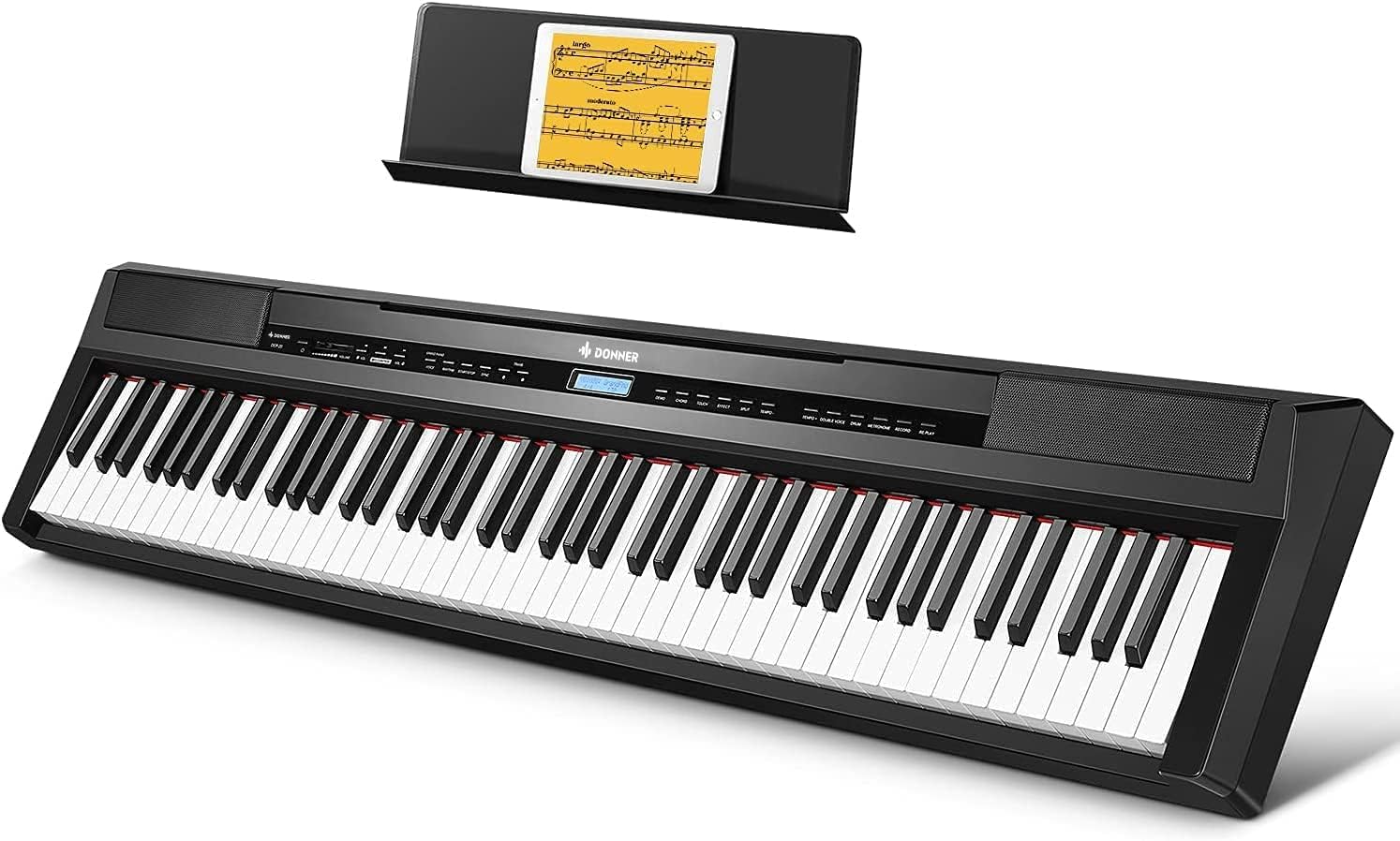 Visit on Amazon → Donner DEP-20 88 key weighted |
88 full size keys, weighted action | Sustain pedal, power supply | A first real practice instrument | $309.99 |
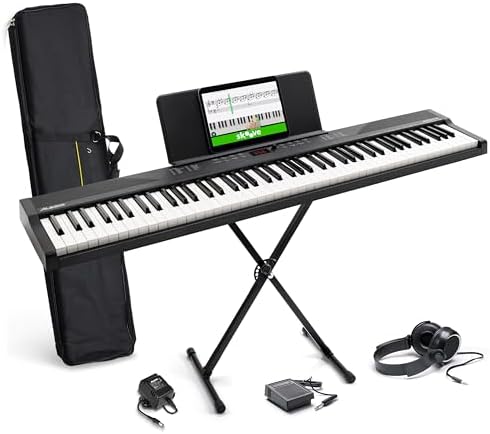 Visit on Amazon → RockJam RJ461 61 key |
61 full size keys, pitch bend wheel | Keyboard with pitch bend | A smaller room, a smaller budget | Check current Amazon price |
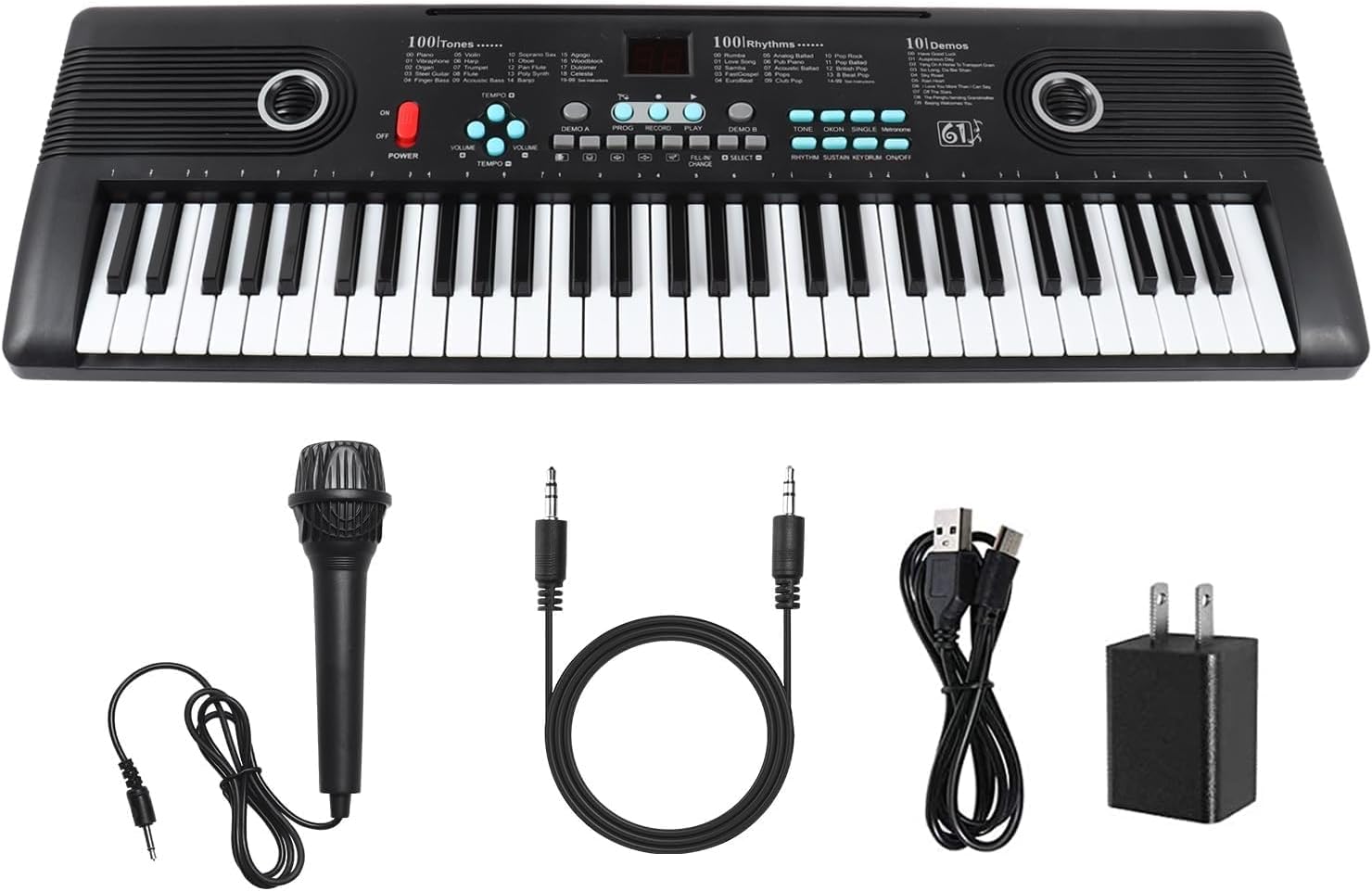 Visit on Amazon → 61 key portable keyboard with microphone |
61 keys, built in speaker and microphone | Keyboard, microphone | A gift for a young beginner | Check current Amazon price |
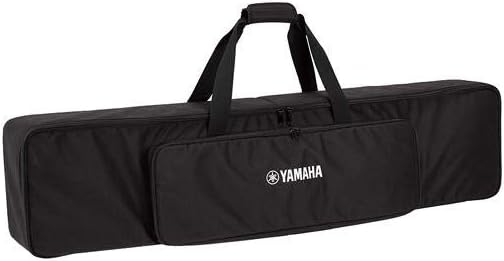 Visit on Amazon → Yamaha soft case for 88 key P series |
Not an instrument, fits 88 key slabs | Padded soft case | Anyone who moves a slab | $189.99 |
The order in that table is also the order I would spend the money. Instrument first, protection second, and only then anything else.
Do you need 88 keys?
Yes, if the player is going to take lessons for more than a year. No, if the player is six and you are testing interest. That is the whole decision, and no amount of feature comparison improves it.
What to skip
Skip the bundled bench and the bundled pedal upgrade on a cheap board. The bench that ships in a box is usually a folding stool at the wrong height, and the pedal slides. Buy the instrument first, then buy a bench that puts the player's forearms level with the keys. If a listing leads with Bluetooth, remember that Bluetooth that drops mid lesson is worse than no Bluetooth at all.
Should you buy the Donner DEP-20?
Yes, if the player is going to take lessons. It is the only instrument here with 88 full size keys and a weighted action, and the action is what makes practice transferable to a real piano later. The included sustain pedal is the weak link, so plan on replacing it. Check current Amazon price, and if it lands anywhere near what a cabinet piano costs, it is still the better buy for a beginner.
Should you buy the RockJam RJ461?
Yes, if the budget or the room will not hold an 88 key slab. Full size keys and a pitch bend wheel put it above the cheapest boards in the category, and it will carry a student through note reading and hand position. Understand what you are buying, though. It is a stepping stone, and a serious student will outgrow it within a couple of years.
Should you buy the 61 key portable keyboard with microphone?
Yes, as a gift, and only as a gift. It is the cheapest way to find out whether a child wants to play, and the microphone does more for daily contact than any feature on the spec sheet. It cannot teach dynamics. If the child is still playing after six months, buy the Donner and hand this one down.
Should you buy the Yamaha soft case?
Yes, if the piano leaves the house at all. A slab piano is a set of plastic levers in a thin body, and a corner impact can cost more to repair than the instrument is worth. The case fits 88 key P series instruments, the same footprint as the Donner. Check current Amazon price, and buy it with the piano, not after the first crack.