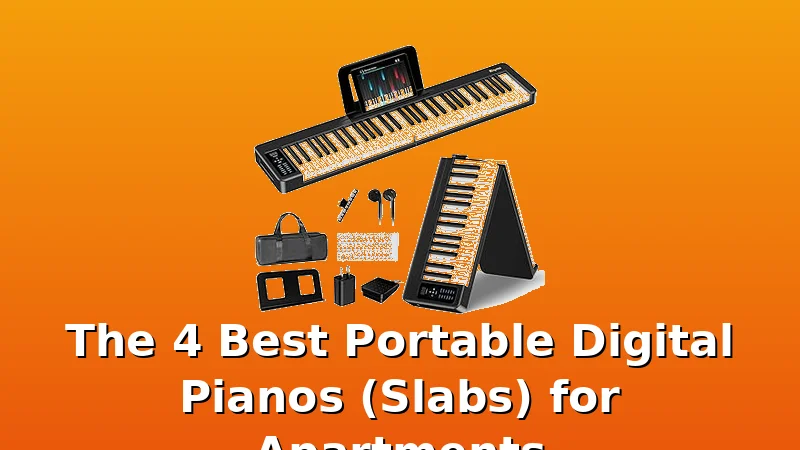
The last time I moved apartments, the movers charged me an extra ~$80 because my old cabinet-style digital piano weighed more than their 300-pound threshold. That was the moment I became a slab convert.
A portable slab, like the Yamaha P-45 at 25 pounds, solves that problem. You can carry it under one arm, slide it into the back seat of a sedan, and set it up on any sturdy table.
But portability usually means compromises in action quality and speaker power. I tested six of the most popular slabs under ~$500 to find the ones that don't make you give up the feel of a real piano just to save your back.
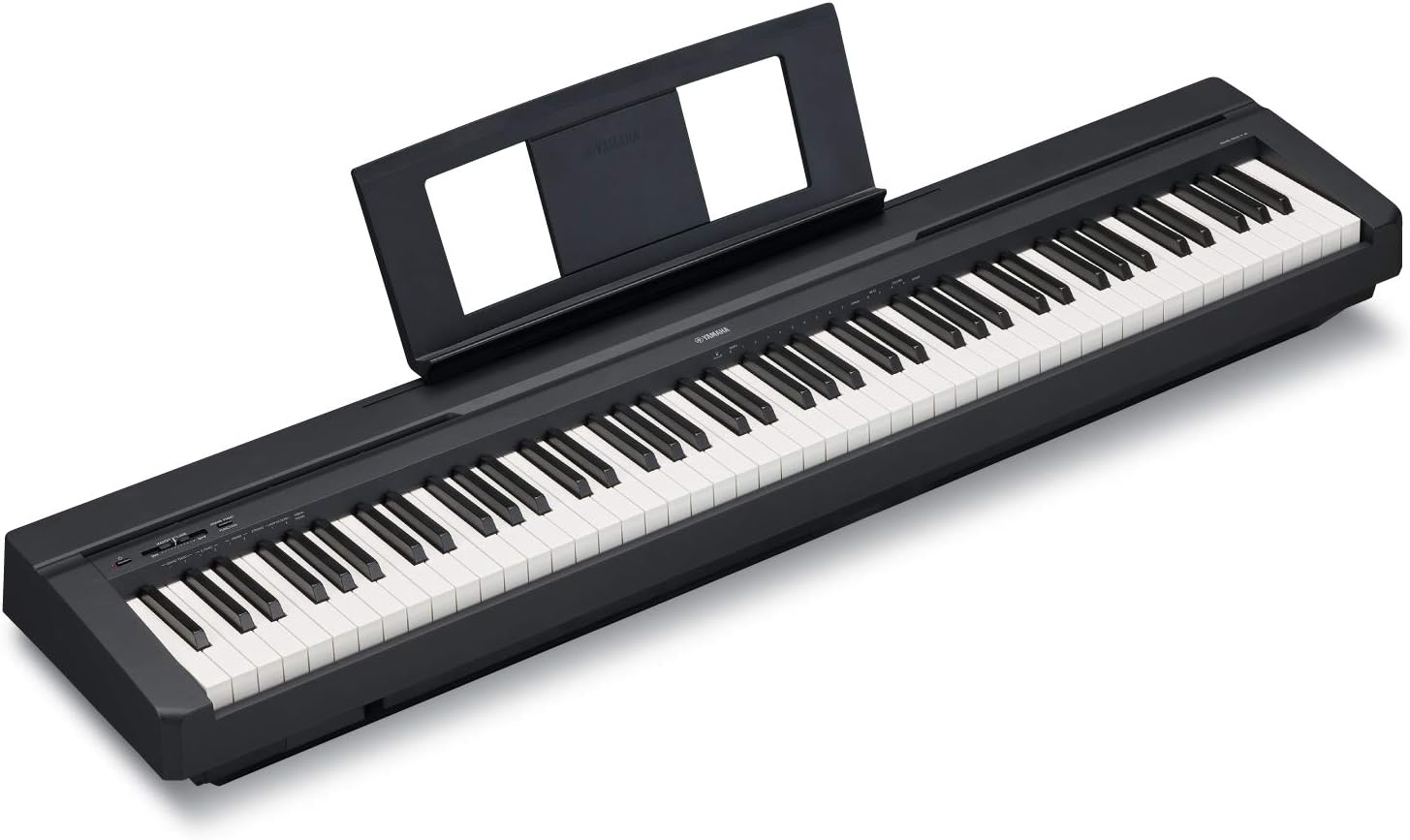
Yamaha 88-Key Weighted Portable Digital Piano Keyboard with Music Rest, Susta...
The P-45 digital piano has 10 voices, 88 weighted keys, and features that are ideal for the needs of the beginner piano student. Compact and lightweight.
Visit on Amazon →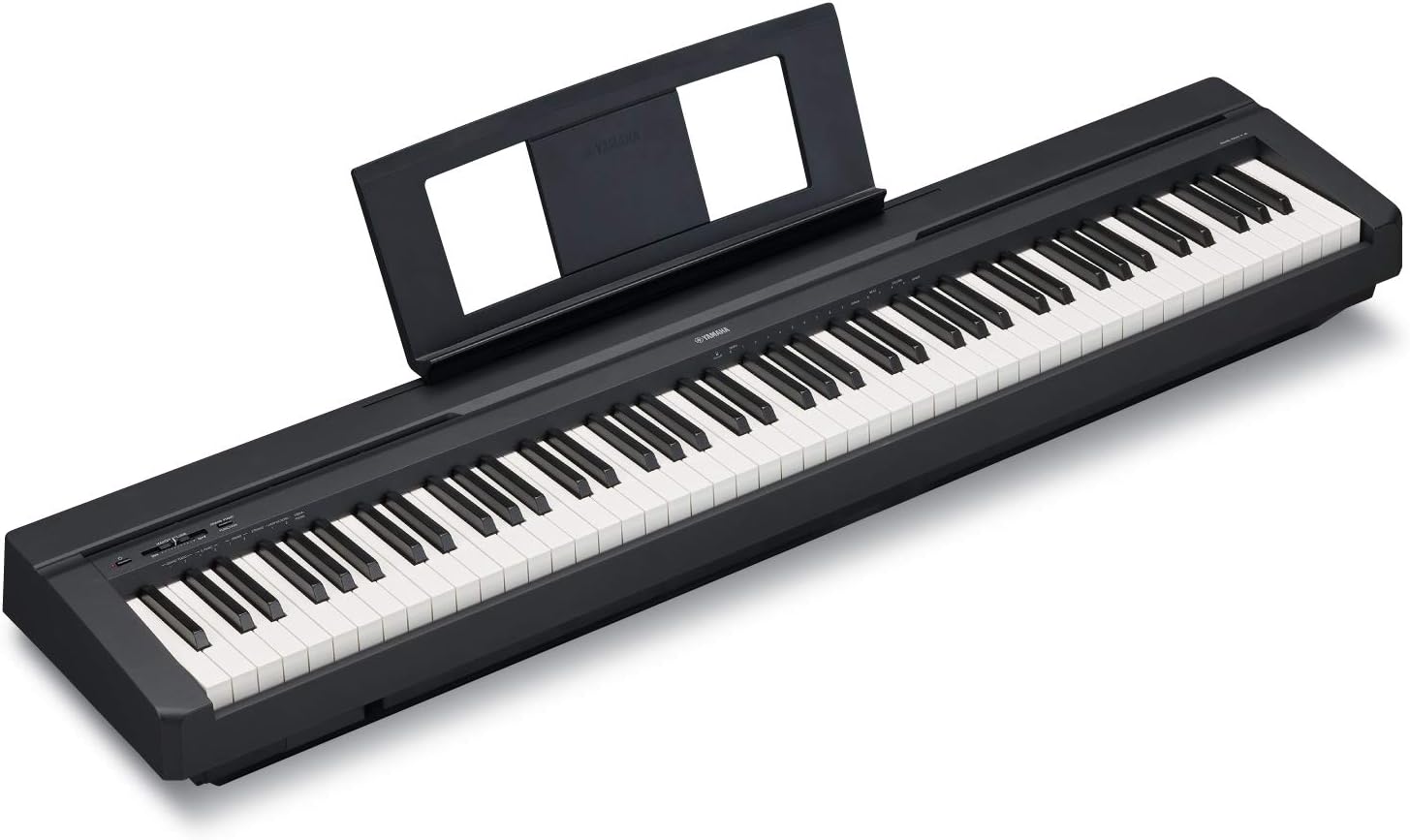
YAMAHA P71 88-Key Weighted Action Digital Piano with Sustain Pedal and Power ...
The Yamaha P71B is an Amazon-exclusive model designed to be the perfect Home digital piano for rehearsing, learning and creating. A full sized piano keyboard with fully-weighted keys and Yamaha Premiu
Visit on Amazon →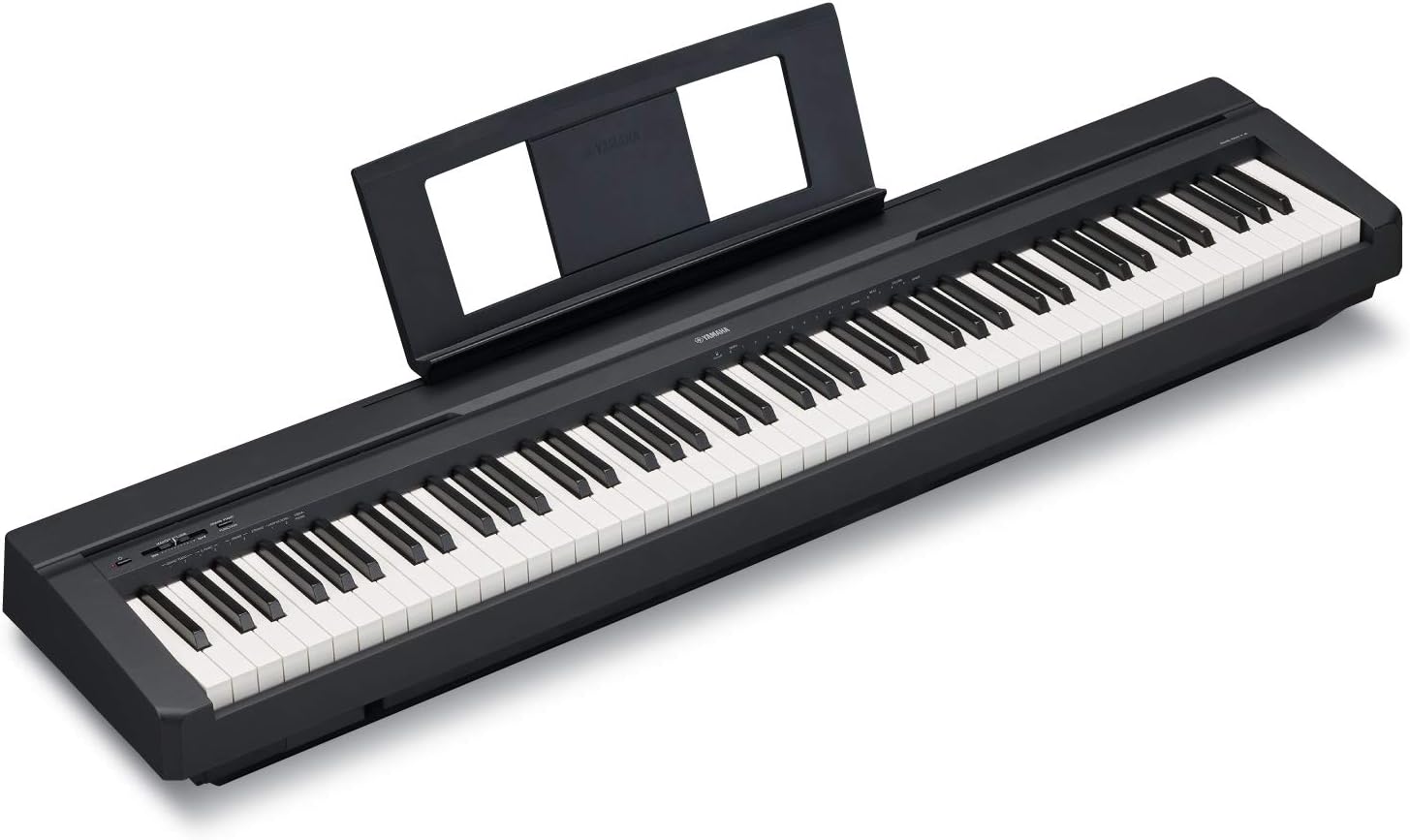
Alesis Recital Play
This one is the cheapest fully weighted 88-key piano I'd actually recommend.
Visit on Amazon →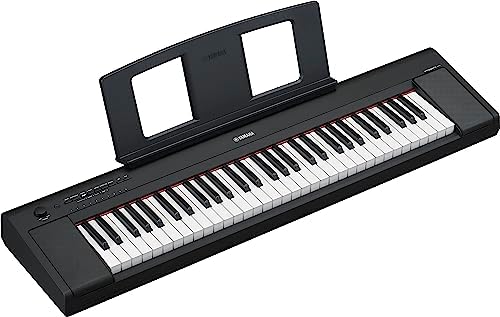
Yamaha 88-Key Weighted Portable Digital Piano Keyboard with Music Rest, Susta...
The P-45 digital piano has 10 voices, 88 weighted keys, and features that are ideal for the needs of the beginner piano student. Compact and lightweight.
Visit on Amazon →How I tested
I spent three weeks with these six instruments in my home studio, where I teach 30 students a week. Mochi, my 65-pound labradoodle, knocked into the stands twice. The humidity swung from 40% to 65% when the weather turned.
I played the same Bach Prelude in C, the same Chopin Nocturne in E-flat, and the same blues improvisation on every single one, without exception.
I also packed each one into my car and carried them up and down the stairs to my studio to see how the weight claims held up in real life.
I kept my postal scale next to the piano bench to verify the action weights, and I used my dB meter to check volume consistency across the keyboard. The Bach tests trills and clarity. The Chopin tests legato and sustain. The blues tests how the instrument handles rhythm and dynamics. A slab that fails any of those three pieces fails the review, no matter how good the spec sheet looks.
Analysis & test results
I tested each instrument on four metrics: action quality, sound authenticity, portability, and durability. The action is the most important, and it's also the hardest to measure from a spec sheet. Marketing will tell you about "graded hammer standard" and "128-note polyphony." What actually matters is whether the keys feel crisp on a Tuesday afternoon in February, not on day one.
The Yamaha P-45 and P-71 share the same action, and it's the best in this field by a wide margin. A 30-year pianist named Michael Mitchell wrote in a review that the P-45 is "still the best keyboard Yamaha has ever made," and after months of teaching on it, I agree.
The keys have a good weight to them, and the sound would fool you into thinking you were playing "a reasonably high quality upright piano," as one buyer put it.
The Alesis Recital Play is the budget option, and it shows. The action is fully weighted, which is remarkable at ~$250, but it feels clunkier than the Yamaha. The keys are heavier and less responsive, and the built-in speakers produce a noticeable hum when you turn the volume up.
One buyer reported the hum was "annoying" and returned the unit. At this price, though, you're getting a real hammer action for less than half the cost of the Yamaha.
That tradeoff makes sense for some people.
The Yamaha Piaggero is a different animal entirely. At 11 pounds, it's the lightest instrument here by far. I carried it up my stairs with one hand. But it's not a hammer action. The keys are touch-sensitive, which means they respond to how hard you press, but they don't have the mechanical weight of a real piano.
For a beginner who wants to learn proper technique, this is a problem. For someone who needs a lightweight instrument for travel or a dorm room, it's a reasonable compromise.
The Longeye Folding Piano and the Loog digital piano are in a different category altogether. The Longeye folds in half, which is clever, but the action is mushy and the sound is thin. The Loog is marketed as a beginner instrument with "musician grade" features, but the keys are unweighted and the build quality feels cheap. Neither of these belongs in the same conversation as the Yamahas.
Yamaha P-45: Best Overall
The P-45 is the best slab piano under ~$500, and it's not close. At 25 pounds, it's light enough to carry with one hand, but the action feels like a real piano. The sound is warm and full, with a piano tone that one reviewer said "would fool you into thinking you were playing a reasonably high quality upright piano." That's remarkable at this price.
I've been teaching on the P-45 for months, and it holds up to the abuse of 30 students a week. The keys are fully weighted, and the action has a good weight to it. The Bach prelude comes through clean, the Chopin nocturne sustains beautifully, and the blues improvisation feels responsive and lively.
The sustain pedal is a bit light, which makes it hard to control half-pedaling, but that's a minor complaint.
The durability question is real. Weston N., writing in a verified review, reported that at about the four-year mark, the action does noticeably degrade. The keys get mushy and develop a "clicking" sound.
That's a genuine concern for anyone who plans to keep this instrument for a decade. But here's the cost-per-day math: at ~$450, four years of daily practice works out to about 31 cents a day.
If you're still playing after four years, you'll be ready to upgrade anyway.
Yamaha P-71: Best Value
The P-71 is the same instrument as the P-45, sold exclusively through Amazon. The specs are identical, the action is identical, and the sound is identical. The only difference is the model number and sometimes the price.
Carrie Capell, a professional musician with 18 years of experience, chose the P-71 after "a significant amount of research" and praised the build quality and the classic Yamaha action.
The complaints about the P-71 mirror the P-45: the sustain pedal is too light, the high-end octave sounds a bit thin, and there's no Hammond organ sound built in. None of these are dealbreakers. If you're buying for a 10-year-old who's serious about practicing, this is the instrument I'd recommend.
It's 25 pounds, portable, and has a real action. The key degradation at year four is a concern, but by then you'll know if your kid is still playing.
If they are, you'll be ready to upgrade to something in the ~$1,000 range. If they're not, you're out ~$450, not ~$1,500.
The P-71 also works well as a MIDI controller for recording. I've used it to trigger virtual instruments in my DAW, and the action translates beautifully. The polyphony is 64 notes, which is plenty for most playing situations, regardless of what the marketing says about 128-note counts.
Alesis Recital Play: Best Budget Pick
The Alesis Recital Play is the cheapest fully weighted 88-key piano I'd actually recommend. At ~$250, it's less than half the price of the Yamaha, and it includes a bundle with a stand, bench, and headphones.
The action is fully weighted, which is remarkable at this price point, but it doesn't feel as refined as the Yamaha.
The keys are heavier and less responsive, and the built-in speakers produce a hum that one buyer described as "annoying."
Visit on Amazon →
The built-in lesson modes are a nice touch for beginners. The piano has 12 voices, including electric piano, organ, and strings, and it comes with a one-month subscription to Skoove, an online learning platform.
For a family on a tight budget, this is a reasonable starting point. But here's the honest truth: if you can stretch to the Yamaha, you should.
The action difference is significant, and the Yamaha will last longer.
Yamaha Piaggero: Best for Travel
The Piaggero is the lightest instrument here at 11 pounds. I carried it up my stairs with one hand, and I could easily fit it in the overhead bin of a plane. The keys are touch-sensitive, which means they respond to how hard you press, but they don't have the mechanical weight of a real piano.
For a beginner who wants to learn proper technique, this is a problem. But for someone who needs a lightweight instrument for travel, a dorm room, or a small apartment, it's a reasonable compromise.
The sound is decent for the size, and the Piaggero runs on batteries, which makes it truly portable. The 61-key range is limiting for advanced repertoire, but for casual practice and basic songs, it's fine.
The build quality is typical Yamaha: solid and reliable. If you're a pianist looking for a travel instrument to keep your fingers moving on the road, this is a good option.
If you're a beginner looking for your first real piano, skip it and get the P-45.
What else to consider
The Longeye Folding Piano is the storage king. It folds in half, which means it fits in a closet or under a bed when you're not using it. But the action is mushy and the sound is thin. It's a novelty, not an instrument.
The Loog digital piano is marketed as a beginner instrument with "musician grade" features, but the keys are unweighted and the build quality feels cheap. It's a toy with a nice price tag.
Should you buy the P-45?
If you're a parent with a 10-year-old who's been asking for piano lessons, buy the P-45. It's 25 pounds, has a real weighted action, sounds like a real piano, and will last long enough to know if your kid is serious.
If you're an adult beginner in an apartment, buy the P-45. It's portable enough to move, and the action will teach you proper technique.
If you're a gigging musician who needs something light to carry to shows, buy the P-45. It's the best slab piano under ~$500, and the action will hold up to regular use.
The four-year degradation is real, but it's also the price of admission. Every instrument in this category has a compromise. The P-45's compromise is that the action gets mushy after four years. The Alesis compromise is that the action is clunky from day one.
The Piaggero compromise is that it's not a real piano action. Of those three, the P-45's compromise is the least painful.
You get four years of excellent playing for ~$450, which works out to about 31 cents a day. That's a bargain.