Related: Digital Piano Action Weight: What Parents Keep Asking Me
I have owned twelve digital pianos. The first was a cheap slab I bought in graduate school because the practice rooms closed at ten, and the newest one sits in my home studio a few feet from a grand I barely touch after eleven at night. In between, I have taught around thirty students a week for twenty-five years and recorded session work on the same instruments I teach on. That is how I learned that almost everything marketed about an 88-key weighted digital piano matters less than the two things nobody prints on the box: how fast the key comes back up under your finger, and whether the speakers make you want to keep playing.
This is not a spec sheet. It is the setup I would hand a transfer student, a parent buying for a ten-year-old, or an adult coming back after twenty years away. Four items, in the order I would spend the money.
Start with the action. Everything else, samples, Bluetooth, polyphony, is a feature bolted onto it. A graded hammer action is a spectrum, not a checkbox, and the cheap ones bounce under your hand while the good ones let you shape tone with finger speed. Speaker quality matters more than sample library size, because a great sample through a bad speaker sounds like a great sample through a pillow. And a digital piano is a practice tool first. If it does not make you want to sit down, it failed, no matter what the brochure says.
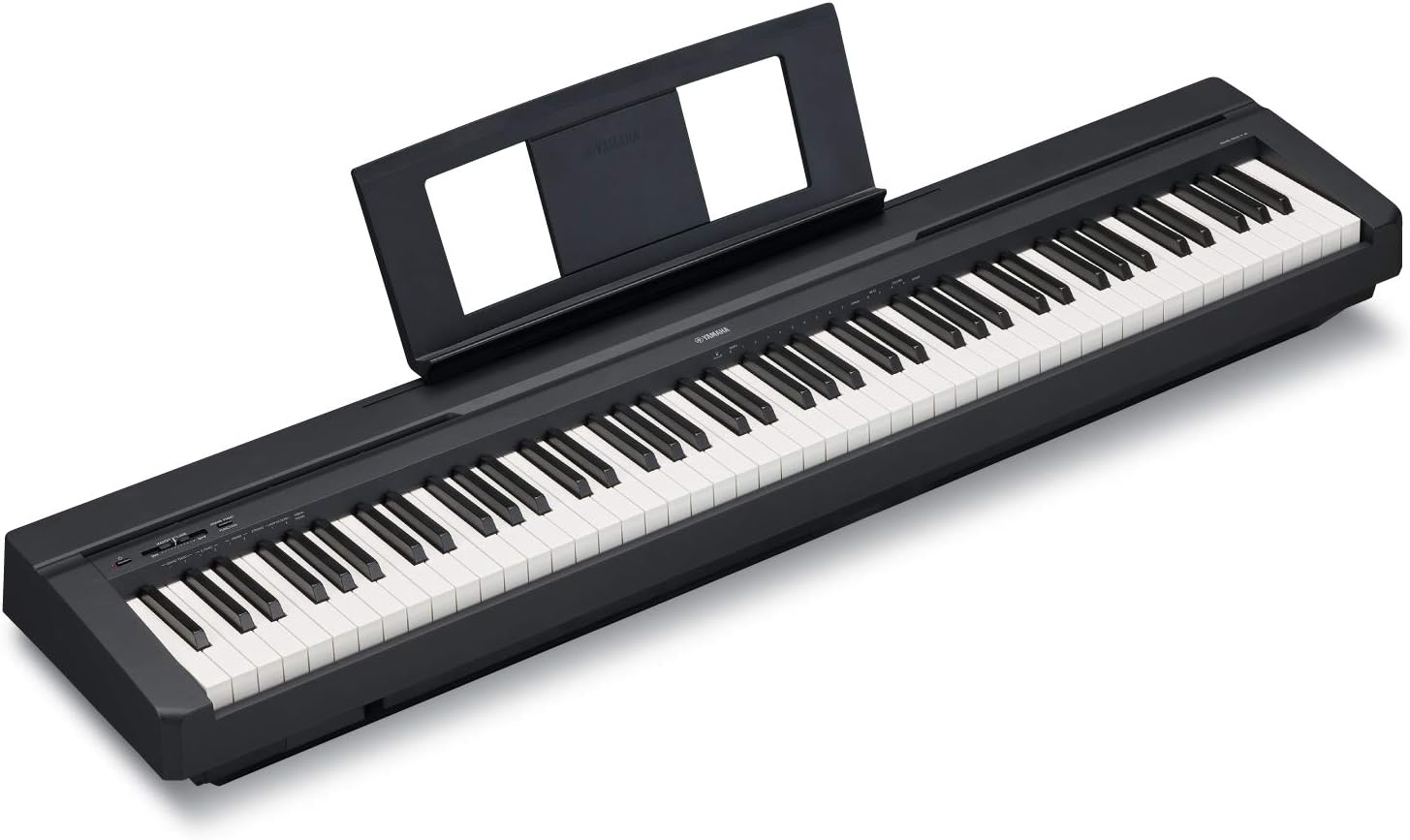
The instrument I would put in every practice room: Yamaha 88-Key Weighted Portable Digital Piano
This is the one I recommend when someone asks me what to buy and does not want a conversation about it. Eighty-eight weighted keys, built-in speakers, a music rest, a sustain foot switch in the box, and USB connectivity for anyone who wants to record or run a teaching app. It is a slab, not a cabinet, and I mean that as praise. Slabs are the smart buy for most people. Cabinets are furniture you pay a lot extra for, and then you pay movers to carry them.
What I care about is what my transfer students sound like after a summer on it. The students who practice on an action in this tier come back in September with their scales intact and their hand position roughly where they left it. The students who practice on a five-octave, spring-loaded keyboard come back playing louder and flatter, because the instrument rewards hitting and punishes shaping. That is the whole difference. It is not about brand loyalty. It is that a weighted action lets you control tone with finger speed, and once a student feels that, they stop banging.
The included sustain foot switch is a simple on-off switch, and like most pedals that ship in the box, it will slide across a hardwood floor. Budget for replacing it, the same way you would budget for a better bench. That is not a knock on this instrument. It is true of nearly everything in this price tier, and it is the cheapest upgrade you will ever make to your playing.
The built-in speakers are honest. They are not going to convince anyone there is a concert grand in the room, and I am grateful for that. I would rather hear a small, clear, slightly boxy piano than a three-inch speaker pretending to be a nine-foot instrument. Headphones solve it entirely, and the USB connection means you can send the sound to a computer and listen through something better.
The keyboard I hand to a ten-year-old who is not sure yet: POGOLAB 61 Keys Compact Keyboard Piano
I do not teach on 61-key keyboards. I want to say that plainly, because I get asked about them every August by parents who are not ready to spend real money on an instrument their child may abandon by October. For that family, this is a reasonable answer.
Sixty-one keys, 255 sounds, 255 rhythms, 24 demos, a sheet music stand, note stickers, and a power supply in the box. For a beginner, the rhythms and the demo songs are the point. A kid who can press one button and get a drum groove behind their five-finger position will practice longer than a kid playing to a metronome alone. The note stickers are genuinely useful for the first month of note reading, and then I take them off, because a student who reads stickers is not reading music.
What it will not do is teach touch. There is no weighted action here, and there is no way around that. A student who spends a year on this and then sits at a real piano will discover that their fingers have been doing almost nothing. The keys are also fewer than the literature needs. Once a method book starts moving hands out of the home position, and certainly once you reach real repertoire, the top and bottom of the range go missing.
So buy it as a gift, as a trial, as the instrument that lives in a dorm room or a vacation rental. Do not buy it as the practice instrument for a student who is serious. Those are two different purchases, and confusing them is how families end up buying twice.
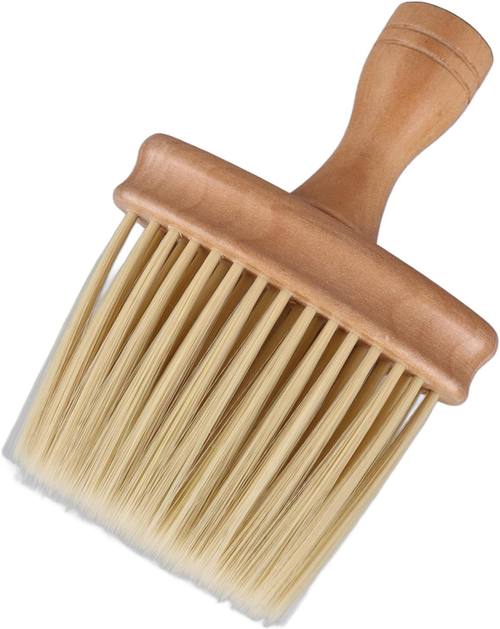
The brush that lives in my bench bag: Keyboard Brush, Wooden Double Sided Dusting Brush
Here is the thing nobody tells you about a black slab with weighted keys: it collects everything. Dust, skin, pencil graphite from a student marking a fingering, crumbs from the sibling eating a granola bar in the corner. It works down between the keys and into the felt, and once it is in there, a cloth does nothing. You need a brush with a wooden handle, an anti-static head, and a shape thin enough to run along the key gaps.
This one is billed as a double-sided wooden cleaner for keyboards, pianos, guitar, synthesizers, and laptops, which is a wide net, but the shape is right for a keybed. I brush along the gaps at a shallow angle, working from the back of the keys toward me, and I never spray anything into the keybed. Liquid and felt do not mix.
The softer one I keep in the studio: Keyboard Cleaning Brush, Ultra Soft Double Sided
This is the same idea in a different package, and the listing calls the bristles ultra soft. That matters more than it sounds. Glossy black key tops show every micro-scratch, and a stiff brush on a matte key top leaves a faint haze you cannot wipe off. Soft bristles, anti-static head, wooden handle, universal enough for a guitar or a laptop keyboard if that is what is on your desk.
Do you need both? Honestly, no. One brush is enough. I keep two because one lives in the studio and one travels in my bag with the cables, and because at this price the question is not worth agonizing over. If you are buying one, buy the softer one and use it gently. If you are buying a gift for someone with a new piano, either works, and a brush is a far better accessory gift than another cable.
How I test, and what I listen for
Every instrument that comes through my studio gets the same three pieces: the same Bach prelude, the same Chopin nocturne, and a blues improvisation. That is twenty-five years of the same routine, and it is the only honest way I know to compare actions. The prelude tells me about evenness and key repetition. The nocturne tells me whether the instrument lets me shape a long line or forces me to hammer it. The blues tells me whether the action gets in the way when I stop thinking about it.
I keep a dB meter on the music rest when I check speakers, and I keep a scale for action weight. Neither number goes on a spec sheet, because the number is not the experience. What I am listening for is whether the speakers flatter a student or expose them, and what I am feeling for is whether the key returns fast enough to repeat a note cleanly without my hand tensing up.
I also do the boring thing: I live with the instrument. I practice on it at night so the neighbors stay friendly. I teach on it for a week. I clean it and see what the key tops look like after a month of thirty students. That last part is where the brushes come in.
The setup reference table
This is the order I would buy these four things, and what each one actually does for you.
| Item | Role in the setup | What the listing says | My note |
|---|---|---|---|
 Visit on Amazon → Visit on Amazon →Yamaha 88-Key Weighted Portable Digital Piano |
The practice instrument | 88 weighted keys, music rest, sustain foot switch, built-in speakers, USB connectivity, black | Buy this first. Everything else on this page is support for it. |
 Visit on Amazon → Visit on Amazon →POGOLAB 61 Keys Compact Keyboard Piano |
The gift, the first touch | 61 keys, 255 sounds, 255 rhythms, 24 demos, sheet music stand, note stickers, power supply | Fun on day one. Not a practice instrument. Do not confuse the two. |
 Visit on Amazon → Visit on Amazon →Keyboard Brush, Wooden Double Sided Dusting Brush |
Dust control for the keybed | Wooden handle, anti-static, double sided, for keyboards, pianos, guitar, synthesizers, laptops | Lives in the bench bag. Never spray into the keybed. |
 Visit on Amazon → Visit on Amazon →Keyboard Cleaning Brush, Ultra Soft Double Sided |
Dust control, gentler | Wooden handle, anti-static, double sided, ultra soft, universal | The one I reach for on glossy black key tops. |
What the table actually tells you
Two of these four items are instruments and two are maintenance. That ratio is not an accident. A piano is a mechanical object with felt, bushings, and a keybed that collects grit, and the single most common reason a student's action starts feeling inconsistent is not wear, it is debris and dust in places they cannot see. A brush costs less than a lesson. Use it monthly.
The other thing the table tells you is that the gap between the two instruments is not a gap in quality, it is a gap in purpose. The 61-key keyboard is not a worse version of the 88-key slab. It is a different product for a different buyer. A child who has never touched a piano does not need a weighted action to fall in love with one. An adult returning to the instrument, or a teenager preparing for a recital, absolutely does. If you are buying for yourself and you already know you will keep playing, skip straight to the weighted 88.
On the action question, here is my honest read after twelve instruments: the cheap end of the weighted market bounces, and the good end lets you control tone with finger speed. The tier this Yamaha sits in is where that stops being a compromise. You will feel the difference in the first thirty seconds of a Bach prelude, and you will feel it again in month six, when the instrument has not drifted on you.
Should you buy the Yamaha 88-key weighted portable digital piano?
Yes. It is the instrument I would buy for a transfer student, for an adult coming back, and for anyone who wants to practice at night without waking a household. The weighted 88-key action is the part that matters, the speakers are honest rather than flattering, the USB connection covers recording and teaching apps, and it is a slab, which means it goes up a stairwell without a moving crew. Replace the included foot switch with a real pedal and you are done.
Should you buy the POGOLAB 61 Keys Compact Keyboard Piano?
Yes, if you are buying a gift or a trial instrument, and if the person on the other end is a beginner. The 255 sounds, 255 rhythms, and 24 demos are more useful than they sound, because a beginner who is having fun practices, and a beginner who is bored quits. Just be honest with yourself about what it is. If the student is already serious, this is not the instrument, and buying it will only delay the purchase you are going to make anyway.
Should you buy the brushes?
Yes, and this is the easiest recommendation on the page. Pick the ultra soft one if you only buy one, and keep it near the piano instead of in a drawer. Brush the key gaps monthly, keep liquids away from the keybed, and your action will feel the way it felt the day you unboxed it for a lot longer than it otherwise would.