Related: Best Digital Pianos for Small Apartments
I have taught piano from a home studio in Seattle for 25 years, and every August the same email arrives: my child starts lessons in September, which beginner digital piano should we buy? I have watched transfer students walk in after a summer of practicing on something that fought them. I have also watched students improve faster than their talent on an instrument that got out of the way.
Here is the short version of everything I know: the action is the piano. Samples, speaker size, Bluetooth, polyphony numbers, teaching apps, all of it is a feature. The keys are the instrument. A beginner digital piano with a good action and mediocre speakers will take a student further than the reverse, every single time.
This guide covers the four instruments parents keep asking me about this season: two 88-key Donner models, a small portable keyboard that surfaces under every "piano for kids" search, and a computer keyboard that keeps landing in the results because of the word keyboard. I will tell you which of those four belongs in a practice room and which one does not.
Best Overall: Donner DDP-300 Digital Piano
This is the instrument in this group that is built to be a home piano rather than a starter package. The spec list is what I want to see at this level: 88 graded hammer action weighted keys, full size, plus record, Bluetooth, 10 voices, 4 reverb settings, and onboard speakers. The finish is a dark rose, which is a real consideration when the thing lives in your living room and your partner has opinions.
Graded hammer action means the lower keys are heavier than the upper ones, the way an acoustic grand is. It is a spectrum, not a checkbox. Cheap graded actions bounce back at you and get louder the deeper you play into a piece. Good ones let you control tone with finger speed alone. That difference is what you are paying for at every price point, and it is the single most important thing to feel for yourself before you commit.
The features I actually care about here are the record function and the speakers. Recording is how a student hears what the teacher hears, and it is the fastest fix for rhythm problems I know of. The speakers matter more than the sample library, because a great sample played through a small speaker sounds like a great sample played through a pillow. Ten voices and four reverb settings is more than enough for a beginner. Nobody needs forty.
Bluetooth is convenient for playing along with a track or a lesson video. Keep a cable on hand anyway. Bluetooth that drops mid lesson is one of those small frustrations that quietly makes a student practice less.
Best Value: Donner DEP-20 Beginner Digital Piano
This one is aimed at the family buying their first 88-key instrument, and the package tells you that: 88 full size weighted keys, a furniture stand, and a 3-pedal unit in the box.
What is in the box matters more than beginners expect. A stand you do not have to buy separately and a three pedal unit are two of the three things I tell parents to budget for. The third is a bench, and the bench that ships with a budget instrument is usually the first thing to replace.
Three pedals instead of one is not a gimmick. On an acoustic piano the right pedal is sustain, the middle is the practice pedal, and the left is the soft pedal. A student who only ever has one pedal learns to treat the pedal as an on and off switch. A student with three learns what a half pedal feels like, and that is a musical skill, not a hardware feature.
Two things to check when it arrives: whether the pedal unit is fixed to the stand or sits loose on the floor, and whether the whole thing wobbles when a ten year old plays a loud passage. A sustain pedal that slides across the floor mid performance is a pet peeve of mine, and it is a solvable problem, but only if the hardware was designed for it.
Because the keyboard is portable, it can come off the stand and go to a lesson or a friend's house. That flexibility is why this category has been eating the cabinet market alive.
Best for a Young Beginner: 61-Key Portable Electronic Piano
I will be honest about my own rule here: I review instruments with 88 weighted keys, and this is not one of them. Sixty-one keys with no weighted action in the specs is a keyboard, not a piano.
That does not make it useless. It makes it a test. If you have a seven year old who has asked for piano lessons twice and quit soccer in October, spending a small amount on this instead of four figures is the right call. The feature list is aimed squarely at that kid: dual built in speakers, an external microphone input, a power plug, and a set of teaching content built into the instrument.
The microphone input is the underrated feature. Small children sing along, and a child who sings while playing is a child who is building an ear. The teaching content gives a parent something useful to do on the first night, when nobody in the house knows where middle C is.
What you give up is real. Two octaves of repertoire are gone, the action will not build finger strength, and there is no weighted feel to transfer to an acoustic later. Buy it as a trial, plan the upgrade, and do not let a student stay on unweighted keys past the first year. Habits form fast, and unlearning them takes longer than learning them did.
The Search Result That Is Not a Piano: Redragon K556
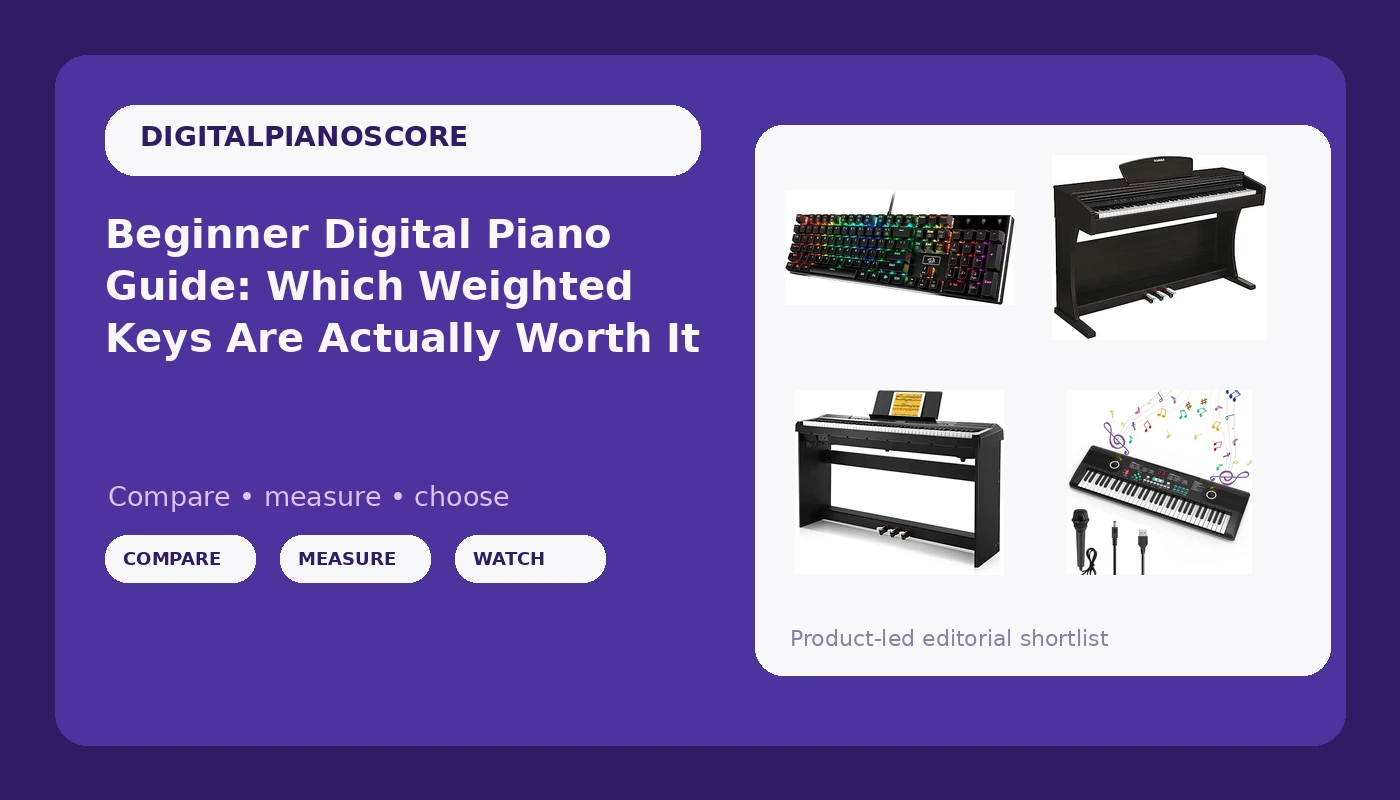
If you searched for a keyboard and landed on the Redragon K556, you are looking at a computer keyboard. It has 104 keys, an aluminum board, RGB lighting, and mechanical switches. It is wired, it is built for typing and gaming, and it will not produce a note you can practice a Bach prelude on.
It is in this guide for one reason: it appears in the same search results as the instruments above, and every month someone buys the wrong box. The only reason a piano student would want it is if they also need a keyboard for notation software on a desktop, and even then it is a separate purchase from the instrument.
If what you need is a piano, this is not it. Move on.
How I judge a beginner digital piano
Every instrument that comes through my studio gets the same treatment: the same Bach prelude, the same Chopin nocturne, and a blues improvisation in the key of the week. Here is what I am listening for when a parent asks whether a particular model is good enough.
Action weight and key repetition. Play the same phrase slowly, then at tempo. Does the key return fast enough for repeated notes, or does it lag? Does the action get heavier as you move up the keyboard? A good action lets you get quieter by playing more slowly, not by pressing less accurately.
Escapement and damper simulation. Real escapement, the little notch you feel as a grand hammer releases, is rare below the professional tier. Damper simulation is more common and more useful: it is what makes the pedal behave like a pedal instead of a volume switch.
Speaker voicing. Speaker quality matters more than sample count. Bring a decibel meter if you want numbers, but your ears will tell you: is it loud enough to play with a singer, and quiet enough for an apartment at ten at night?
Headphone jack placement. Front. Always front. A jack on the back of the unit means reaching behind the piano every single night, and that is how a student ends up practicing less.
Pedal stability and the bench. Budget for replacing the bench, and check that the pedal does not walk across the floor.
Polyphony. Ignore it. Nobody plays 256 notes at once. The number exists to win spec sheet arguments, not to make you a better player.
Analysis: what the spec sheets tell you and what they do not
Two things are true about this price band right now.
The first is that action quality keeps spreading down the price curve. What felt like a premium action a few years ago is showing up in instruments that cost a fraction of that. The Chinese brands, Donner included, have closed most of the gap on sound. They have not closed it on action consistency, which is a different problem: the action on the unit you unbox is not guaranteed to feel like the action on the unit I played. That is why I tell parents to buy from a seller with a real return window and to check the instrument in the first week, not the first month.
The second is that sample quality has plateaued. The differences people hear between brands at this level are speaker voicing, not samples. Marketing copy about concert grand sound coming out of a pair of small speakers is one of my least favorite sentences in this industry. A small speaker cannot move the air a nine foot grand moves. What it can do is sound pleasant and even across the keyboard, and that is the actual goal.
Where I expect this to go: the slab that costs around $800 in 2027 will feel like the slab that cost around $1,800 in 2023, hybrid actions with real hammers will reach the mid tier, and the cabinet market will keep shrinking as slabs plus a good stand win on price and on moving day.
The beginner digital piano reference table
Same information, arranged the way I arrange it for parents. The instrument column is the thing to click. The rest is what you are actually comparing.
| Instrument | Keys and action | Who it is for | What to know |
|---|---|---|---|
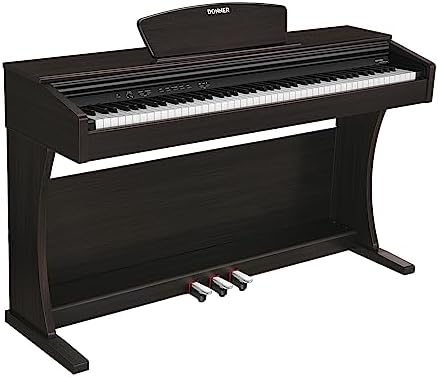 Visit on Amazon → Visit on Amazon →Donner DDP-300 Digital Piano |
88 graded hammer action weighted keys | A student who needs a home instrument that records | 10 voices, 4 reverb, Bluetooth, onboard speakers, dark rose finish |
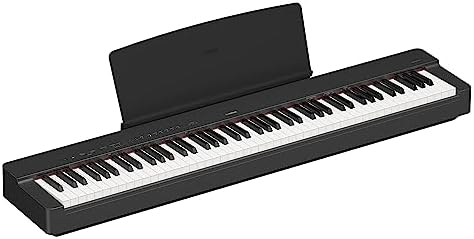 Visit on Amazon → Visit on Amazon →Donner DEP-20 Beginner Digital Piano |
88 full size weighted keys | A first 88-key instrument on a budget | Furniture stand and 3-pedal unit included, portable keyboard |
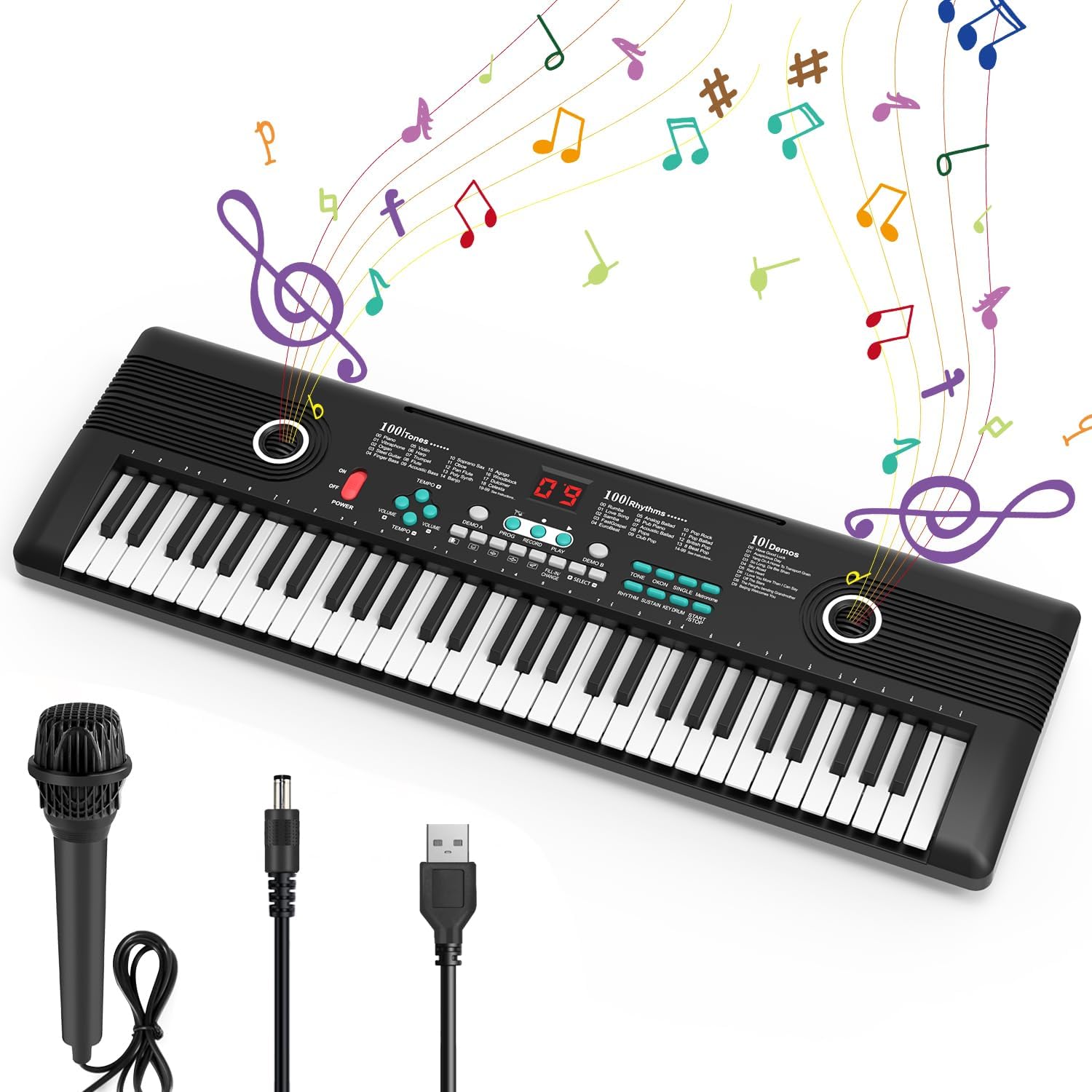 Visit on Amazon → Visit on Amazon →61 key portable electronic piano |
61 keys, no weighted action in the specs | A young beginner testing interest | Dual speakers, external microphone input, power plug, teaching content |
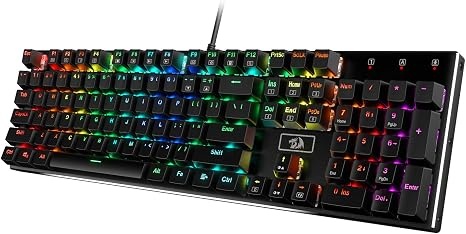 Visit on Amazon → Visit on Amazon →Redragon K556 |
104 mechanical keys | Not an instrument | Wired RGB computer keyboard, only relevant for notation software |
One column is missing from that table on purpose: price. Prices move weekly, and an instrument that is a bargain in March is a bad deal in December. Check the current Amazon price on the listing before you decide, and compare the two 88-key options against each other rather than against a number you remember from last year.
Slabs, cabinets, and moving day
Slabs are the smart buy for most people. A cabinet is furniture, and you pay for the cabinet. If the keyboard can come off the stand, it goes to lessons, it goes to a friend's house, and it goes into a car when you move apartments. A cabinet piano stays where it is and costs more to get there.
The one thing a cabinet buys you is a pedal unit that does not move and a keyboard at a height that matches a real piano. If the DEP-20 stand holds the keyboard at a sensible height and the pedal unit bolts down, you have most of the cabinet benefit for a fraction of the furniture premium. That is the trade I would make every time.
Should you buy the Donner DDP-300?
Buy it if you want a home instrument with a graded hammer action and a record function, and you want the piano to look like something you leave in the living room. The graded action is the reason to choose it in this group, the record button is the reason a teacher will be glad you did, and Bluetooth is a convenience you should back up with a cable.
Should you buy the Donner DEP-20?
Buy it if this is your first 88-key instrument and you want the stand and the pedals handled in one purchase. The three pedal unit is the detail that separates it from most beginner packages, and the portability means it can leave the house. If you can stretch to the DDP-300, do that instead. If you cannot, this is the one in this group that gets a beginner through the first two years.
Should you buy the 61-key keyboard?
Only as a trial for a young child, and only with an upgrade plan attached. It is a low cost way to find out whether the interest is real. It is not a practice instrument for anyone who already reads music.
Should you buy the Redragon K556?
No, not as a piano. It is a computer keyboard. If you need one for notation software, that is a different shopping trip.