Related: Digital Piano Actions Explained: Graded Hammer, Semi Weighted, and Spring
A weighted key digital piano is not a nicer keyboard. It is a different instrument. The moment a student learns to shape a note with finger speed instead of a volume knob, they are playing piano. Everything else on the spec sheet, the sample library, the polyphony figure, the Bluetooth logo, is a feature bolted onto that one fact.
I teach about thirty students a week from a home studio in Seattle and I have owned twelve digital pianos over twenty five years, from a cheap slab to a serious stage piano. Every September the same scene plays out. A transfer student arrives with technique that has gone soft over the summer, and my first question is what they practiced on. The answer is usually a keyboard with springy keys and a pedal that slid under the couch.
This is what I would tell a parent, an adult beginner, or a returning player who is shopping right now. Four instruments, four different jobs, and the reasoning behind each one. No marketing language and no concert grand fantasies from speakers the size of a coffee cup.
Best Overall for Home Practice: Yamaha YDP105
The YDP105 is the one I point families toward when the piano will live in one room and nobody is moving it. It is an upright cabinet with a weighted 88 key action, a three pedal unit, and a bench in the box. That sounds like furniture, and part of it is furniture, but the furniture is doing real work. The keys sit at the height and angle your hands already expect. The pedals are where your right foot reaches without hunting for them. The whole thing does not creep across the floor while you play octaves.
For a beginner or an intermediate player, the cabinet format removes an entire class of excuses. You do not assemble a stand, you do not chase a loose foot switch, you do not wonder where the pedal went. You sit down and you practice. That is the whole game. A digital piano is a practice tool first, and if it does not make you want to sit at it, it failed no matter how good the samples are.
The action here is weighted and responds to how you play, which is the part that matters for a student building hand strength. The cabinet also gives the built-in speakers somewhere to breathe, and speaker voicing is where most of the perceived difference between brands actually lives. Sample quality has plateaued. What you hear is the box.
Two honest notes. The bench that ships in the box is a starter bench, and a bench that is the wrong height will wreck a young player's posture faster than a bad action will. Budget to replace it. And the white finish is a commitment, though in a bright room it disappears rather than dominating.
Best Slab for Travel and Small Rooms: Yamaha P145BT
Slabs are the smart buy for most people. Cabinets are furniture you pay extra for, and if your living situation might change in two years, a slab plus a decent stand is the decision you will not regret. The P145BT is a compact 88 key instrument with weighted keys, built in speakers, a music rest, Bluetooth, and a sustain foot switch.
The weighted keys are the reason it belongs in this article and not in a list of keyboards. A student who practices on a slab with real key resistance and then sits at a teacher's grand piano will not fall apart. A student who practices on springs will.
Bluetooth is the feature I am most careful about recommending. It is genuinely useful for playing along with a backing track or running a teaching app, and it is genuinely useless the moment it drops in the middle of a lesson. Treat it as a bonus, never as the reason you buy. The same goes for the sustain foot switch in the box. It will slide on a hardwood floor, and a sliding pedal teaches bad pedaling. A proper pedal unit with a stable base is the first accessory I would add.
Where this instrument earns its place is portability without compromise. It goes to lessons, it goes in the car, it sits on a desk in a dorm room, and it still gives you 88 weighted keys and speakers you can practice through without headphones.
Best Mid Budget Hammer Action: Alesis Recital Pro
The Recital Pro is an 88 key instrument with a weighted hammer action, and it is the least expensive way into a hammer action in this group. That matters, because graded hammer action is a spectrum rather than a checkbox. The cheap end of that spectrum bounces. The good end lets you control tone with finger speed, which is the skill every piece of repertoire depends on.
What you are gambling on at this tier is consistency, unit to unit and key to key. Buy from a seller with a real return window, play it for a week before you decide, and listen for a key that sounds or feels different from its neighbors. That advice is not a knock on this instrument specifically. It is the rule for the entire budget hammer action category, and it is why I tell students to spend their money here only if the alternative is a spring action.
For an adult returning to the piano after years away, or a teenager who has outgrown a starter keyboard, this is a defensible step. It is not the instrument I would put in front of a student preparing for an exam, because repetition speed under fast passagework is where inexpensive actions show their limits. But as a practice instrument that lives on a stand and gets played every night, it does the job that matters.
Best Starter Bundle for a First Year: 88 Key Piano Keyboard
I normally refuse to talk about instruments without weighted keys. I am making an exception here, and I want to be clear about why. This is an 88 key digital piano with semi weighted keys that ships as a complete package: stand, sustain pedal, power supply, carrying case, headphones, and USB MIDI compatibility.
The bundle is the argument. A parent buying for a ten year old does not want to discover on Christmas morning that the stand was sold separately. Everything needed to start is in the box, the headphones mean an apartment or a shared wall is not a problem, and USB MIDI means the instrument can talk to a laptop if the student gets interested in notation software or a piano app.
What semi weighted means, plainly, is that the keys resist a little but do not behave like hammers. For the first year of note reading, hand position, and rhythm, that is survivable. For anything past that, it is a ceiling. Dynamics come from finger control, and a semi weighted key will not let a student develop that control properly. Plan on this being a first instrument with a known expiration date, not a ten year purchase. If the budget can stretch at all, the Yamaha slab above is the better long term decision.
How I evaluate a digital piano
Every instrument I sit down with gets the same three pieces: a Bach prelude for evenness and slow control, a Chopin nocturne for tone under a singing line, and a blues improvisation to see whether the action rewards speed or fights it. I am listening for whether the instrument changes tone when I change finger speed, whether a repeated note comes back cleanly, and whether the keys feel the same at the back of the key as they do at the front.
Then the boring checks. Where is the headphone jack? If it is on the back of the unit, you will hate it within a month. Does the pedal stay where you put it? Is the music rest at a height that lets you read without craning? Do the speakers sound like a piano in a room, or like a piano in a pillow?
The four instruments side by side
| Instrument | Action | What ships with it | Best for | Price |
|---|---|---|---|---|
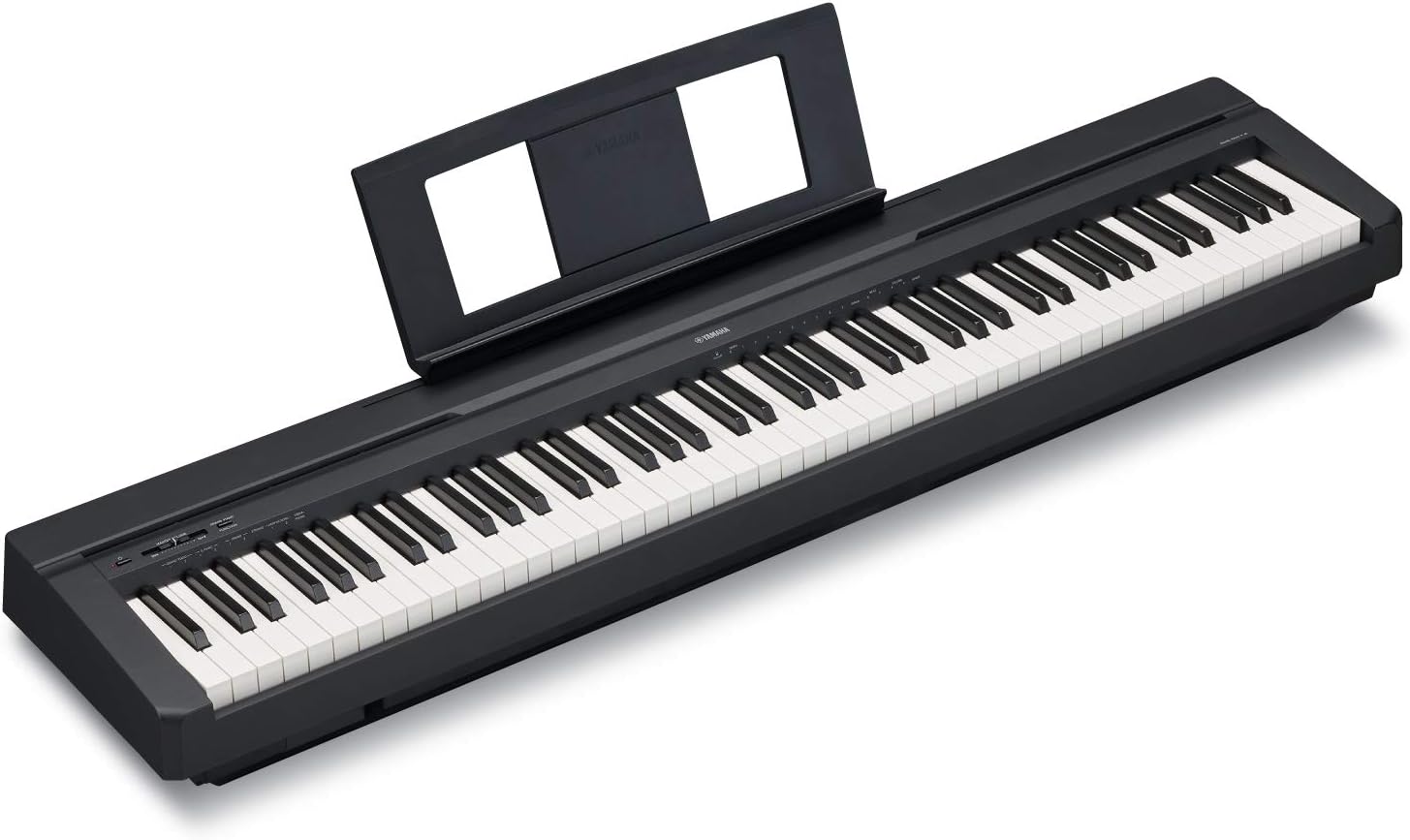 Visit on Amazon → Visit on Amazon →Yamaha YDP105 upright |
Weighted, cabinet | Three pedal unit, bench | One room, daily practice, beginner to intermediate | Check current Amazon price |
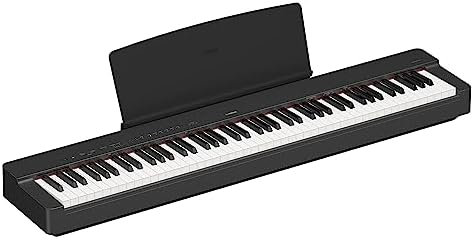
 Visit on Amazon → Visit on Amazon →Yamaha P145BT slab |
Weighted | Music rest, sustain foot switch, Bluetooth | Lessons, travel, small rooms | $469.99 |
 Visit on Amazon → Visit on Amazon →Alesis Recital Pro |
Weighted hammer action | Piano and power supply | Budget hammer action, returning players | $349.00 |
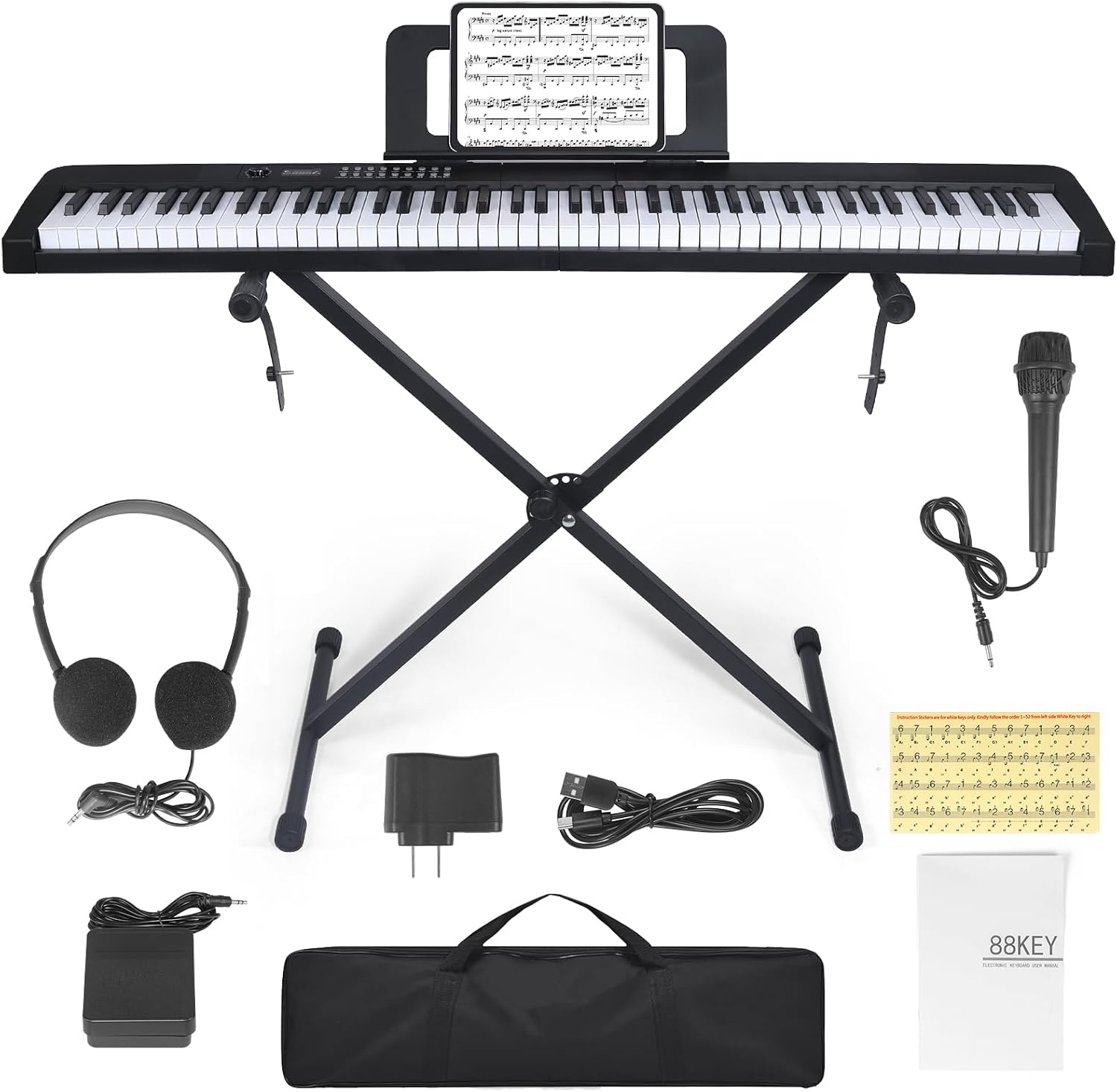 Visit on Amazon → Visit on Amazon →88 Key Piano Keyboard bundle |
Semi weighted | Stand, pedal, case, headphones, power supply | First year of note reading, tight budget | $119.98 |
What actually matters, in order
The action is the piano. Everything else is a feature. A weighted action that lets you control tone with finger speed will teach a student correctly even if the samples are ordinary. A gorgeous sample library behind springy keys will teach them nothing except bad habits they will have to unlearn.
Speakers come second. A great sample through a weak speaker sounds like a great sample through a pillow. This is why cabinets still win for home practice when space allows. There is simply more room for a speaker to move air, and the difference is audible in a way that sample count is not.
Polyphony comes last. It is a marketing number. Nobody plays 256 notes at once. Any instrument in this guide has enough polyphony for real repertoire, and if a listing leads with that figure, it is because there is nothing better to lead with.
And then there are the accessories, which are almost always the weak point. The pedal that ships in the box slides. The bench that ships in the box is the wrong height for somebody. Set aside money for a stable pedal unit and a proper bench before you spend it on a bigger sample library.
Should you buy the Yamaha YDP105?
Yes, if the piano has a permanent home. The weighted action, the three pedal unit, and the upright cabinet put a beginner in the same sitting and foot position they will meet on an acoustic piano, and the included bench at least gets you started. It is the instrument I would choose for a family that wants one purchase to last through the intermediate years.
Should you buy the Yamaha P145BT?
Yes, for anyone whose life involves moving. Weighted keys in a compact slab with built in speakers, a music rest, and Bluetooth for play along tracks. Buy a stable pedal to replace the foot switch in the box, and treat the wireless connection as a bonus rather than a feature you depend on.
Should you buy the Alesis Recital Pro?
It is the cheapest way into a hammer action here, and for a returning adult player on a stand in a corner of a room, that is enough. Buy it somewhere with a return window, play it daily for a week, and check every key against its neighbors. At this tier you are buying consistency, and consistency is what you should verify.
Should you buy the 88 Key Piano Keyboard bundle?
For a ten year old in an apartment, with a parent who wants everything in one box, yes. Stand, pedal, case, headphones, and a power supply means practice can start the day it arrives. Just go in knowing the semi weighted keys are a first step, not a destination, and that the next instrument is already in the plan.