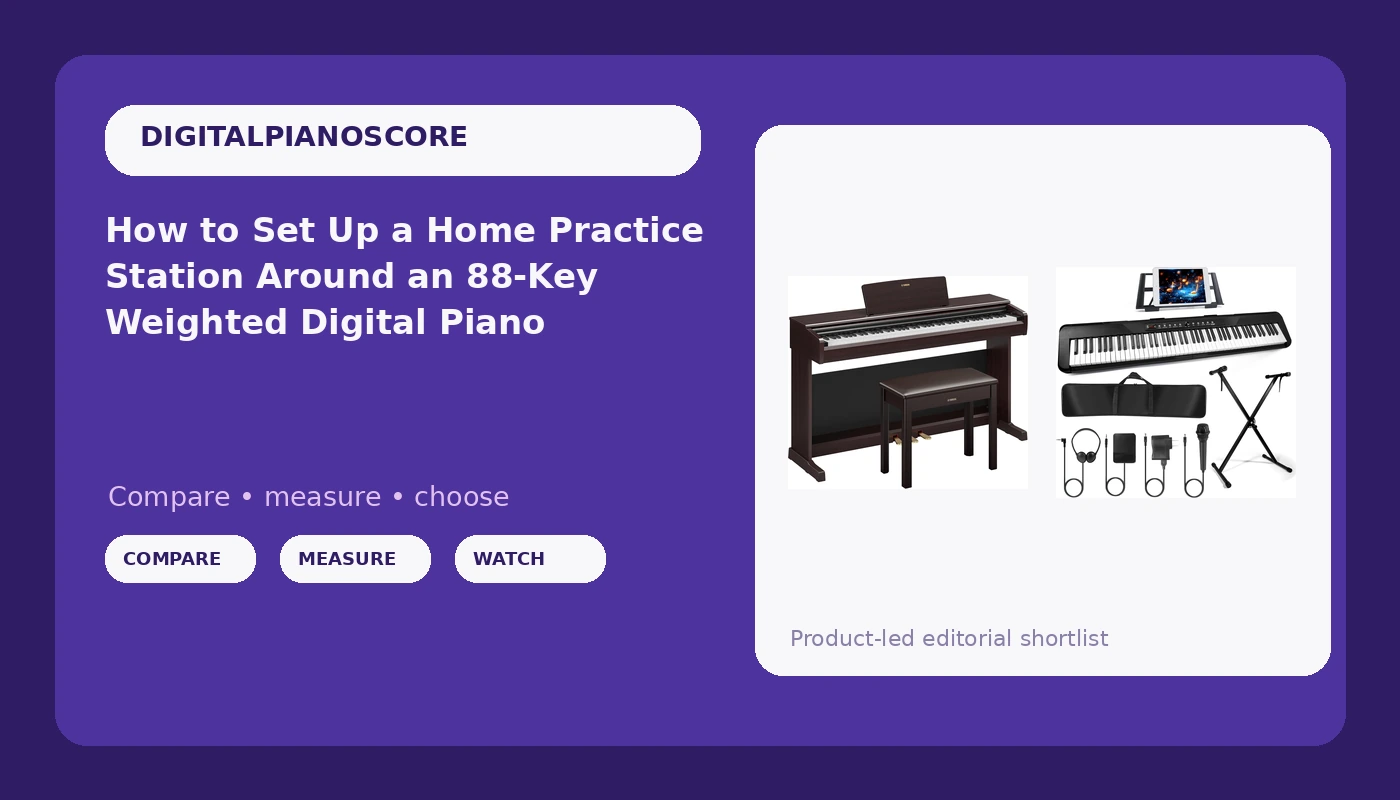
Most people do not need a better digital piano. They need a better setup around the one they already own. I have watched a student practice on a perfectly good 88-key weighted digital piano and still quit in March, because the bench sat too high, the sustain pedal skated across a hardwood floor, and the headphones lived in a drawer three rooms away. The instrument was never the problem. The station was.
This is the setup order I use with my own students, and it works the same whether you are unboxing a cabinet instrument with a real three-pedal unit or a folding slab that arrives in one box with a stand, a pedal, and a carrying case. It takes one afternoon. It saves about a year of bad habits.
Why you should trust me
I have taught piano in Seattle for 25 years and I run a home studio where I teach 30 students a week and record session work in between lessons. Over that career I have owned 12 digital pianos, from a $200 Casio to a $6,000 slab, and I have helped more transfer students than I can count unlearn a summer of sloppy technique caused by an instrument that fought them.
My test routine has not changed in a decade. Every instrument that comes through my studio gets the same Bach prelude, the same Chopin nocturne, and the same blues improvisation. I keep a scale for action weight and a dB meter for speaker output. What I care about is repetition speed, control at low dynamics, and whether the thing makes a student want to sit down again tomorrow.
What "setting up" actually means
Setup is not assembly. Assembly is putting the stand together and plugging in the power supply. Setup is the five decisions that determine whether you practice for twenty minutes or ninety.
The first is the action. The action is the piano. Everything else, the sample library, the Bluetooth, the app, the number of voices, is a feature. A weighted action that lets you control tone with finger speed is what separates an instrument from a toy, and you can feel the difference in the first bar of a scale.
The second is position. Where the instrument sits in the room, how high the bench is, and how far you sit from the keys change your hand position more than any exercise will.
The third is the pedal. A sustain pedal that slides away from your foot mid-phrase is worse than no pedal, because it trains you to chase it.
The fourth is the headphone path. If getting headphones on takes more than ten seconds, you will play loud at night instead, or not at all.
The fifth is the routine you attach to the instrument. A digital piano is a practice tool first. If the station does not make practice easy, the station failed, no matter what the box claimed about grand piano sound.
The two instruments I would build a station around
I keep two recommendations for families, and they sit at opposite ends of the price curve. One is for the student who is in this for years. The other is for the beginner adult or the parent who needs to know whether the interest is real before spending cabinet money.
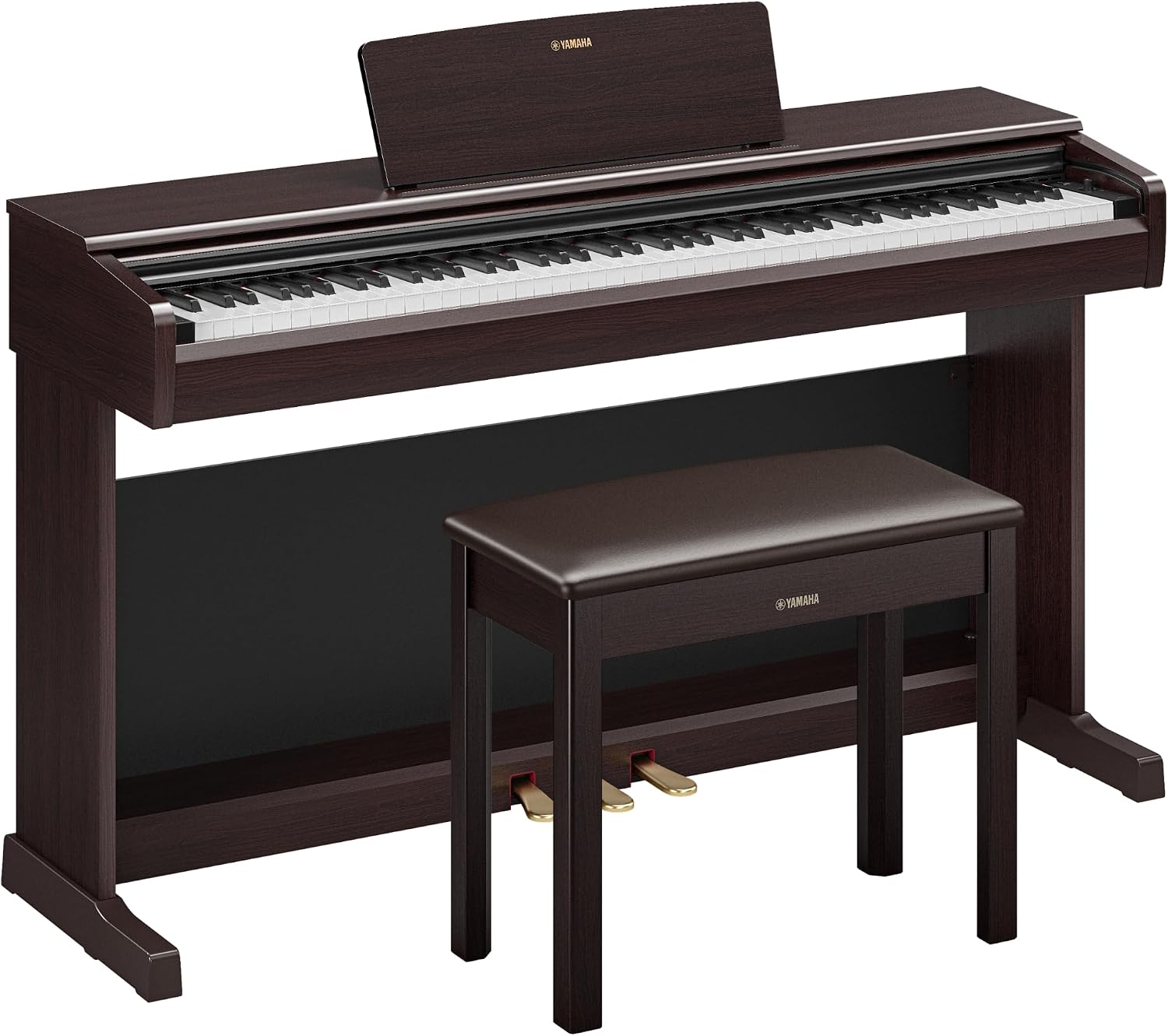
The long-term pick: Yamaha Arius Series 88-Key Weighted Digital Piano Keyboard for Beginners, Full Size, Grand Piano Sound, 3-Pedal Unit, Bench Included, Classic Upright Design in Rosewood, YDP-146R
 Visit on Amazon →
This is the one I point parents toward when the student has made it past the first year and the question has shifted from "will they stick with it" to "what will they still be playing in five years." It is a full 88-key weighted instrument in an upright cabinet, and it arrives with the three-pedal unit and a bench in the box, which removes two separate purchases from your list and removes two chances to buy the wrong thing.
The cabinet format matters more than people expect. A fixed three-pedal unit means the damper pedal is always exactly where your right foot expects it, at the same angle, at the same height. On a slab with a loose pedal on the floor, that never happens. The rosewood upright design also means the instrument reads as furniture, which sounds like a vanity point until you are the parent deciding whether a piano gets to live in the living room or gets exiled to a bedroom corner where nobody walks past it.
The name says grand piano sound. Treat that as a description of the sample, not a promise about the room. Sample quality has plateaued across the industry, and what you actually hear at the bench is speaker voicing, not sample size. Sit at it in a carpeted room and a bare room before you decide where it lives.
Worth knowing before you buy: Cabinets are heavy, and they are furniture you pay for. Moving day is a real cost with this format. Also, my standing rule for any instrument that ships a bench in the box is to sit on that bench before you commit to it as your long-term seating. Measure your elbow height at the keys, not your comfort on the first day.
Anyone with a dedicated spot in the house and a student who has already proven they practice will get a decade out of this instrument.
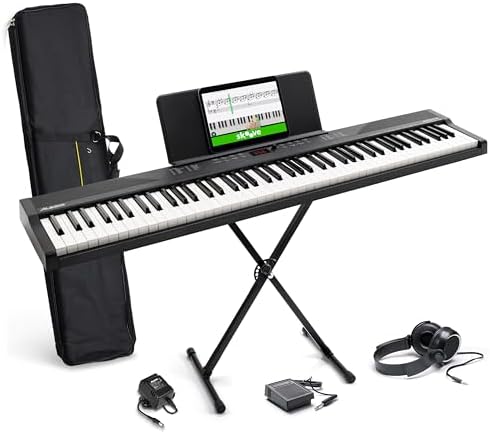
The budget starter: 88 Key Piano Keyboard, Electric Digital Piano with Semi Weighted Keys, Keyboard Piano with Sustain Pedal, Power Supply, Stand, Carrying Case, Headphones, USB-MIDI Compatibility, for Beginner Adults
 Visit on Amazon →
This is the other end of the curve, and I want to be honest about what it is. The keys are semi weighted, not graded hammer. Semi weighted is a spectrum, and it is not the same feel as a cabinet action. If you are a transfer student working on Chopin, this is not your instrument.
But for a beginner adult in an apartment, or a parent testing whether a ten-year-old actually wants to practice, it solves the exact problems that kill beginners. It is a full 88 keys, so you never run out of range in the middle of a piece. It arrives with the stand, the power supply, the sustain pedal, a carrying case, headphones, and USB-MIDI compatibility, which means the total cost of getting started is one purchase instead of six. The carrying case and headphone bundle matter more than the marketing suggests: a piano you can move to a friend's house or a lesson is a piano that gets played.
Two things to plan for. The sustain pedal in a bundle like this is a simple switch pedal, and switch pedals slide. Put a rubber-backed rug under it or a pedal stopper on it the day it arrives, not the week you notice. And budget for a better bench early, because a folding stand with a kitchen chair is the fastest way to build tension in your forearms.
Anyone in a rental, a dorm, or a small apartment who needs a real 88-key layout and a low entry price should start here.
The setup workflow, step by step
Now the part you came for. Do these in order, because each one changes the next.
Step one: choose the wall. Put the instrument on an interior wall, away from heating vents, radiators, and direct afternoon sun. Avoid a spot where the back of the piano faces a glass door. In a small room, angle the instrument slightly off the wall rather than pushing it flat, so the sound does not fire straight into drywall.
Step two: set the bench height. Sit at the keys and let your arms hang. Your forearms should be level with the keys or angled very slightly down toward them. If your wrists bend upward to reach the keys, the bench is too low. If your shoulders rise, it is too high. Sit toward the front half of the bench, feet flat, right foot ready to move to the pedal.
Step three: set your distance. Sit so your arms are nearly straight when your hands rest on the keys, elbows just in front of your torso. Closer than that and you play with bent wrists. Farther and you lean forward all evening.
Step four: anchor the pedal. Find where your right heel naturally lands with the ball of your foot on the pedal, and put the pedal there. Then keep it there. A pedal that moves is a pedal you cannot use musically. If you are on the slab, a small non-slip mat or a pedal stopper fixes this for a few dollars.
Step five: solve the headphone path. Plug the headphones in and check where the jack is. If it is on the back of the unit, leave the cable permanently plugged in and route it to a hook on the side of the stand or the cabinet, so the headphones hang within reach of the bench. Never leave the cable draped across the keys.
Step six: check stand stability. Push the instrument gently from the side. If the stand wobbles, fix it now. Every wobble you feel while playing gets absorbed into your hands as tension, and students blame their technique for it. A cabinet has no wobble. A slab needs a stable stand, not the flimsiest X-stand in the house.
Step seven: connect and test MIDI. If you are using the USB-MIDI connection for a practice app, a metronome, or notation software, set it up now and confirm the computer sees the instrument before you build a routine around it. Do this once, at the start, while you are still motivated by a new purchase.
Step eight: attach a routine. This is the step everyone skips. I give my students a fixed twenty-minute shape: five minutes of warm-up and scales, five minutes of technical work, ten minutes on the current piece. Same shape every day, whether or not the practice goes well. Use the instrument's volume control so that your soft playing is genuinely soft, not just quieter than your loud playing. If you flatten the dynamics by keeping the volume at maximum, you lose the main reason to have weighted keys at all.
Mistakes I see in every transfer student
The most common one is buying a 61-key keyboard, then upgrading eight months later. If you are going to practice, get 88 keys now.
The second is positioning the instrument so it faces a wall in a corner. The player stares at drywall, the sound goes into the wall, and the instrument becomes invisible to the rest of the household. Nobody walks past it, so nobody sits down at it.
The third is treating the bench and the pedal as afterthoughts. They are not accessories. They are the two contact points between your body and the instrument, and they decide how long you can practice before your forearms complain.
The fourth is practicing pieces only, with no technical work. Twenty minutes with five minutes of scales beats forty minutes of stumbling through the same eight bars.
The fifth is Bluetooth that drops mid-lesson. If you use a wireless connection for an app, keep a cable on hand. I have watched a lesson stop dead because the page turner lost its pairing.
What this all costs
The two instruments here sit at very different points on the curve, and both are single purchases that end the shopping. For each one, check current Amazon price on the product page above, because prices on instruments move with stock and season more than people expect.
The starter package includes the stand, pedal, power supply, carrying case, and headphones, so your only likely follow-up buys are a better bench, a non-slip pedal solution, and possibly a sustain pedal upgrade. Call it a small additional spend, spread over the first year.
The cabinet instrument includes the three-pedal unit and a bench, so the follow-up list is shorter, but the instrument itself is the bigger commitment. The honest framing is that the cabinet costs several times what the starter costs and gives you an action and a fixed pedal unit you will not outgrow. Over five years of daily practice, both work out to a few cents a day, and the cabinet works out to less per year of playing than most people spend on coffee.
The math is the easy part. The afternoon you spend setting the bench height, anchoring the pedal, and hanging the headphones is what turns a purchase into a practice station. Do it once, and you will not think about it again until you move.
That is the job. The instrument was built for this. Let it.