Related: Best Digital Pianos for Small Apartments
Every September the same email lands in my inbox: my ten-year-old is starting lessons, what do I buy? I have taught piano in Seattle for 25 years and owned twelve digital pianos, from a plastic slab to a heavy cabinet. My answer has not changed in a decade. Buy an 88-key digital piano for beginners, buy it somewhere with a real return window, and spend what is left on a bench you can raise.
Here is what parents get wrong. They shop for sound. Sound is easy now. The samples in a budget slab are perfectly decent, and nobody in the room can hear the difference once the speakers are involved. What no listing can tell you is how the keys feel at nine at night, on the fourth repetition of the same two bars, when the student is tired and the action is fighting back.
So this guide is about the parts you can actually evaluate before you click buy: action type, what ships in the box, where the headphone jack lives, and whether the thing survives three years of being pushed under a bed next to a radiator. There are four products in front of me here, two instruments and two covers, and I will tell you plainly which ones earn a place in a beginner's room.
The complete setup: AODSK Weighted Keyboard 88-Key Digital Piano
The listing calls this a weighted 88-key digital piano with speakers, a stand, and pedals. Read that twice, because the combination is the whole argument. A bare slab leaves a family shopping for three more things the same afternoon, and the stand they grab is usually the wrong height. Here the speakers, the stand, and the pedals arrive in one box, and the instrument is playable the day it lands.
Weighted is the word I care about. A weighted action resists the finger, and that resistance is what builds the small muscles that make scales even and trills clean. It is also harder on day one, and that is the honest tradeoff. What I would check in the first week is repetition. Play the same note twenty times at a moderate tempo and listen for the ones that do not sound. Cheap weighted actions drop notes when you play fast, and no spec sheet will ever tell you that.
Two more checks. Assemble the stand and push it sideways, because a wobbly stand teaches bad posture faster than any bad habit. Then put the sustain pedal on a hard floor and play for five minutes. If it walks away mid-phrase, tape it down or replace it. The pedal that ships in the box is the weakest part of almost every bundle at this level, and it is also the cheapest part to fix.
The first instrument for a ten-year-old: Semi Weighted 88-Key Bundle
This one is honest about what it is. Semi weighted keys, not graded hammer. A spring under each key, lighter than an acoustic, faster to press. For a nine or ten-year-old in the first year, that is not a flaw, it is a kindness. Small hands tire on a heavy action, and a child who cannot get through eight bars without aching will quit long before technique matters.
The bundle backs that up. Music stand, power supply, sustain pedal, stand, carrying case, headphones, USB-MIDI, and Bluetooth, plus beginner lesson material. Everything a first-year student needs shows up together, including the headphones, which matter more than most parents expect. A beginner practicing at seven in the evening needs to not be heard.
Where it stops working is year two. Once a student is playing real repertoire, a semi weighted action stops rewarding finger control and starts hiding the lack of it. Dynamics get harder to shape, and the fingers never learn to carry weight. I have taken transfer students after two years on a spring action, and the first month is spent rebuilding touch from scratch. If your child is already reading music and playing hands together, skip this tier and go weighted.
USB-MIDI and Bluetooth are genuinely useful, and I will say so even though I am suspicious of feature lists. USB-MIDI lets the instrument drive a teaching app on a laptop. Bluetooth is convenient for playing along with a backing track, and it is also the first thing to drop mid-lesson. Use a cable when it matters.
The two covers, and which one to pick
A slab collects dust in the keybed. Dust in the keybed turns into gritty keys, and gritty keys turn into a technician's bill. A cover is the cheapest insurance in this hobby, and both of these are cut for the Casio Privia PX-S1100 from 2021 to present.
Heavy Duty 210D Oxford Cover with Adjustable Bottom Drawstring
210D Oxford is a woven fabric with a waterproof backing, which is the right material for this job. It breathes less than cotton, sheds dust, and wipes clean. The adjustable drawstring hem is the part I would insist on. A cover without one slides off the moment a cat investigates, and a cover on the floor is collecting exactly the dust you were trying to keep out of the keybed.
210D Oxford Cover with Silver Coating and Storage Bag
Same 210D Oxford shell, with a silver coating that reflects light and heat, and a storage bag. The coating matters if the piano sits near a window, which is where most home slabs end up because that is where the outlet is. The storage bag sounds trivial until you own a cover without one. Then you own a crumpled heap of fabric that lives on the floor.
Neither of these is a case. They are dust covers. If the piano travels in a car, you need a padded gig bag, and these will not do that job.
How I judge an 88-key instrument
I have run the same routine for 25 years. A Bach prelude for evenness across the keybed, a Chopin nocturne for pedal and dynamic control, and a blues improvisation for repetition speed. I bring a dB meter to hear what the speakers actually put out at playing distance, and a small scale to measure how much weight it takes to sound a note. Then I sit there for an hour. That last part is the real test. Does the instrument make me want to keep playing, or does it make me check the time?
This is the routine I would run in the first week on any of these, while the return window is still open.
What the spec sheet will not tell you
Polyphony numbers are marketing. Nobody plays 256 notes at once. Speaker voicing matters more than sample library size, and a great sample through a thin speaker sounds like a great sample through a pillow. Claims of concert grand sound from small drivers are marketing too, and you can hear the truth in the first chord.
The things that actually separate instruments are consistency, repetition speed, and layout. Does every key in the middle two octaves feel the same? Does a fast repeated note sound every time? Is the headphone jack on the front, where you can reach it in the dark, or on the back, where you will be groping for it every evening? Yamaha and Kawai still own the top action tier. The budget brands are closing the gap on sound much faster than on action consistency, and consistency is what a student feels at minute forty of practice.
The 88-key reference table
This is the table I would keep on the wall while shopping. Action and what ships in the box are the two columns that decide the purchase.
| Product | Role in the setup | Action | What ships with it | Price |
|---|---|---|---|---|
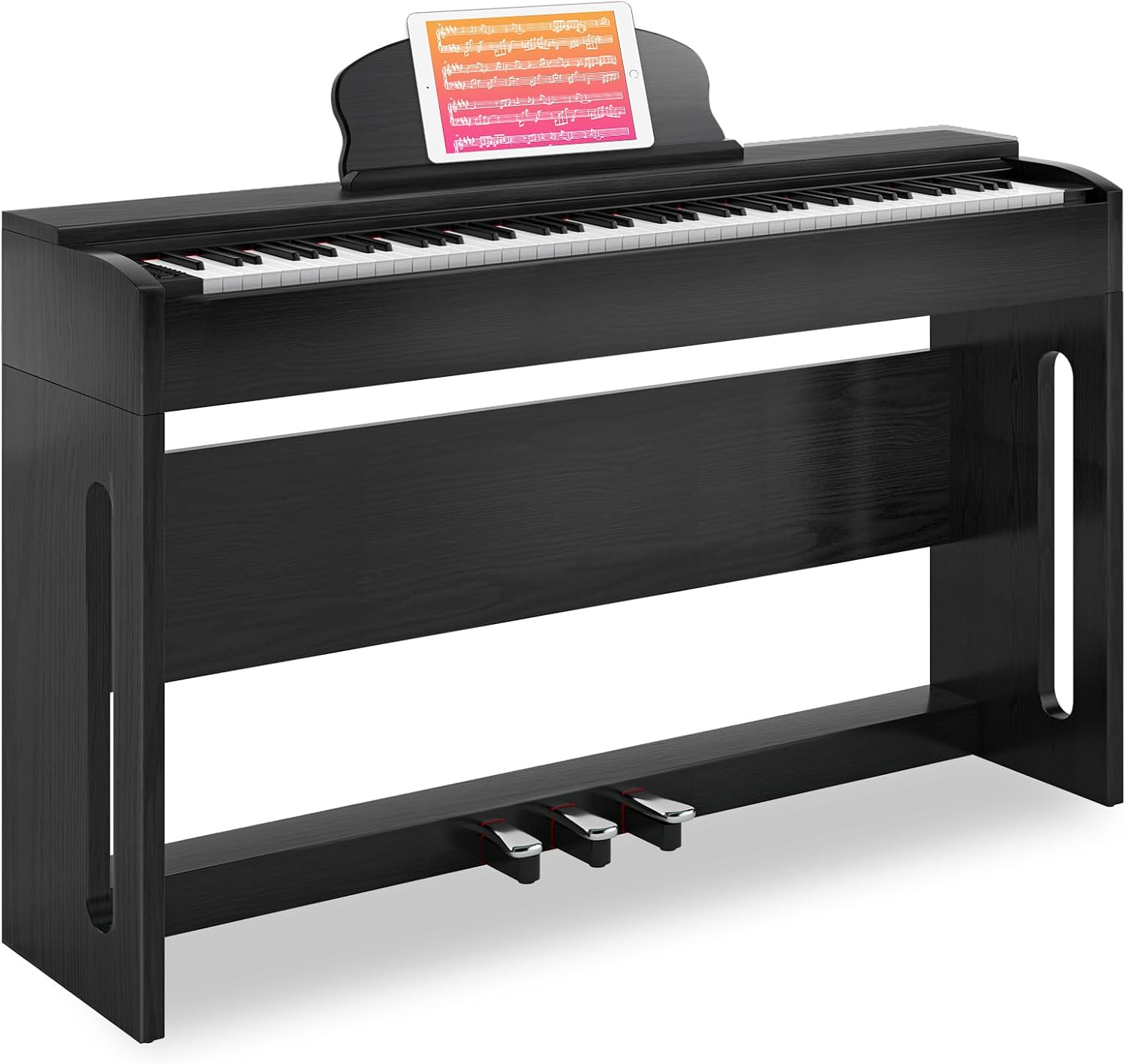 Visit on Amazon → Visit on Amazon →AODSK Weighted keyboard 88-Key Digital Piano |
Main instrument | Weighted | Speakers, stand, pedals | Check current Amazon price |
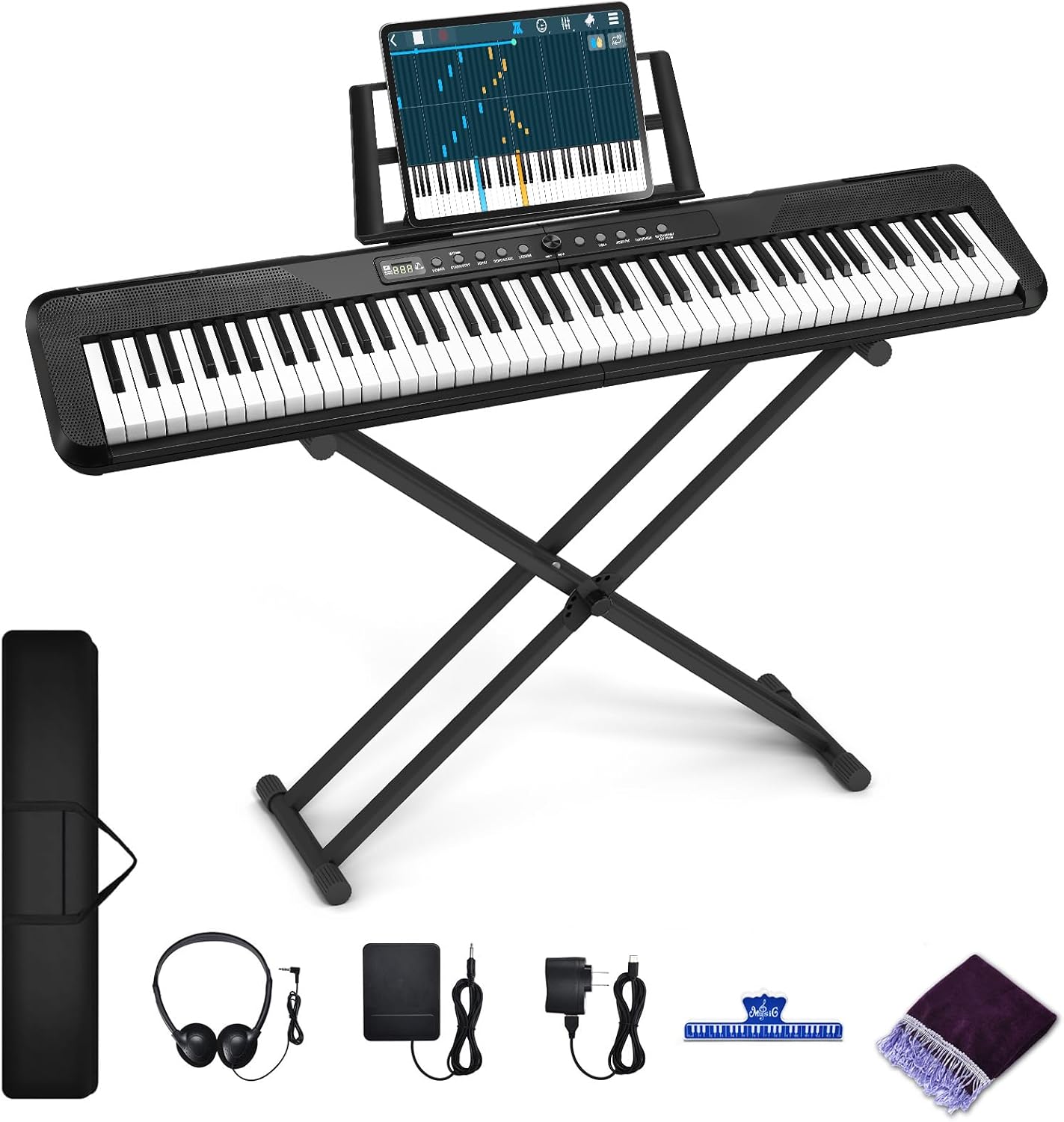 Visit on Amazon → Visit on Amazon →Semi Weighted 88-Key Digital Piano bundle |
First instrument | Semi weighted | Music stand, power supply, sustain pedal, stand, carrying case, headphones, Bluetooth, USB-MIDI, lessons | $119.99 |
 Visit on Amazon → Visit on Amazon →Heavy Duty 210D Oxford Cover for PX-S1100 |
Protection | Not applicable | Cover only | $39.99 |
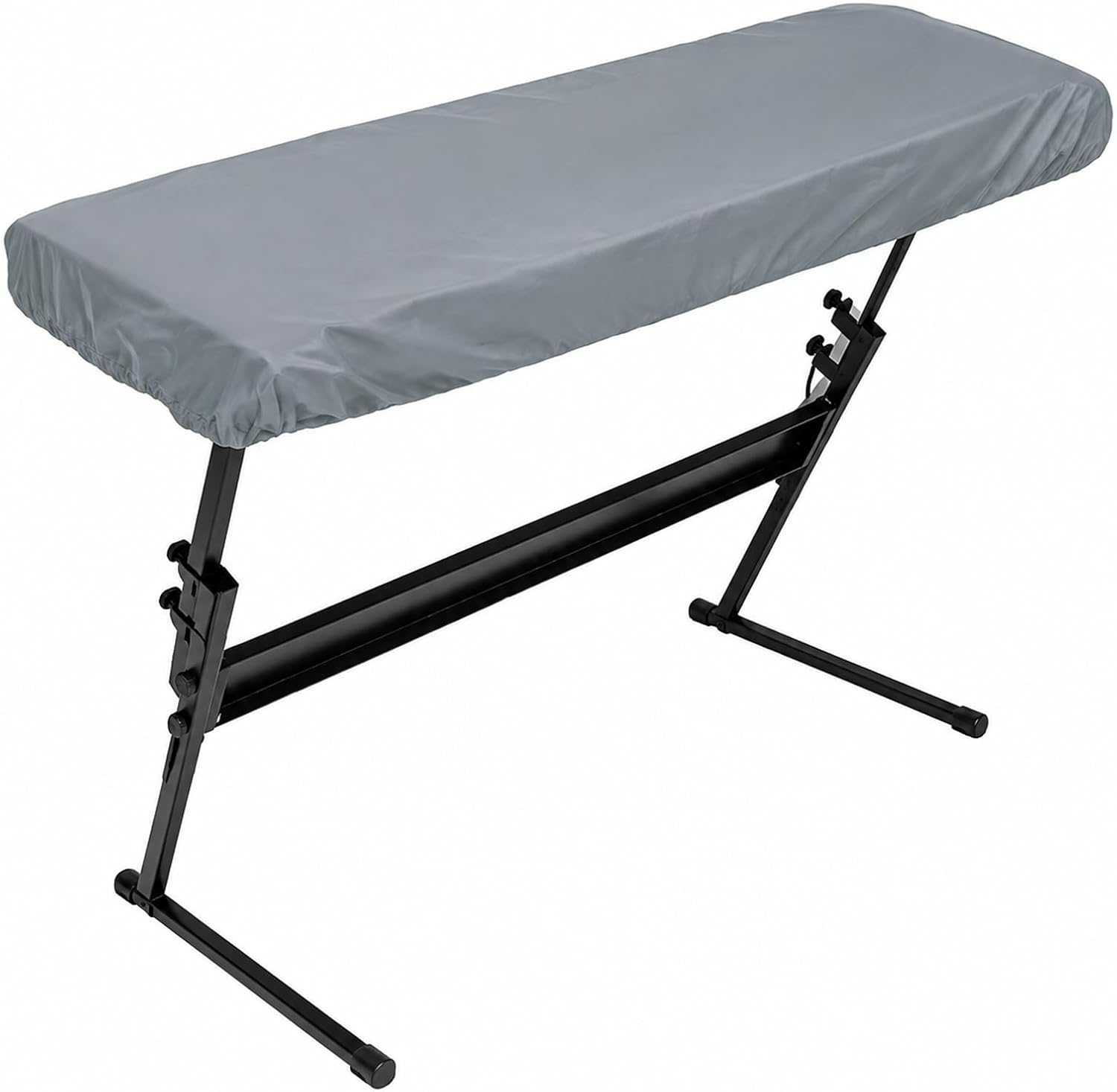 Visit on Amazon → Visit on Amazon →Silver Coated 210D Oxford Cover with Storage Bag |
Protection | Not applicable | Cover, storage bag | $39.99 |
Should you buy the AODSK weighted keyboard?
Yes, if you want one box and no follow-up shopping. Speakers, stand, and pedals together mean the piano is playable the evening it arrives, and a weighted action is the right long-term choice for anyone past the first six months. Check the stand for wobble, budget for a better pedal eventually, and test repetition speed in the first week while you can still return it.
Should you buy the semi weighted bundle?
Yes for a young beginner, and only for a young beginner. The headphones alone justify the bundle for a family in an apartment, and a light action keeps a nine-year-old playing instead of complaining. If the student is already playing hands together, this is the wrong tier. Go weighted and accept the harder first month.
Should you buy one of the covers?
Yes, and pick by where the piano lives. If it sits near a window, take the silver coated cover with the storage bag, because reflected heat is a real thing and the bag keeps the cover off the floor. If the piano lives in a shaded corner, the heavy duty cover with the drawstring hem does the same job. Either way, it is the least expensive thing you will buy for this instrument, and the one that keeps dust out of the keybed.