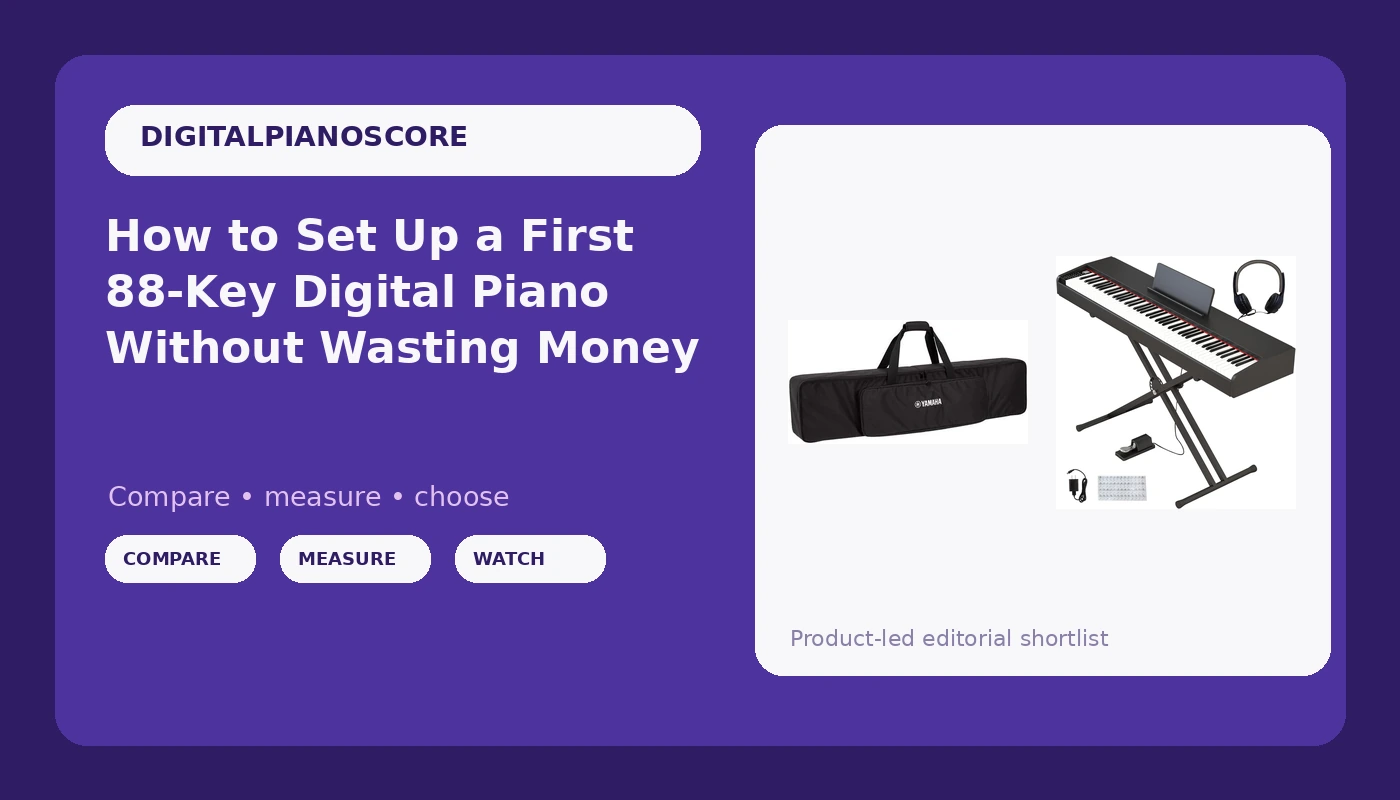
Most beginners do not quit piano because they lack talent. They quit because the instrument in the corner does not behave like a piano. The keys are too light, the sound comes out of a three-inch speaker, and by week four the whole thing feels like a toy that happens to be shaped like a keyboard.
I am Yuki. I have taught piano in Seattle for 25 years, I run a home studio where I teach 30 students a week and record session work between lessons, and I have owned 12 digital pianos in that time, from a slab I bought in grad school for less than a month of groceries to a cabinet model I eventually sold because it was furniture with a keyboard glued on.
What follows is the 88-key digital piano setup I hand to the parents of every transfer student who shows up in September. It is not a shopping guide for a concert-grade instrument. It is the how-to for getting a first piano into a small room and keeping it playable through the two years when a beginner either builds a habit or walks away.
Why you should trust me
I have spent 25 years listening to beginners play. That is a different skill from listening to a recital, and it is the one that matters here. When a transfer student sits down at my grand and their fingers collapse on the first phrase of a Bach prelude, I can usually tell within eight bars whether the problem is their hand position or the action they have been practicing on at home.
Every instrument I evaluate gets the same routine: the same Bach prelude, the same Chopin nocturne, the same blues improvisation in F. I keep a kitchen scale for action weight at middle C, a dB meter for how loud a piano actually gets before the speakers start to complain, and a notebook of dated notes going back to 2011. My students' summer regressions are the other half of the data. I see exactly what happens to a kid who spends July and August on a keyboard with no weight in the keys, and I see how long it takes to undo.
How I picked and how I tested
The gear below is not a list of the best digital pianos on the market. It is the two pieces I tell families to buy first: the instrument a beginner can actually afford, and the bag that keeps that instrument alive through lessons, moves, and the back seat of a car.
For the instrument, I ran my three-piece routine and checked the things a student feels rather than hears. Action weight at middle C. Key repetition speed, which is how fast a key returns so a trill does not choke. Whether the touch response setting could be dialed to something that punishes a lazy finger instead of flattering it.
The numbers I trust: action weight between 55 and 70 grams at middle C is a range a beginner can build real technique on. Below 50 grams the keys are so light that a student never learns to shape a tone with finger speed, which is the entire point of a weighted action. Key repetition under eight strikes per second on a single key is a hard stop for me, because the instrument will fight a student the first time they meet a real trill.
For the case, I looked at padding at the corners, whether the zipper runs past the end of the keys instead of stopping short, and how the thing behaves when you slide it into a trunk with a stand on top of it.
One bias to declare: I do not love semi-weighted actions. I think a serious beginner should stretch for graded hammers if the budget allows. But I have also watched families buy nothing because the right thing cost too much, and nothing is worse than nothing. The instrument below is the honest floor of what I will put a beginner on.
The two pieces to buy before the first lesson
A first piano is not one purchase. It is two. The instrument gets played, and the case keeps the instrument from turning into a repair bill. Here is what I recommend at the entry tier and why.
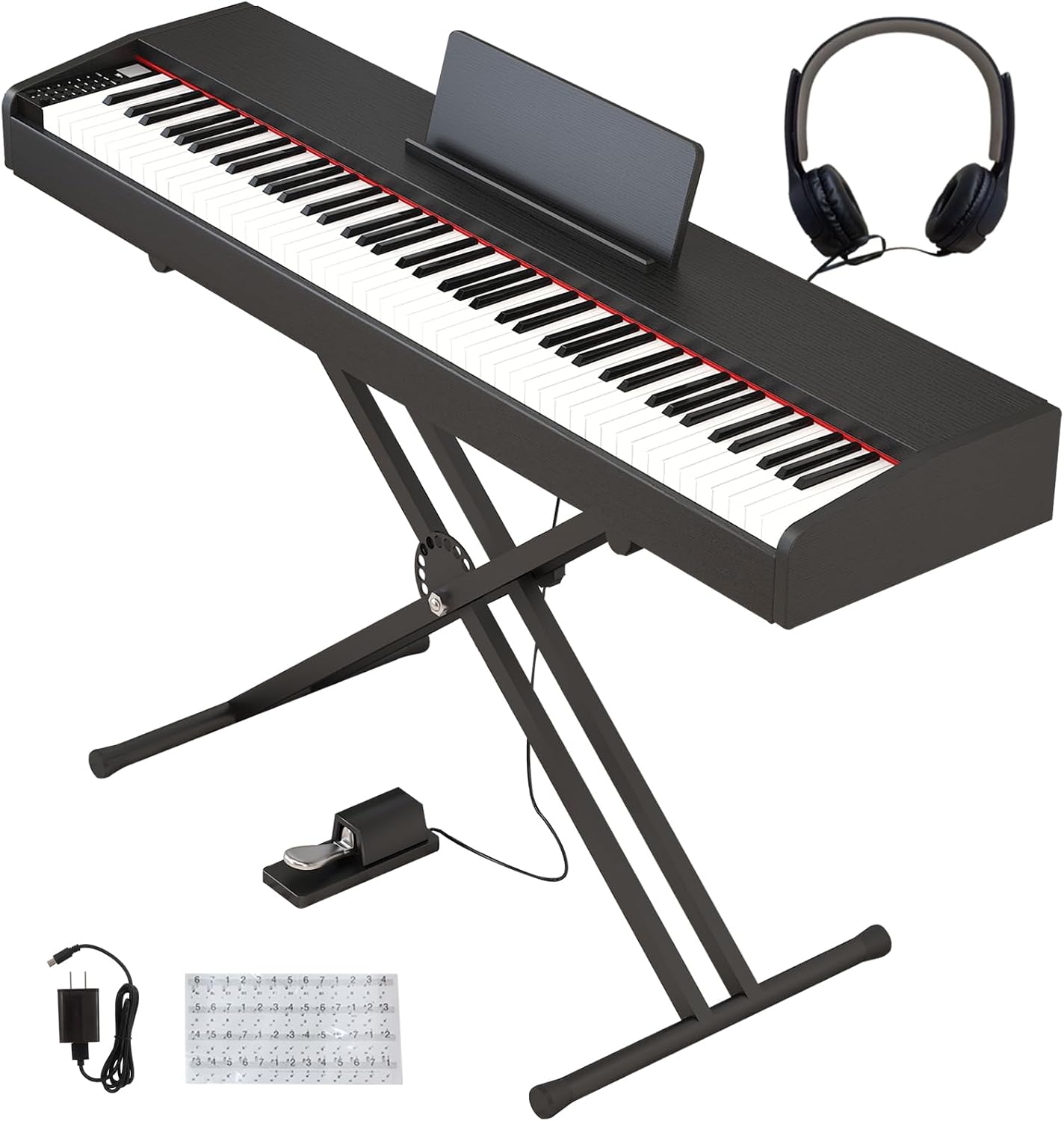
Entry-level pick: Digital Piano 88 key Semi-Weighted Keyboard For Beginner
 Visit on Amazon →
Check current Amazon price. This is the instrument I point families at when the budget is tight and the student is under 12. It has the one feature that actually matters at this price: 88 keys at full width, so a beginner learns the geography of the keyboard correctly from day one. Kids who practice on 61-key boards learn to read music in a range that does not exist on a real piano, and unlearning that takes about a year.
The semi-weighted action is the compromise, and I will not pretend otherwise. It is not a graded hammer action, so it will not teach a student to control tone with finger speed the way a good slab does. What it will do is put a full-size keyboard in front of a child who is still deciding whether they like piano, which is the decision that matters in year one. For a 9-year-old in their first 18 months, it is fine. For a teenager practicing an hour a day who wants to play Chopin, it is not, and I say so to any parent who asks.
Setup notes that apply specifically to this tier: put it on a stand that places the tops of the white keys at roughly elbow height when the student sits with forearms level. Then set the touch response to the middle setting, not the lightest one. The lightest setting flatters a beginner and teaches them to bang.
Flaws but not dealbreakers: The internal speakers are small, so the bottom two octaves sound thin. Headphones fix most of that, and a beginner in an apartment should be practicing with headphones anyway.
Families who need a full-size keyboard for a young beginner, and who are not ready to spend cabinet money, are the right buyers here.
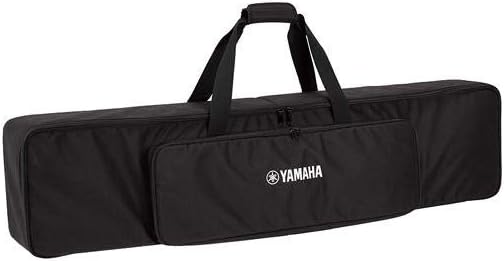
Protection pick: Yamaha Soft Case for 88-Key P-Series Digital Pianos
 Visit on Amazon →
Check current Amazon price. The moment a piano leaves the house it needs a bag, and this is the one I trust for a full-size slab. It is cut for Yamaha's P-series, which means the interior is shaped for a full-length instrument rather than a 61-key board with a foot of empty space rattling around it.
Why this matters for a beginner specifically: a digital piano gets moved to lessons, to a grandparent's house, to a summer camp, and back. Every one of those trips is a chance to crack a circuit board or shear a key. The corner padding and the shape of the interior are what stand between a slab and a repair shop, and a case is almost always cheaper than the first repair.
It also doubles as storage, which is the part people miss. If the piano lives in a small apartment and comes out onto a stand for practice, the case is where the power supply, the pedal, and the music books live when the piano is out. That keeps a beginner from hunting for a power brick ten minutes before a lesson.
Flaws but not dealbreakers: This is a soft case, not a flight case. It handles a car trunk, a closet, and a weekly lesson run. It does not handle an airline baggage hold.
Anyone carrying a full-size slab to a weekly lesson will get their money back out of this within a semester.
The setup workflow: eight steps
Now the part you came for. This works on any 88-key digital piano, at any price, in any room.
Step one: Let it acclimate. If the box arrived cold, leave it closed for a few hours before you open it. Condensation on a circuit board is a real thing, and there is no reason to rush the first ten minutes of a two-year relationship.
Step two: Set the height before you play a note. Sit the student down, let them drop their arms, and raise or lower the stand until the tops of the white keys sit at elbow height with the forearms level or angled slightly down. Most beginners sit too low, and a low bench makes the wrist collapse, which is the root of half the hand-position problems I correct in transfer students.
Step three: Pick the wall carefully. Interior wall, away from radiators, away from windows with direct afternoon sun, and away from heating vents. Heat and sun dry out and warp keybeds over years, and a warped keybed is not a repair most people bother to make.
Step four: Fix the sustain pedal. The pedal that ships in the box slides across a wood floor, and a sliding pedal teaches a student to chase it with their foot instead of using it musically. Put a square of non-slip shelf liner under it, or set a block of wood behind it. This is a two-dollar fix for a problem that ruins phrasing.
Step five: Route the cables once, properly. Power supply, pedal, headphones. If the headphone jack is on the back of the unit, which is a design decision I will never forgive, run an extension cable around to the front so the student is not reaching behind the piano every night. Keep the power brick off the floor and out of foot range.
Step six: Dial the touch response and then leave it alone. Middle setting, or one step heavier for a student with strong hands. Students who fiddle with this weekly never build consistent finger control, because the instrument keeps changing under them.
Step seven: Set the volume where the tone is audible, not just the notes. On small speakers, low notes need a little more room than high ones. Find the level where the student can hear the shape of a phrase, then write that number down on a sticky note so nobody turns it to maximum when company comes over.
Step eight: Build the pack-out routine. This is where the case earns its keep. Keys, pedal, power supply, books, in the same pockets every single time. A student who loses a power supply every month is a student who misses practice days, and missed practice days are how beginners quit.
One more habit to install at setup: 20 minutes daily beats two hours on Sunday, every time. The instrument cannot teach that. You have to.
What to skip
Skip the cabinet. A cabinet is furniture you pay a large premium for, and it makes the piano harder to move and harder to sell. Slabs plus a decent stand win on price and on moving-day practicality.
Skip the "grand piano sound" claims that come out of three-inch speakers. Sample libraries plateaued years ago. What you are hearing between brands is speaker voicing, not the samples, and a great sample through a small speaker sounds like a great sample through a pillow.
Skip the polyphony arms race. Nobody plays 256 notes at once. A beginner plays ten.
Skip the bench and pedal that ship in the box, or at least replace the pedal first. The bench can wait a few months. The sliding pedal cannot.
And skip anything with fewer than 88 keys if classical repertoire is the goal. A 61-key board is a fine second instrument for a kid who wants to write songs. It is the wrong first instrument for a student who wants to play piano.
What this all costs
The instrument sits in the entry tier and the case sits a step above it, which sounds backwards until you run the math. Check current Amazon price on both before you decide anything.
Then divide the price you see by the number of days you expect to keep the instrument. A first piano that lasts a student two years is not an expense, it is a daily rental on a habit. The case is the same math with a shorter clock: one avoided repair pays for it, and the repair it prevents most often is a cracked key from a car trunk.
The thing I tell parents is that the setup is free. The stand height, the pedal fix, the touch response setting, the pack-out routine: none of that costs a cent, and all of it decides whether the instrument in the corner behaves like a piano or like a toy. Do the eight steps the week the box arrives, write the volume number on a sticky note, and let the kid play.
That is the job. The piano is the easy part.