Every September the same email lands in my inbox: my ten-year-old wants to learn piano, what do I buy? Twenty-five years of teaching, thirty students a week, and twelve digital pianos of my own later, the answer has not changed much. For most families, an 88-key weighted digital piano is the right first instrument, and the exact model matters far less than whether the keys push back. The four items below are what I would actually put in front of a beginner this fall: the Casio CDP-S160 that has become my default recommendation for transfer students, two Donner keyboards at very different price points, and one cheap accessory that protects all of them.
Related: Graded Hammer Action Explained For Beginners
If you are buying one thing, buy the Casio CDP-S160. It is the only instrument in this group with a scaled hammer action, and the action is the piano. The Donner 88-key is a fair second choice for a younger beginner on a tighter budget, the 61-key kit plays real notes but teaches keyboard rather than piano, and the dust cover belongs in the cart either way.

Casio CDP-S160
Scaled hammer action across 88 keys, duet mode for teacher and student at one keyboard, USB-MIDI, slim enough to move alone
Thin built-in speakers, and the sustain pedal is a separate purchase
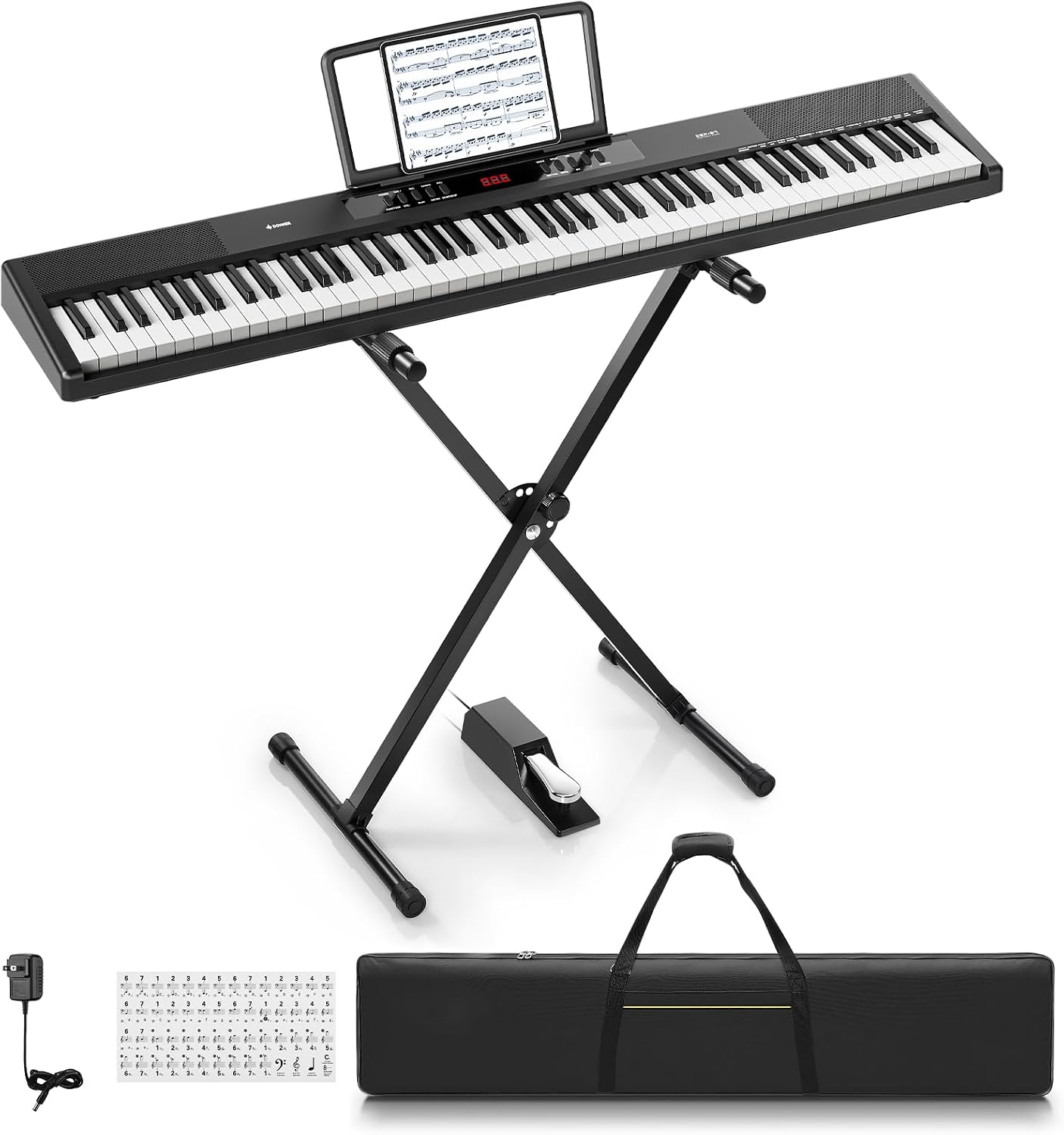
Donner 88 Key Keyboard Piano
88 keys, 500 tones, 128-note polyphony, USB-MIDI, plus bag, X-stand, pedal and music rest in the box
Semi-weighted keys are not a hammer action, and the bundled parts are starter grade
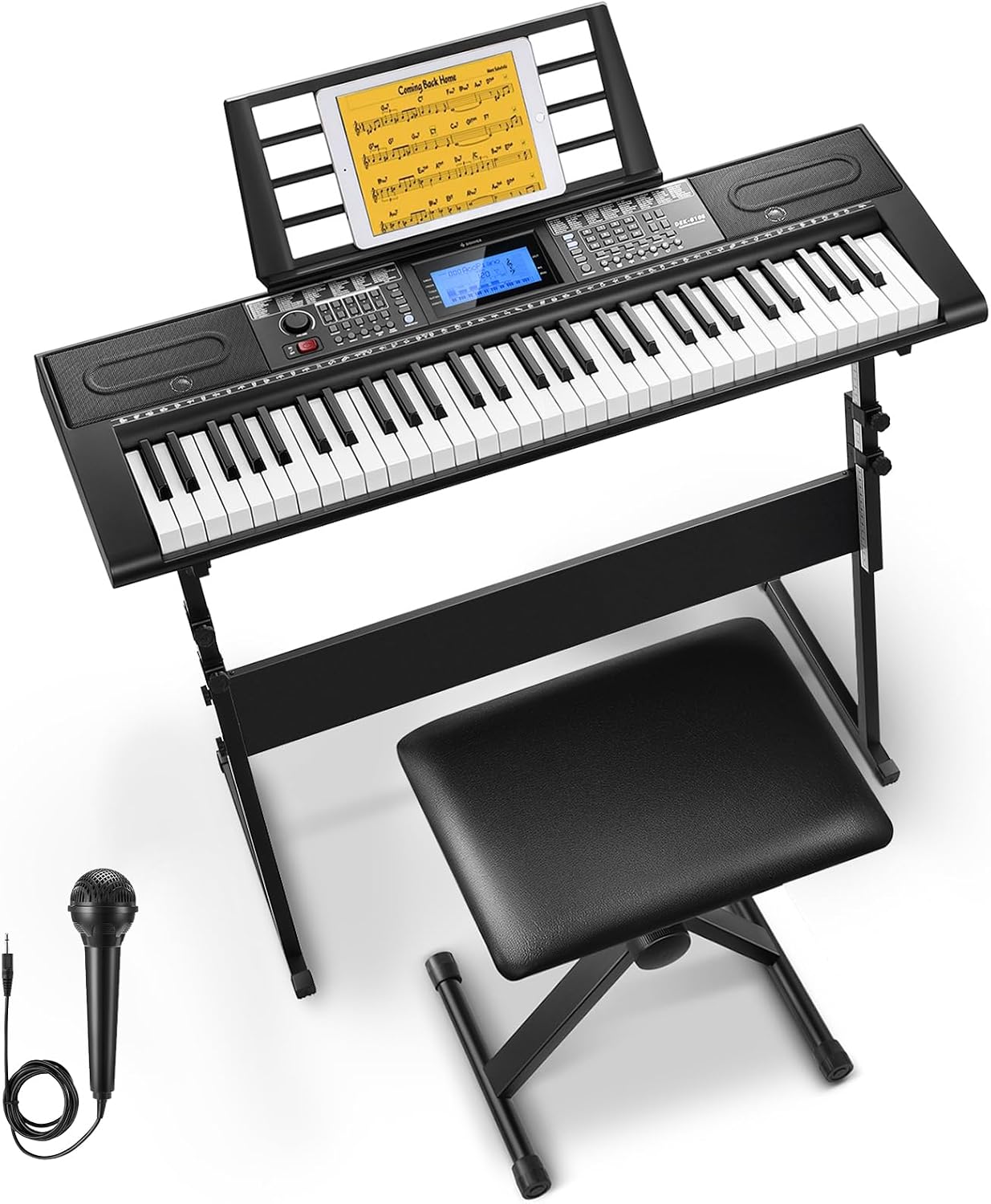
Donner 61 Key Keyboard Piano
A complete first kit with stand, stool and microphone, 249 voices and 249 rhythms
61 unweighted keys, so it is a keyboard, not a practice piano
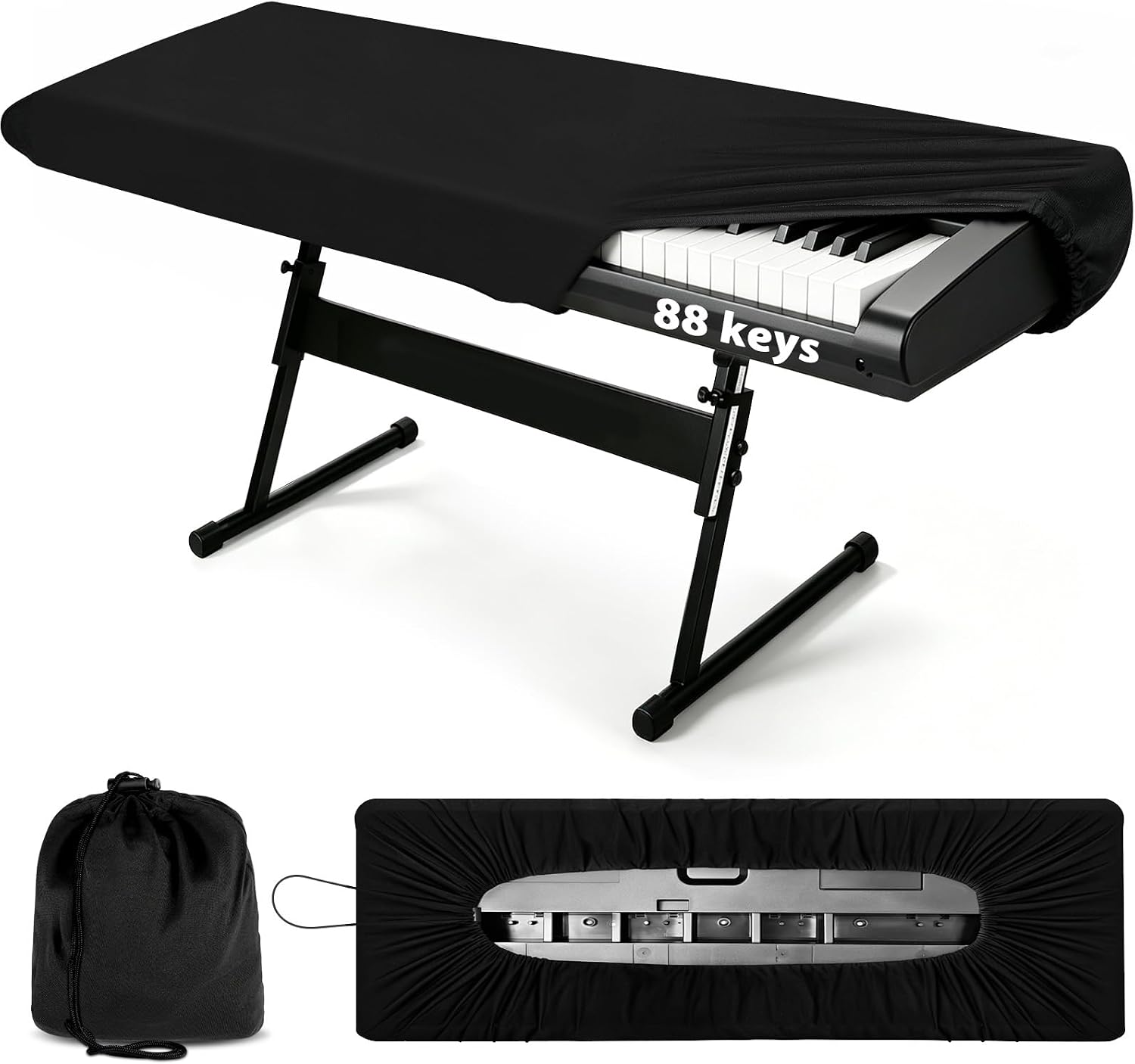
88 Keys Piano Keyboard Dust Cover
Stretch cover with an elastic cord locking clasp, universal fit for most 88-key slabs, keeps dust out of the keybed
Not an instrument, and the fit is approximate on unusually deep cabinets
Prices and availability were captured from Amazon Creators API and may change.
How I judge a beginner instrument
I keep the same routine for anything that comes through my studio. The same Bach prelude, the same Chopin nocturne, and a blues improvisation in the key of F. The Bach tells me whether the action lets me control a slow crescendo through a long line. The Chopin tells me whether repeated notes come back fast enough under the fingers. The blues tells me whether the instrument makes me want to keep playing, which is the only test that predicts whether a student practices.
Three things send an instrument home with a bad review. First, an action that gets louder as I play deeper into a piece, because that means the sensors or the weighting are uneven, and a beginner cannot tell whether the problem is the piano or their hands. Second, a headphone jack on the back of the unit, because a kid practicing at nine at night should not have to reach behind the piano to plug in. Third, a sustain pedal that slides across the floor mid-phrase. All three are cheap to fix in the design stage and annoying forever in the living room.
Notice that none of those tests involve the number of tones, the size of the sample library, or the polyphony figure on the box. A beginner needs one good piano sound, a keyboard that feels like it is doing something under the fingers, and speakers or headphones that do not turn that sound into mush. Everything else is a feature.
Casio CDP-S160: the only real action here
The Casio CDP-S160 is an 88-key digital piano with a scaled hammer action, which means the keys are weighted to feel heavier at the bottom of the range and lighter at the top, the way an acoustic piano's hammers behave. That is not a marketing phrase. It is the difference between an instrument a student can build technique on and an instrument that will teach them to bang.
The feature I use most in lessons is duet mode. It splits the keyboard into two equal ranges so the teacher sits on the left and the student on the right, both playing in the same octave. If you have ever tried to lean over a beginner's shoulder to demonstrate a passage, you know why this matters. It is the single most useful thing a digital piano can do for a family taking lessons, and it is the reason I keep recommending this one to transfer students who show up after a summer on a keyboard.
USB-MIDI is here, so it doubles as a controller if your student ever wants to record, and there are built-in tones and effects beyond the main piano sound. The body is slim and light enough that one adult can carry it up a flight of stairs without a second person, which matters more than anyone admits before moving day.
The honest criticisms are about everything around the action. The built-in speakers are small, and small speakers are the reason a good piano sample can sound like a piano heard through a pillow. Plan on headphones for daily practice. The sustain pedal that ships in the box is not the pedal you want, and a proper one is a small extra purchase that changes how the instrument plays. The action is the part worth the money here, and Casio clearly spent the budget there.
Donner 88 Key Keyboard Piano: 88 keys, semi-weighted action
This is the bundle that shows up in every beginner search, and the spec sheet is genuinely generous: 88 keys, 500 tones, 128-note polyphony, USB-MIDI, built-in speakers, plus a carry bag, an X-stand, a pedal, and a music rest in the box. If you are assembling a first setup on a tight budget and you want everything to arrive at once, that is a real convenience.
The catch is in two words: semi-weighted. Semi-weighted keys are spring-loaded, with a bit of resistance added to feel less toy-like than a synthesizer key. They are not hammers. They do not have the graded weight of an acoustic action, and they do not give a student the resistance that builds finger independence. For a seven-year-old who is testing whether they like music at all, that is a fair trade. For a ten-year-old who wants to play Chopin in three years, it is a dead end, and you will be buying a second instrument.
On the rest of the package: 128-note polyphony is more than enough, and the 500 tones are mostly there to sell the box. Nobody learns piano on tone 412. The X-stand is usable, the carry bag is the sleeper feature if the piano lives in a closet between lessons, and the pedal is the part I would replace first, because a sliding pedal is worse than no pedal at all. The music rest is fine.
My verdict on this one is that it is a good keyboard and an okay piano. If the budget cannot stretch to the Casio, buy it, but go in knowing what you are buying and plan to upgrade if the student sticks.
Donner 61 Key Keyboard Piano: honest talk about 61 keys
I do not usually review keyboards at all. My rule for the last decade has been 88 weighted keys or nothing, because anything less is a different instrument. I am making an exception because this kit is what a lot of grandparents buy, and because someone should say plainly what it is and is not.
Sixty-one keys is five octaves. Beginner method books fit inside that range for about a year. After that, repertoire starts running off the top and bottom, and a student has to transpose or skip notes to practice. The keys are unweighted, so the instrument responds to the lightest touch. A student who practices on this and then sits down at a real piano will feel like they are pushing through wet sand.
What it does well is get a child playing with almost no setup friction. The kit includes a stand, a stool, and a microphone, along with 249 voices and 249 rhythms. The stool is the piece I would keep, since it is at least the right height for a small player. The microphone is for singing along, which some kids love and some ignore after a week. The rhythms are a metronome with extra steps, and a metronome is genuinely useful.
Buy this if the child is six or seven, the budget is fixed, and there is a real chance the interest fades by spring. Do not buy it for a serious ten-year-old, and do not buy it as a second piano for a student already taking lessons.
The 88-key dust cover: the cheap thing that saves the expensive thing
This is a stretchy fabric cover with an elastic cord locking clasp and a universal fit for 88-key digital pianos. It costs less than lunch, and it solves a problem that nobody thinks about until the keybed is full of dust and the felt under the keys is gritty.
A digital piano that lives in a living room, a dorm room, or a church hall collects dust, pet hair, and whatever is floating in the air. Dust works its way between the keys, and a gritty keybed is not a cosmetic problem, it is a feel problem. The cover takes ten seconds to put on and keeps the keybed clean between practice sessions.
Two honest notes. First, universal fit is approximate. It will sit nicely on a slim slab like the Casio and on the Donner 88-key, and it will be loose on a 61-key instrument, which is not what it was sized for. Second, it protects against dust, not against a tipped cup of juice, so keep drinks off the piano anyway. If you are buying an 88-key instrument for a beginner this year, add this to the order. It is the cheapest way to protect the most expensive thing in the room.
The trade-offs nobody puts on the box
Here is the part that costs families money after the purchase. The pedal and the bench that ship in beginner bundles are starter grade, and both matter more than the tone list. A sustain pedal that slides is a pedal a student stops using, and pedal technique is part of playing the piano. A bench at the wrong height teaches bad posture that takes a year to unlearn. Budget for a proper pedal and an adjustable bench, and treat the bundle versions as temporary.
Second, speaker size beats sample quality. The samples in every instrument in this comparison are good enough for a beginner. The difference a student hears is the speaker, which is why the Casio sounds thin without headphones and why any of these will sound better through a decent pair of closed-back headphones than through the built-in speakers.
Third, ignore the polyphony war. 128 notes is plenty. A beginner plays ten notes at a time, and a pianist with the sustain pedal down rarely needs more than that. The number exists to make a spec table look better than the instrument.
What I would buy, by student
For a serious beginner aged nine or older, or a transfer student who has outgrown a keyboard: the Casio CDP-S160, a proper sustain pedal, a pair of headphones, and the dust cover. That is a complete practice setup that will carry a student through several years of lessons, and the action is the reason.
For a younger beginner on a fixed budget where the whole setup has to arrive at once: the Donner 88-key bundle. You get 88 keys and every accessory in one order, and you accept the semi-weighted action as the compromise. Replace the pedal when you can.
For a six or seven-year-old who might quit by spring: the 61-key kit, with the understanding that it is an audition, not an instrument. If the child is still playing in a year, you will be shopping again, and that is fine. Visit on Amazon → if you want to see the current bundle.
Whichever you choose, put the cover on it when you are done. The action is the piano, and dust is what quietly takes the action away.