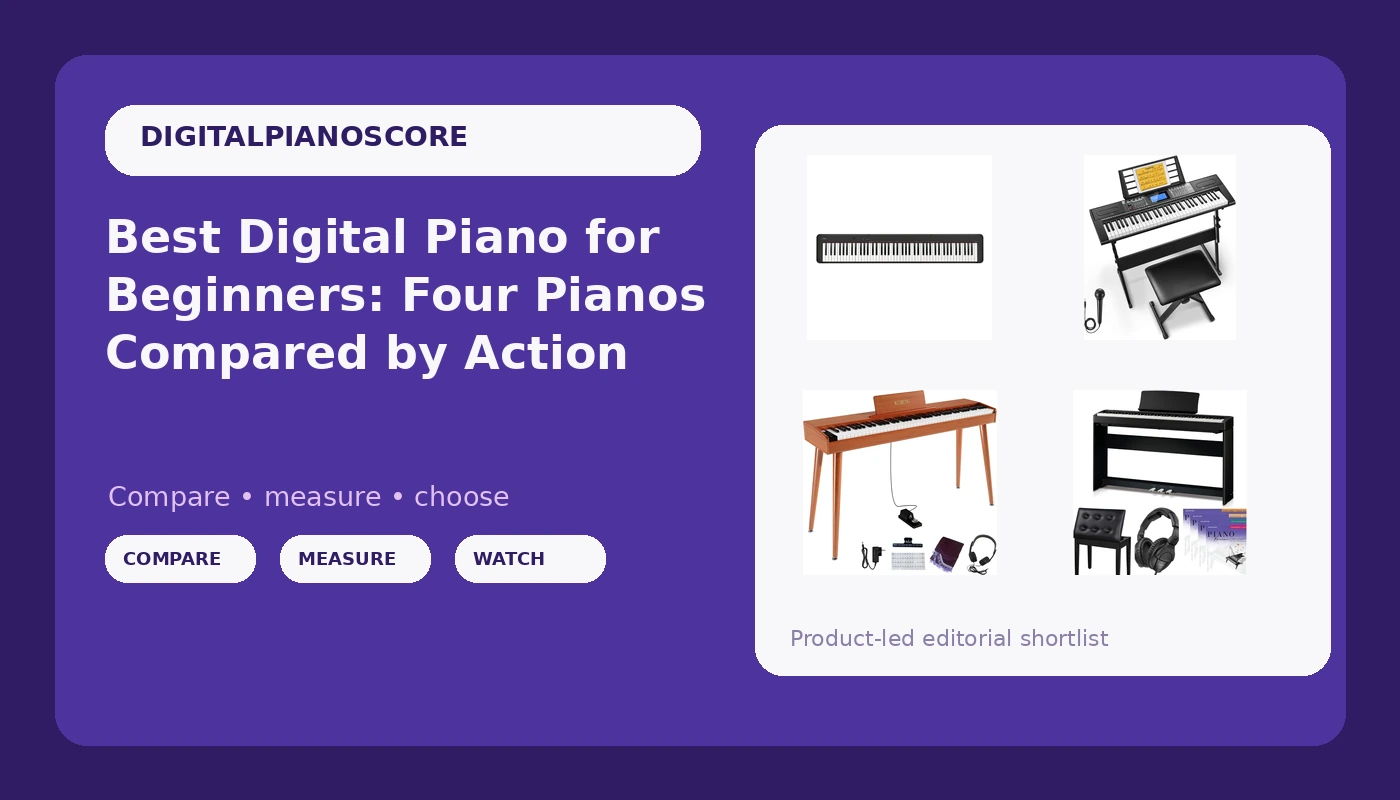
Thirty students a week walk into my Seattle studio, and every September I meet the same parent with the same question. What should we buy? I have taught on everything from a $200 slab to instruments that cost more than my first car, and my answer has not changed in a decade. The best digital piano for beginners is the one whose action makes a ten-year-old want to sit down again tomorrow. Voices, rhythms, Bluetooth, and app lessons are features. The keyboard under the fingers is the instrument.
This comparison covers four instruments that come up in that conversation constantly. Three of them have 88 keys. One has 61. Two arrive as furniture-style bundles, one is a slim slab, and one is a starter kit with a stand, a stool, and a microphone. I am going to rank them the way I rank them for my own transfer students, which means the action comes first, the pedal comes second, and the speaker comes third. If that ordering sounds harsh, it is because I have watched too many kids quit on a keyboard that fought back.
Related: Weighted vs Semi-Weighted Keys: What the Difference Actually Feels Like
The Kawai ES120 bundle is the best instrument in this group, and the one I would put in the room of a student who is serious about exams or auditions. The Casio CDP-S160 is the value pick, and it is the one I recommend most often to families buying their first piano. The other two are cheaper for reasons you will feel in the first week.
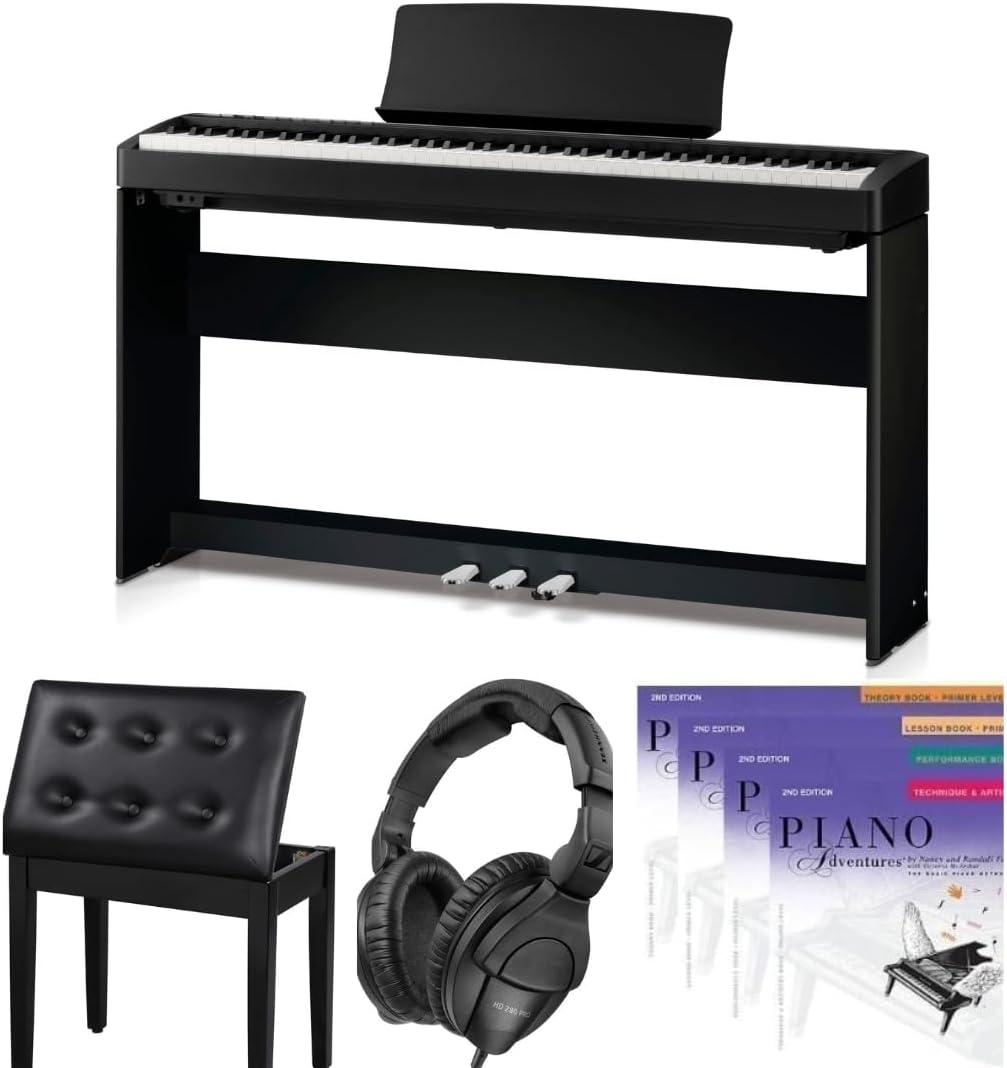
Kawai ES120 88-key Digital Piano bundle
Hammer action from a company that also builds acoustic grands, plus stand, pedal board, bench and headphones in one box
Highest cost here, and you pay for accessories you may already own

Casio CDP-S160 88-Key Weighted Digital Piano
Scaled hammer action across 88 keys, Duet Mode, USB-MIDI, and a slim body that fits a small apartment
Small onboard speakers and a dated tone set
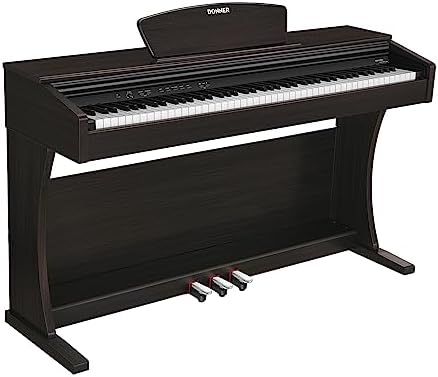
Digital Piano 88 Key Semi Weighted Keyboard
Full 88-key range at a low cost, light enough to move alone
Semi-weighted means springs, not hammers, so dynamics suffer
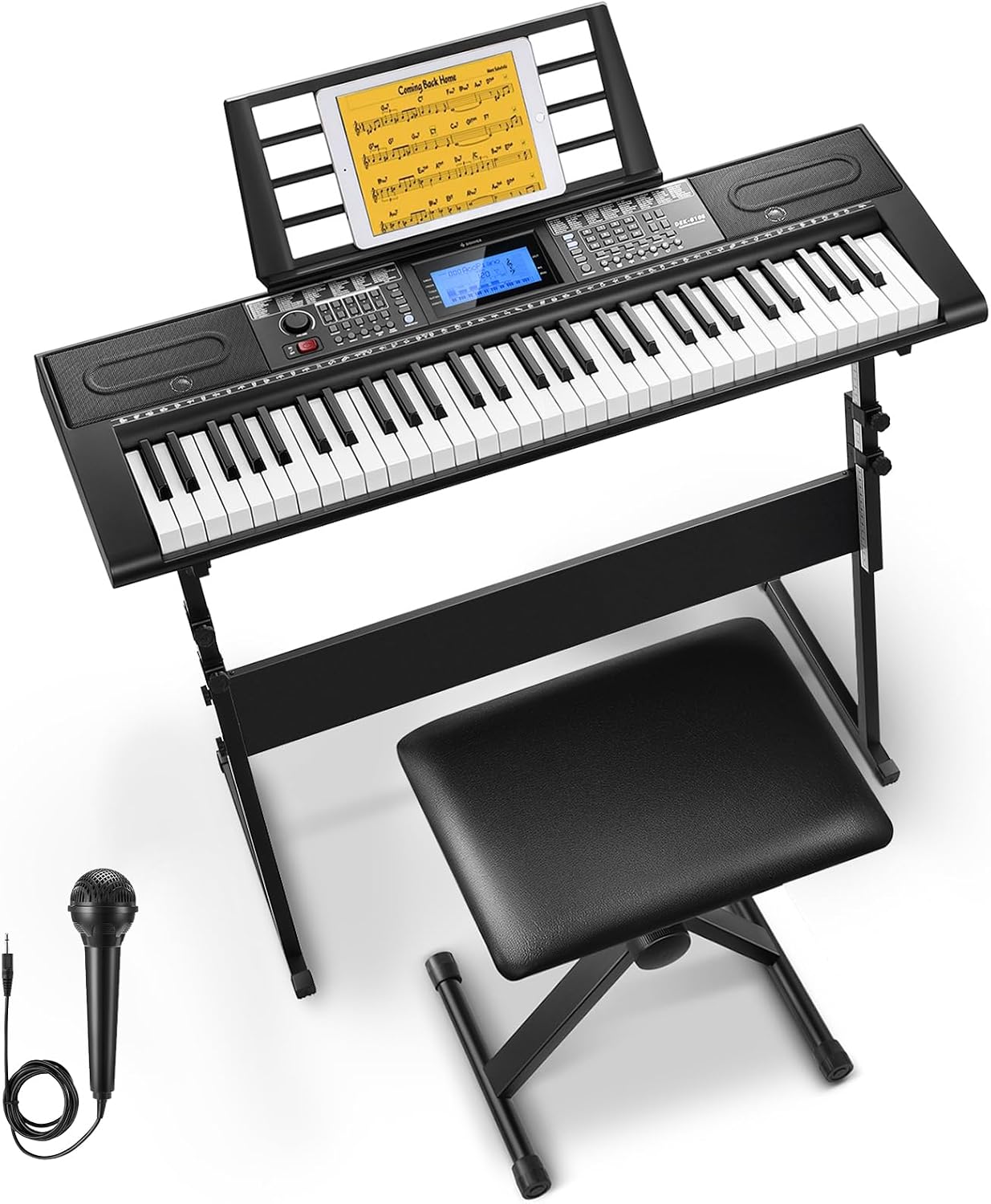
Donner 61 Key Keyboard Piano Kit
Complete starter kit with stand, stool and microphone, plus 249 voices and rhythms
61 unweighted keys run out of range by the end of method book two
Prices and availability were captured from Amazon Creators API and may change.
How I judge a beginner piano
In my studio the ranking never changes: action, pedal, speakers, key count, then everything else. Parents usually arrive with the order reversed. They have read about voice counts and app subscriptions, and they want the piano with the most of everything. I ask one question instead. When your child sits down after a long school day, does the instrument feel good enough that they play ten more minutes?
That question is about action weight and key repetition. A graded hammer action lets a small hand learn control, because the keys resist in proportion to how the mechanism is built. A spring action resists the same way at the top of the press and at the bottom, so the hand never learns to shape a phrase. You can hear it in a beginner's playing within a term. The student on a hammer action starts playing softly on purpose. The student on a spring action plays at one volume and calls it expression.
Key repetition matters just as much. A child learning a scale needs the key to come back up fast enough that the next finger is not waiting. Cheap actions bounce and double-strike. Good ones reset cleanly. That is the whole difference between an instrument that teaches and an instrument that gets blamed.
Kawai ES120 bundle: the one that behaves like a piano
The ES120 is the only instrument here from a company that also builds acoustic grands, and it is the only one I would hand to a student preparing for a graded exam without a caveat. The action is graded across the keyboard, so the low end carries more resistance than the top. That gradient is not a marketing detail. It is what teaches a hand to balance a melody against an accompaniment, and it is the first thing transfer students notice when they move from a spring action.
What makes this listing interesting is the box. Stand, pedal board, bench, headphones, and a learning course all arrive together. In this tier, a three-pedal board is genuinely unusual. Most bundles at this level throw in a single sustain switch that slides across a hardwood floor, which is one of my standing complaints about the entire category. If the pedal unit here is a real three-pedal assembly, that alone justifies part of the premium, because I tell every parent to budget for a proper pedal anyway.
Where it loses is price and flexibility. You cannot opt out of the accessories, so if you already own a bench and headphones you are paying for them twice. It is also a slab on a separate stand, which means the whole thing still wobbles if you play with any force and the stand is not solid. Buy the bundle for the instrument and the pedal board, not for the furniture.
Casio CDP-S160: the value pick I recommend most
This is the piano I name when a family tells me their ceiling is around the cost of a used upright that would need a tuning twice a year. It has 88 weighted keys with a scaled hammer action, it is slim enough to stand against a wall in a small apartment, and it weighs little enough that one adult can carry it. For a Seattle rental with stairs, that matters more than any spec sheet line.
The feature I use constantly is Duet Mode, which splits the keyboard into two equal ranges. A teacher and a student can sit side by side and play the same register without fighting over octaves. I use that in almost every lesson with a beginner, and very few instruments at this price offer it. USB-MIDI is there too, so a student can connect to a notation app or a lesson platform without an adapter.
The honest weaknesses are the speakers and the tone set. Small drivers cannot reproduce a concert grand, and any manufacturer claiming otherwise is selling you a phrase, not a sound. Through headphones the CDP-S160 is a much better instrument than it is through its own speakers. If your child practices with headphones most evenings, you get most of the value. If the family wants the piano to fill a living room, this is not the one.
The 88-key semi-weighted option: the number that misleads
Eighty-eight keys is a key count. Semi-weighted is a mechanism. This instrument gives you the count and not the mechanism, and that is the whole story.
Semi-weighted keys are spring-loaded. They push back with a constant force and they do not change resistance based on where a hammer would be in its travel. For a beginner, that flattens dynamics. The difference between soft and loud becomes a matter of how hard you smash rather than how fast your finger moves. Students who practice on spring actions and then sit at an acoustic grand discover that their hands have no idea how to produce a quiet note. It takes weeks to undo.
What it does well is cost and portability. You get the full 88-key range, so repertoire fits, and the whole thing is light enough to move alone. For a dorm room, a second instrument, or an adult returning to piano who is genuinely unsure about committing, that combination is defensible. What I would not do is buy it for a child who is starting lessons and will need to play softly on purpose within six months.
The 61-key Donner kit: what it is actually for
Sixty-one keys is not a piano. It is a keyboard, and I say that without snobbery, because there is a real use case for it. The kit arrives with a stand, a stool, a microphone, 249 voices, and 249 rhythms. For a seven-year-old who wants to make noise and a family that is not ready to spend piano money, that is a legitimate purchase. It answers the question "will this child stick with it" for a fraction of the cost of a hammer action slab.
The problem arrives around month seven. Method book two starts using the low octave, and a 61-key instrument does not have it. Left-hand accompaniments get rewritten or skipped, and the student starts to feel that the instrument is holding them back. When a child has to work around their own piano, the piano becomes the excuse.
I do not review keyboards like this one as pianos, because a spring action with 61 keys is not a piano. I review it as a trial instrument. Buy it to find out whether lessons stick, then plan to replace it, and treat the purchase as a rental fee on that answer.
The trade-offs nobody prints on the box
Three things decide whether a beginner keeps playing after the novelty wears off, and none of them appear in the marketing copy.
The pedal comes first. Whatever ships in the box, plan on replacing it. A sustain pedal that slides away from your foot mid-phrase is worse than no pedal, because it teaches a student to chase it instead of listening.
The bench comes second. A bench at the wrong height puts a small player's wrists below the keys, and that habit takes a year to fix. An adjustable bench is not optional equipment.
The speakers come third. Sample libraries have plateaued. The difference you hear between two instruments in the same price band is almost always voicing and cabinet, not the recording. A beautiful sample through a thin driver sounds like a beautiful sample through a pillow.
And ignore the polyphony numbers. Nobody plays 256 notes at once. That specification exists to win a comparison table, not to improve a lesson.
Who should buy which
Buy the Kawai ES120 bundle if the student is serious, if exams or auditions are on the horizon, or if you want one purchase that covers the instrument, the stand, the pedals, and the bench. It is the only one here I would call a long-term instrument.
Buy the Casio CDP-S160 if you want a real hammer action at the lowest sensible cost, you have headphones, and the piano will live in a small room. It is the pick for most families, and it leaves budget for a better pedal and an adjustable bench.
Buy the 88-key semi-weighted piano if you are an adult returning to playing, or you need a light second instrument and you understand what you are giving up in dynamics.
Buy the Donner 61-key kit only as a trial, for a young child, with the expectation that it will be replaced. It is a good answer to a temporary question.
What I tell parents at the first lesson
The instrument is not the teacher, and no piano has ever made a student practice. But the wrong action will end lessons faster than any other purchase mistake, and it will end them quietly, with a kid who says they are bored when they actually mean their hands are fighting the keys.
If you can only do one thing, spend the budget on the action and buy the accessories later. A hammer action on a wobbly stand beats a spring action on beautiful furniture every single time, and it is the difference between a piano that gets played at 9 p.m. on a Tuesday and one that becomes a shelf.
Check the current Amazon price on each of these before you decide, because this category moves, and a bundle that was out of reach in the spring sometimes is not in the fall. Then sit down and play one scale on each. Your hands will tell you in thirty seconds what no comparison table can.