Every June I lose two or three transfer students to the same mistake. They go home for the summer, the family buys whatever 88-key slab is cheapest that week, and in September they come back playing from the wrist with a collapsed hand shape that takes a full semester to undo. I am Yuki. I have taught piano in Seattle for twenty-five years, I run thirty students a week out of a home studio, and I have owned twelve digital pianos in that time, from a cheap plastic slab to a six-thousand-dollar stage piano. This is my comparison of affordable 88-key digital pianos for the household that needs one instrument to do everything.
The four instruments here cover the whole range of what a beginner family actually buys. Two are slabs you set on a stand. One is a cabinet piano that arrives with a bench and a pair of headphones. One is a bundle that includes the stand, the pedal, the power supply, a carrying case, and headphones in the same box. They are not interchangeable, and the thing that separates them is not the sound. It is the action, and the action is the part you cannot upgrade later.
Related: Weighted vs Semi-Weighted Keys: What a Beginner Actually Feels
For most beginners, the Yamaha 88-key weighted portable is the one I would put in a student's house, because a weighted action is the only feature on this list you cannot fix with a trip to the accessory aisle. That is the short answer. The long answer involves what "weighted" and "semi-weighted" mean on a spec sheet, why the speaker matters more than the sample library, and why I tell parents to budget for a better pedal before they budget for a better stand.
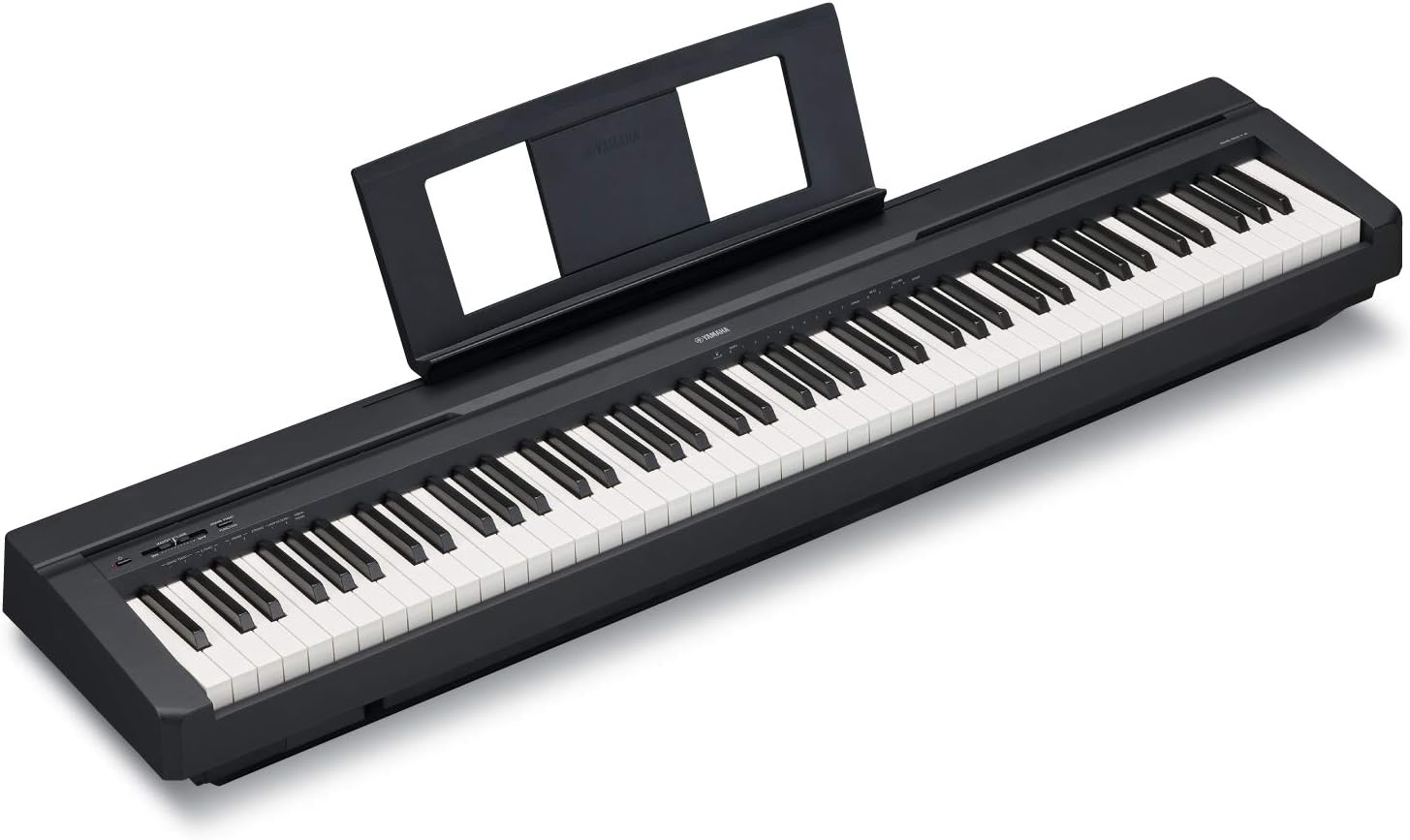
Yamaha 88-Key Weighted Portable Digital Piano (P45B)
Weighted action, built-in speakers, USB connectivity, music rest and sustain foot switch included
No stand, bench, or headphones in the box
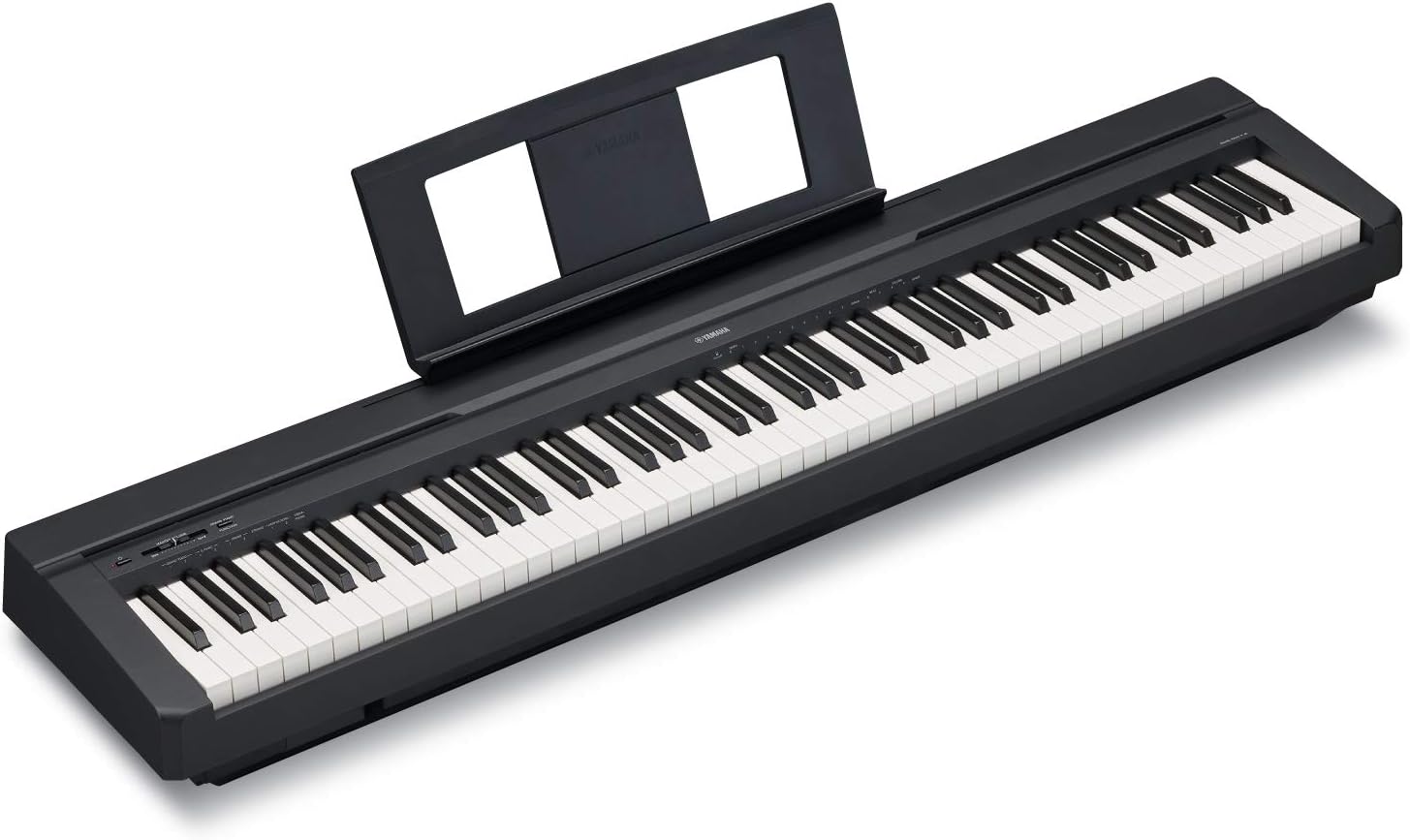
Casio PX-870 Privia Digital Piano Bundle
Cabinet piano with furniture bench, headphones, instructional book, online lessons, and DVD included
The heaviest and most expensive of the four, and it stays where you put it
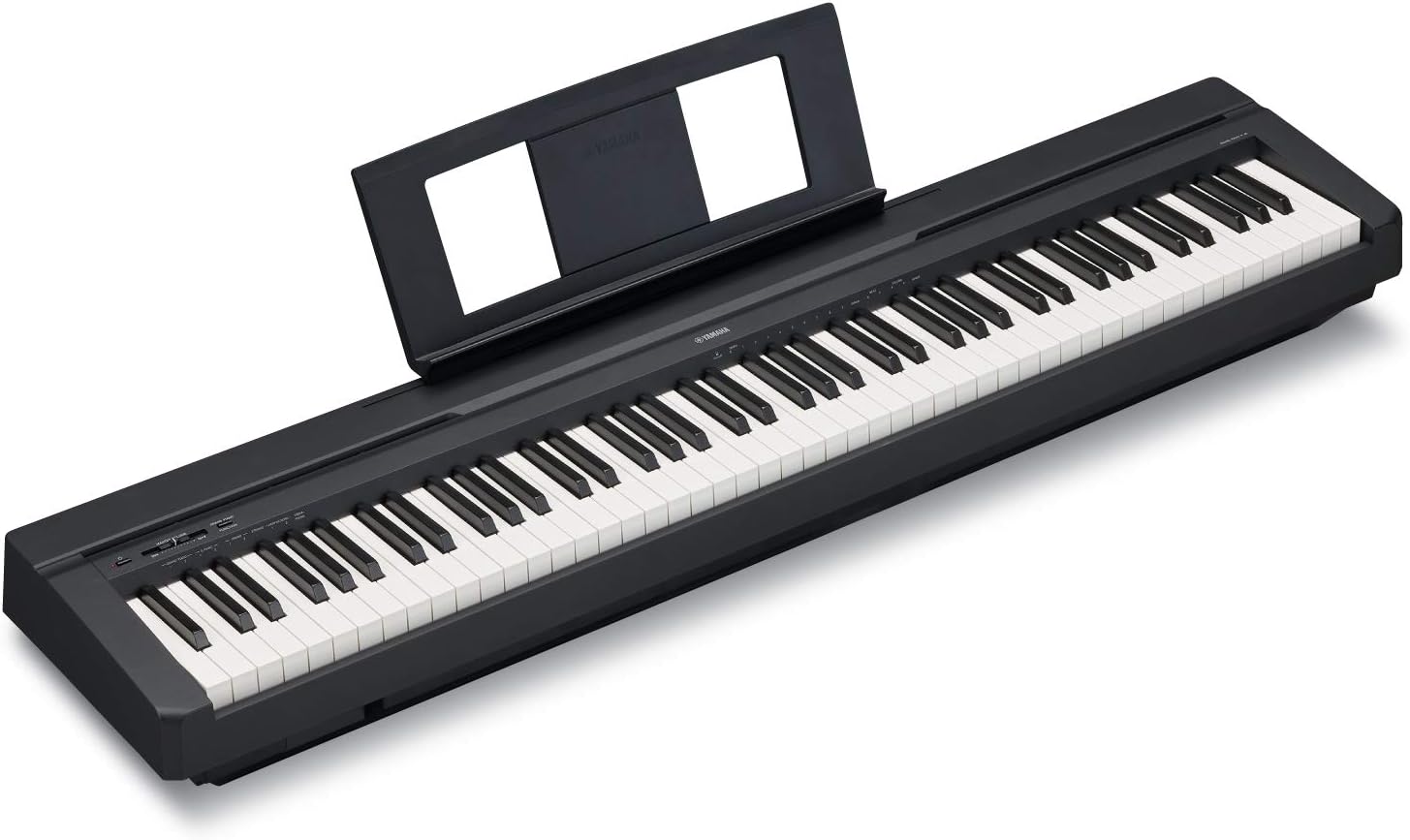
Alesis Recital Digital Piano 88-Key Semi-Weighted
Light, simple, 88 keys, easy to move and easy to live with
Semi-weighted action, so it is not a substitute for a graded hammer action
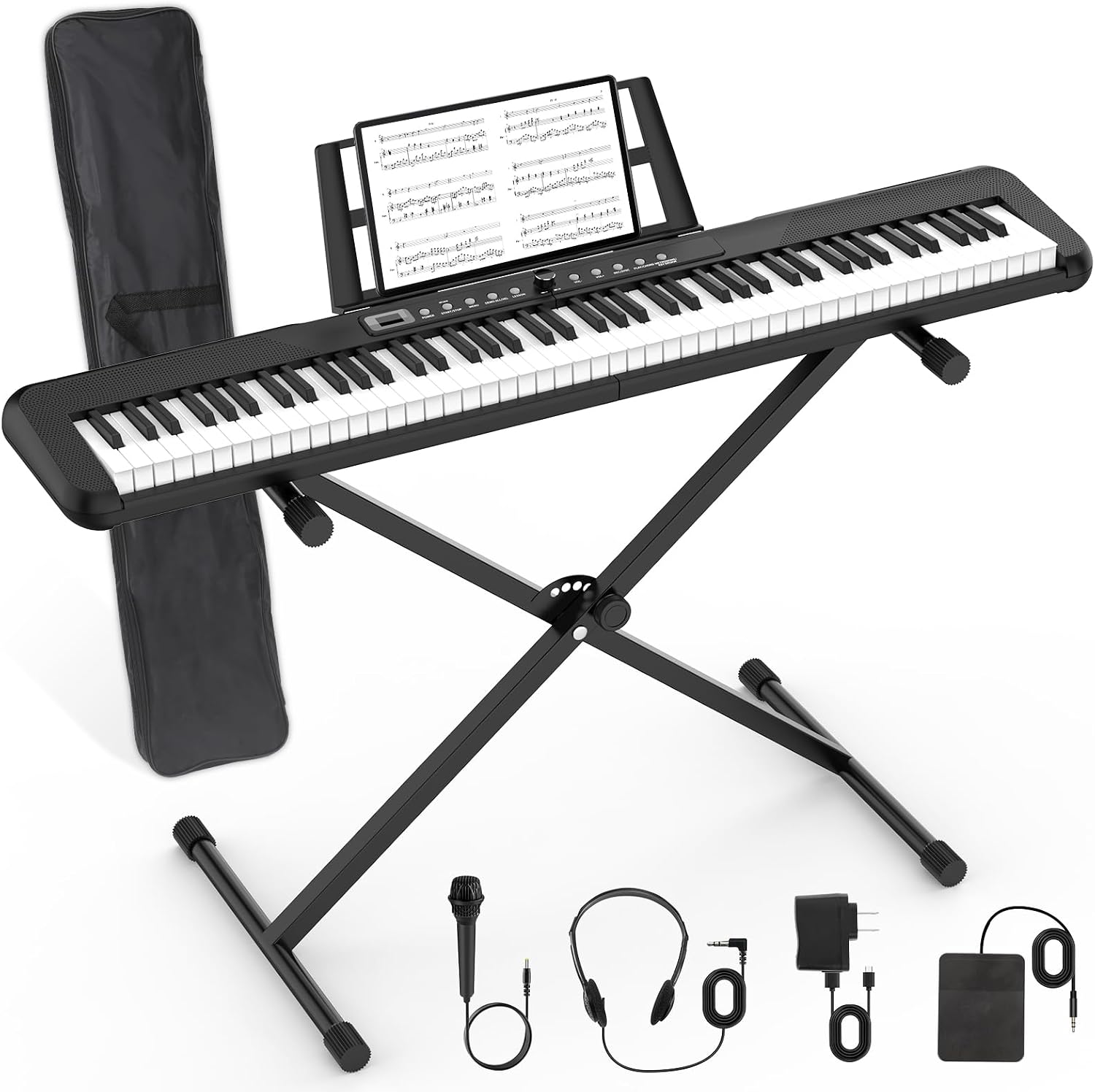
88 Key Electric Digital Piano Bundle for Beginners
Stand, sustain pedal, power supply, carrying case, headphones, and USB-MIDI in one box
Semi-weighted action and starter-grade accessories
Prices and availability were captured from Amazon Creators API and may change.
How I judge an instrument before I recommend it
I run the same routine on every piano that comes through my studio. The C major prelude from the Well-Tempered Clavier, the E-flat nocturne, and four minutes of blues improvisation in F. The Bach tells me whether the action repeats cleanly when I play fast. The Chopin tells me whether I can shape a phrase with finger speed instead of arm weight. The blues tells me whether the instrument makes me want to keep playing past the point where I should stop, which is the only test that matters for a beginner.
I also keep a dB meter and a kitchen scale. The meter sits at a fixed distance from the speakers. The scale goes on the keys to check how much force it takes to make a note speak. Two disclaimers, because I would rather be useful than impressive: I have not had all four of these on the bench in the same week, and where I have not measured something I am going to say so instead of pretending. What follows is a mix of what the names on the boxes tell you, what this tier does in general, and what I see in students' houses after a year of lessons.
The action is the piano
Everything else on a digital piano is a feature. The action is the instrument. When a student practices on a light, springy keybed for nine months and then sits down at a real piano, the sound falls apart, and it is not their fault. Their fingers learned a different instrument.
Graded hammer action is a spectrum, not a checkbox. At the top of the range you get key repetition fast enough to play a repeated note without lifting your hand, and enough resistance that you can control a crescendo with the speed of your finger rather than the force of your arm. At the bottom you get keys that bounce back at you and get louder the deeper you push into a passage, which is the opposite of how an acoustic piano behaves.
This is where the four instruments separate. The Yamaha 88-key weighted portable is the only entry-tier slab here whose name commits to a weighted action, and Yamaha has owned the action quality tier for as long as I have been teaching. I have put transfer students on Yamaha weighted slabs for a decade and I have never had one regress over a summer. Visit on Amazon →
The Alesis Recital is semi-weighted, and so is the beginner bundle. Semi-weighted covers a wide range of feel, from a decent synth-action keybed to something closer to an organ. It is not automatically bad. It is a different instrument, and it teaches different habits.
Speaker voicing matters more than the sample library
Sample quality plateaued years ago. If you put the same sample set through two different speaker systems, you will hear two different pianos, and the difference people describe as "warm" or "bright" between brands is almost always voicing, not the recording.
This is why the phrase "grand piano sound" on a box with three-inch speakers makes me tired. No sample survives a small speaker at low volume. What you should listen for instead is whether the instrument sounds full at the volume you will actually practice at, which for most apartment students is quieter than they expect. Headphones solve this, which is why headphone jack placement matters more than the Bluetooth spec. A jack on the back of the unit means you are reaching around the instrument every time you practice at night.
The cabinet option: Casio PX-870 Privia bundle
The Casio PX-870 Privia bundle is the one instrument here that arrives as furniture, and I mean that as both a compliment and a warning. It comes with a furniture bench, headphones, an instructional book, online lessons, an instructional DVD, and a polishing cloth. Everything in the box points at a household that wants the piano to live in the living room and look like it belongs there. Visit on Amazon →
The trade-off is weight and commitment. A cabinet piano is not moving to a dorm room, and it is not going under a bed. What you get for that is a stable, full-size footprint that will not walk across the floor while a ten-year-old plays, and a bench at the correct height instead of whatever dining chair happens to be free. The bench in this bundle is better than the folding bench in the cheap kits, though I still tell parents to check the height against the student's forearm before the first lesson.
The apartment compromise: Alesis Recital 88-Key Semi-Weighted
The Alesis Recital is light, simple, and easy to live with. It has 88 keys, it runs on its own power, and it does not ask you to reorganize a room. For a small apartment, a teenager who wants to play at the kitchen table, or a household where the piano has to be put away when guests arrive, that matters. Visit on Amazon →
The catch is in the name. Semi-weighted is not a graded hammer action, and if your goal is to eventually play an acoustic piano, you will spend the first month at the acoustic instrument relearning how much arm weight a key needs. That is not a dealbreaker for a hobbyist. It is a real cost for a student.
The everything-in-the-box beginner bundle
The 88 key electric digital piano bundle is the one I see most often in the homes of families who are not sure the child will stick with it. It arrives with a sustain pedal, a power supply, a stand, a carrying case, headphones, and USB-MIDI compatibility, and it covers every accessory a beginner needs on day one. For a six-month trial run, that is a genuinely sensible purchase. Visit on Amazon →
Two things to plan for. First, the action is semi-weighted, so it is a practice keyboard, not a piano substitute, and I would not keep a serious student on it past the first year. Second, the accessories are starter grade. The sustain pedal that ships in a bundle like this is the kind that slides across the floor mid-phrase, and the stand is a folding stand. My standard advice applies: budget for a replacement pedal with a spike or a proper footplate, and set the whole thing on a stable surface. The instrument is fine. The accessories are the part you will replace.
Where the four trade off
If I line them up by what a beginner actually needs:
Action: the Yamaha weighted slab and the Casio cabinet lead. The Alesis and the bundle are semi-weighted, which is a different category of instrument.
Sound at practice volume: the cabinet instrument and the Yamaha slab have the advantage of a bigger box behind the speakers. The cheap bundle is the one that sounds thinnest at low volume.
Portability: the bundle and the Alesis win, because they are light and one of them comes with a case. The Casio is furniture and should be treated as such.
Accessories: the Casio bundle and the beginner bundle include everything. The Yamaha and the Alesis assume you already own a stand, a bench, and headphones, and you should factor that into the decision.
What I would buy, and for whom
If the student is serious, or might be serious, buy the Yamaha weighted slab. A weighted action is the only spec on this page that changes how a student plays, and Yamaha is the brand I trust at the entry tier. Add a stand, a bench, and headphones, and you have a practice instrument that will carry a student through the first three years of lessons.
If the piano is going in a living room and the household wants one purchase that includes everything and looks like a piano, the Casio PX-870 Privia bundle is the right answer. It is the most expensive of the four and it earns part of that back with a stable footprint and a complete kit.
If the priority is a small apartment, a tight budget, or a child who may quit in six months, the Alesis Recital or the beginner bundle will get you playing. Just be honest with yourself about what they are: semi-weighted practice keyboards that are excellent first instruments and poor long-term pianos.
And whatever you buy, replace the pedal. I have never met a bundled sustain pedal that stayed where I put it, and a pedal that slides across the floor teaches a student to chase it instead of listening to the phrase.