I have taught piano out of a home studio in Seattle for 25 years, thirty students a week plus session work, and every October the same email arrives: a parent wants to know which digital piano for beginners will not wreck their kid's hands before the spring recital. I keep a fixed routine for anything that crosses my bench, the same Bach prelude, the same Chopin nocturne, a blues improvisation in E, plus a dB meter for speaker voicing and a spring scale for action weight. Twelve digital pianos into my career, I can tell a cheap action from a good one with my eyes closed.
Three of the four instruments in this comparison are 61-key keyboards, and that is outside my usual territory. My rule has always been 88 weighted keys or nothing, because that is what a student meets at a real piano. I am breaking it here because a parent buying for a ten-year-old in October is not shopping for a cabinet, they are shopping for something that survives the first year. So I will judge all four the way I judge everything: the action first, the speakers second, the feature list a distant third.
The short answer: if the budget reaches the cabinet tier, the Yamaha Arius YDP-146B is the only instrument here I would hand a transfer student for a summer without worrying about regression. If it does not, the 88-key semi-weighted bundle is the compromise that at least keeps a beginner on full-size keys. Everything below is about what you give up as you move down from there.
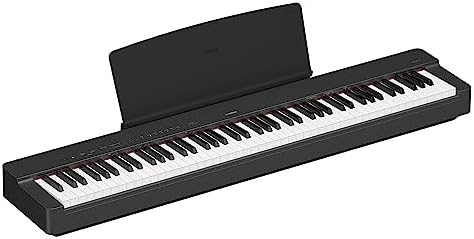
Yamaha Arius YDP-146B
The only weighted 88-key action here, with a cabinet large enough to voice a believable low register, plus a three-pedal unit and a bench in the box
You are paying for wood, speakers and cabinet furniture as much as for the keybed
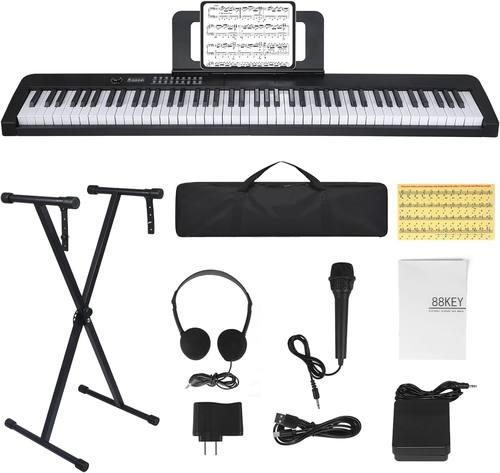
88 Key Piano Keyboard, Electric Digital Piano with Semi Weighted Keys
Full 88 keys plus stand, case, headphones, power supply, sustain pedal and USB-MIDI in one box
Semi-weighted is not graded hammer; the bundled pedal is the first thing I would replace
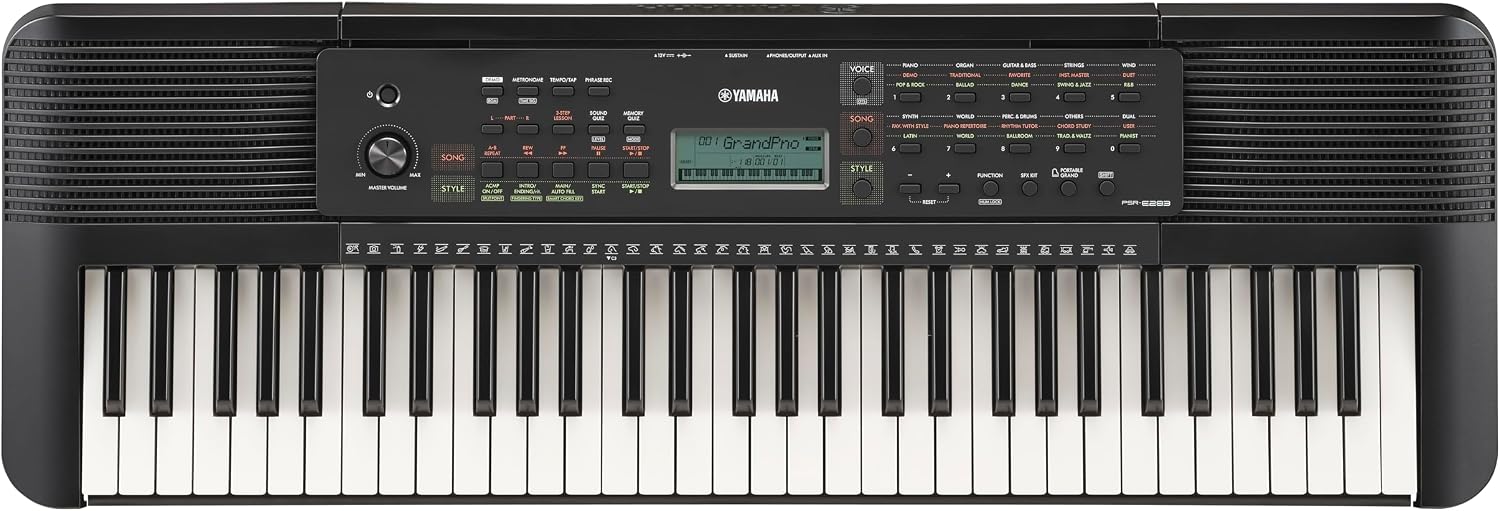
Yamaha 61-Key Portable Keyboard PSRE283
Yamaha's unit-to-unit action consistency at the starter tier, learning tools built in, music rest and power adapter included
61 unweighted keys, no dynamics to speak of, outgrown in roughly a year
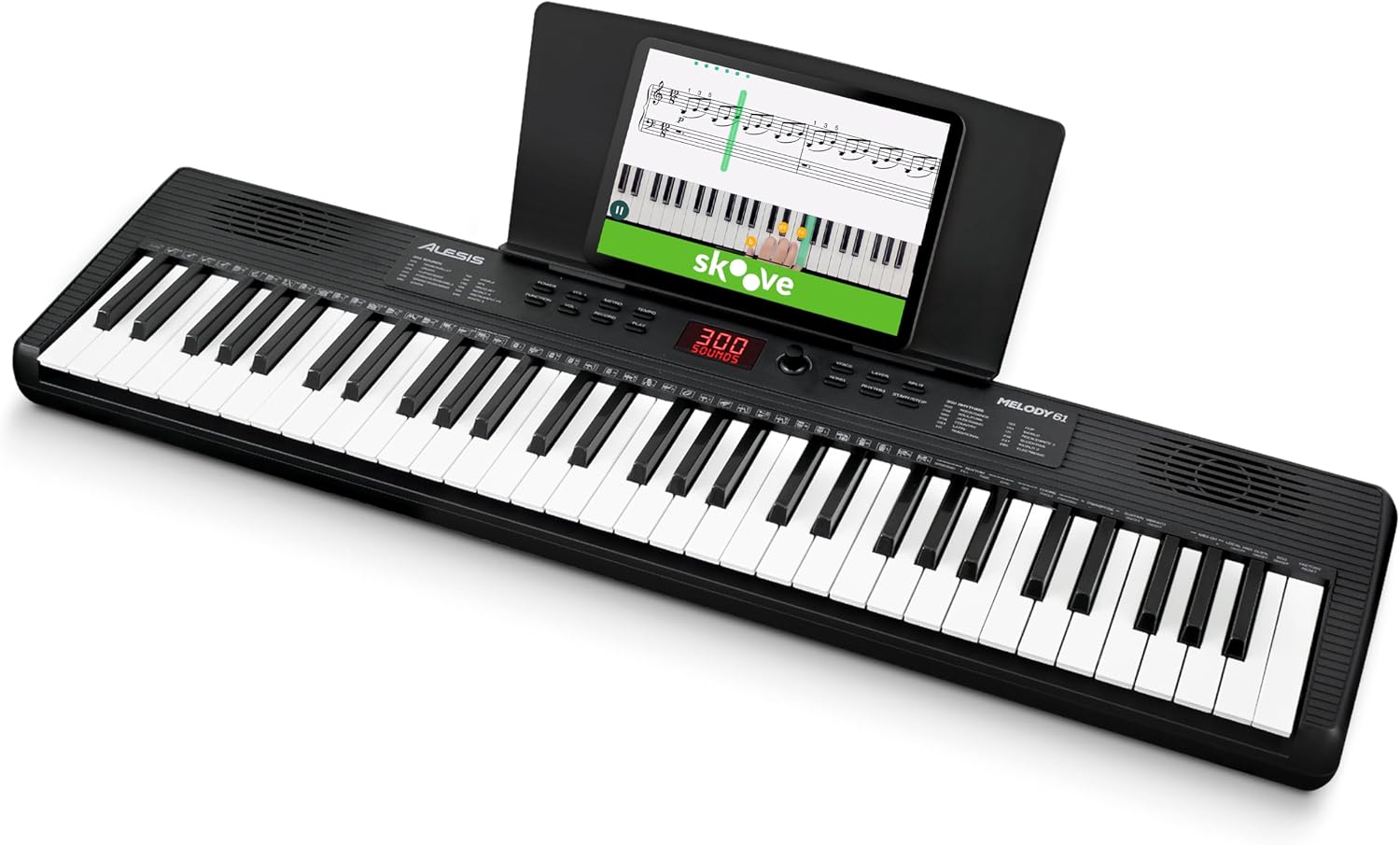
Alesis Melody 61 MK4 61-Key Piano Keyboard
The least expensive way to find out whether a child will still be playing in March
Action and speakers are the compromise; not an instrument I would want a serious beginner practicing on for two years
Prices and availability were captured from Amazon Creators API and may change.
How I judge an instrument I have not lived with
Honesty first: I have not had all four of these units in the studio for a month each, and I will not pretend otherwise. What I do have is 25 years of students arriving with instruments in exactly this class, and a clear picture of what each action type does to a beginner's hand over twelve months. I know how a graded hammer action behaves under a Bach prelude, and I know what an unweighted keybed does to a scale passage at tempo. That is the lens here.
Three things decide whether a beginner instrument is worth owning.
Key repetition and return. A cheap action does not come back up fast enough for repeated notes. In the first year this barely matters. By the second year, when a student meets their first real trill, it matters enormously. Weighted actions in the Yamaha tier return faster and more consistently than anything else at their level, which is why I keep sending families back to them.
Speaker voicing. Sample libraries have plateaued. The difference you hear between an entry instrument and a cabinet is mostly the box around the speaker and the amplifier behind it, not the recording. A cabinet has the physical volume for a believable bass register. A thin slab does not, and no amount of "concert grand" labelling changes physics. When I measure speaker output with a dB meter, the cabinet instruments win the low end every time, and that is before anyone plays a note.
Pedal and bench. The sustain pedal and the bench that ship in the box are almost always the first things I tell a family to replace. A pedal that slides across the floor teaches a student to chase it instead of listening to their own sound. Budget for a proper pedal unit and a solid bench from day one, whatever you buy.
Yamaha Arius YDP-146B: the one that behaves like a piano
The Yamaha Arius YDP-146B is the only 88-key weighted instrument in this comparison, and that single fact decides most of what follows. A graded hammer action lets you control tone with finger speed, which is the exact skill a beginner is trying to build in year one. On an unweighted keybed, dynamics are a knob. On a weighted action, they are your hands.
The cabinet matters too, and not for the reason the marketing suggests. It gives the speakers physical volume, which is why the low register sounds like a piano instead of a recording of one. The three-pedal unit is the feature I would actually pay attention to, because a student learns half-pedalling on it two or three years in. The included bench is the part I would still scrutinise; bundled benches are usually the first upgrade I recommend.
What you are buying here is the box, the speakers and the action. The samples are the cheap part. Visit on Amazon → if you want to check the current configuration and pedal setup for yourself.
The 88-key semi-weighted bundle: full-size keys, lighter touch
This is the instrument I would recommend to the parent who cannot justify a cabinet but wants their kid on the right number of keys. The 88 Key Piano Keyboard with Semi Weighted Keys ships as a bundle: stand, carrying case, power supply, headphones, sustain pedal and USB-MIDI compatibility, marketed for beginner adults. Nothing about that bundle is a mistake. The key count is right, and USB-MIDI means the instrument can still be useful in five years when the student wants to record or run a teaching app.
The compromise is in the words semi-weighted. Semi-weighted is a spectrum, not a standard, and at this tier it usually means a spring keybed with some mass added. It gives you more resistance than a portable keyboard, but it will not give you the graded, heavier-in-the-bass feel of a real action, and it will not teach dynamic control the way a hammer action does. For a nine-year-old with small hands, that is arguably a kindness in month one. By month eighteen it is a ceiling.
The included pedal is the other weak point. Pedals in this class slide, and a sliding pedal is worse than no pedal because it teaches the foot to hunt. Replace it early. Visit on Amazon → to see the full bundle contents before you commit.
Yamaha PSR-E283: the 61-key starter I hand to the youngest students
The Yamaha 61-Key Portable Keyboard PSRE283 is a 61-key portable keyboard with learning tools, a music rest and a power adapter in the box. The reason I keep recommending Yamaha at the starter tier is consistency: their actions are predictable from unit to unit in a way budget brands are not, and predictability is what protects a beginner from bad habits. A keybed that fights you differently every week is a keybed that teaches you to fight it.
What you get here is five octaves and an unweighted keybed. Method books through the first year fit inside five octaves comfortably. The Bach two-part inventions do not, and neither does most of the Romantic repertoire, which gives this instrument a known expiry date of roughly a year to eighteen months for a student who stays with it. That is not a failure. It is a rental period, and the learning tools built into the keyboard make that period more productive than a bare keybed would.
If your child is six or seven and you want to know whether they will sit down at an instrument at all, this is the safe answer. Visit on Amazon → to check what ships in the current box.
Alesis Melody 61 MK4: the entry point for a family testing the waters
The Alesis Melody 61 MK4 61-Key Piano Keyboard is the least expensive way into this comparison. Nothing in the name suggests weighted keys, and at this tier you should assume a spring-action keybed. That is the honest description, not a criticism.
Here is the case for it. A family in October genuinely does not know whether the child will still be playing in March. A surprising number quit in the first six months, and a keyboard that gets played beats a cabinet that sits under a sheet. If the answer turns out to be no, you have spent the least on that answer. If the answer is yes, you will buy again, and the second purchase is the one that matters.
I will not pretend this is an instrument a serious beginner should practice on for two years. The action and the speakers are the compromise, and both will limit how fast a motivated student progresses. But as a first instrument for a young child who has asked for piano lessons and might not follow through, it is a defensible purchase. Visit on Amazon → to see the current listing.
What the comparison actually shows
The four instruments split cleanly into two groups, and the dividing line is touch, not features. The two 88-key instruments give a beginner somewhere to grow. The two 61-key keyboards give a beginner somewhere to start.
Polyphony numbers are marketing. Nobody plays 256 notes at once, and no beginner will ever hit the limit of a modern instrument. Speaker voicing is where cheap instruments lose, and the cabinet wins because of physics rather than samples. The single strongest predictor of whether a beginner keeps playing is whether the instrument makes them want to sit down, and in my experience that comes down to how the keys return under the fingers, not how long the feature list is.
61 keys or 88?
This is the question that actually decides your purchase, so here is the version I give parents in person.
A student who practices for two years on a light 61-key keyboard and then sits at an acoustic upright will find the keys heavy, the pedals unfamiliar, and their own hands tired after ten minutes. Some of them conclude they have gotten worse. They have not. They have changed instruments, and nobody warned them that the change would cost them three months of adjustment.
If the plan is lessons for more than a year, buy 88 weighted keys now and skip the intermediate step. If the plan is "let us see whether she likes it," 61 keys is a defensible experiment, and the money you save is the money you will spend on the second instrument.
What I am watching next
My standing prediction is that action quality keeps spreading down the price curve. The slab that costs what a mid-tier slab cost three years ago will feel like that mid-tier slab, and the gap between tiers will narrow. I am also watching hybrid actions, the ones with real hammers and digital sound, because if they reach the mid-tier they will change what I recommend to transfer students. The cabinet market will keep shrinking as slabs plus good stands win on price and on moving-day practicality. I score that list every January and I am usually right about the direction, wrong about the timing.
The bottom line
If the budget reaches a cabinet and the student is serious, buy the Yamaha Arius YDP-146B. The weighted action and the three-pedal unit are what a student actually needs. Visit on Amazon →.
If you need full-size keys without the cabinet, the 88-key semi-weighted bundle is the right compromise, as long as you replace the pedal. Visit on Amazon →.
For a six or seven year old in the first year of lessons, the Yamaha PSR-E283 is the safe starter with the most consistent action in its class. Visit on Amazon →.
And if you genuinely do not know yet whether the child will stick with it, the Alesis Melody 61 MK4 answers that question for the least money. Visit on Amazon →.
Whichever one you choose, budget for a bench and a pedal, and put the instrument somewhere it will be played rather than somewhere it will be stored. That last part matters more than anything in the table above.