Related: Weighted vs Semi-Weighted Keys: What Beginners Actually Feel
The action is the piano. Samples, speakers, wireless connection, a color screen, none of that matters if the keys will not let you control tone with finger speed. I have taught for 25 years and watched hundreds of students practice on whatever their families bought, and the pattern never changes: the student who practices on a good action keeps improving, and the student who practices on a bouncy one stalls. That is the whole reason this 88-key weighted digital piano comparison exists.
Most buying advice counts features. Sixty tones versus six hundred, 128-note polyphony versus 256, a list of rhythms nobody uses past week two. I care about four things instead: how the key returns under a repeated finger, whether the tone changes when you play deeper into the key, what the speakers do with a single sustained note, and whether the instrument makes you want to sit down at it tomorrow.
Here are four instruments that cover the range of what families actually buy, from a full cabinet with a bench in the box down to a portable slab that lives in a closet between lessons.
Best Overall: Yamaha Arius Series YDP-146B
Yamaha and Kawai own the action quality tier, and the Arius line is where that reputation becomes affordable. This is an 88-key weighted instrument in a classic upright cabinet, with the grand piano sound Yamaha is known for, a three-pedal unit, and a bench included in the box.
The thing you are paying for is consistency. Cheap actions vary from unit to unit. One arrives light, the next arrives heavy, and a student who learns on an outlier spends a year fighting the instrument instead of learning music. When I have a transfer student arrive from a Yamaha, I can usually tell within a page of Bach, because the key return is even across the keyboard and the repetition speed does not collapse when they move into the middle of a fast passage.
The three-pedal unit matters more than beginners think. A single sustain pedal teaches you nothing about half-pedaling or damper simulation, and the transition to an acoustic grand later gets ugly if you never learned to use the middle and left pedals. Having all three, plus a bench that is actually at the right height, means the setup is complete.
What I would flag: the included bench is still a bench in a box, and the persona-approved rule applies. Budget for a real adjustable bench eventually, and a decent pair of headphones from the start. The cabinet design is furniture, which is exactly what you want in a living room and exactly what you do not want if you move apartments every year. Check current Amazon price before you commit, because this tier moves.
Best Value: Donner DDP-95
The Donner DDP-95 is the value pick for a family buying a first instrument. It gives you an 88-key weighted keyboard in a full-size cabinet, plus a feature list that no acoustic piano will ever match: a 4.3 inch LCD, recording, wireless connection, 610 tones, 600 rhythms, and three piano teaching modes.
The Chinese brands are closing the gap on sound but not on action consistency, and that is the honest way to read this instrument. Tonally it is more than good enough for lessons. The speaker voicing is where the money went, and it is a reasonable job for the size of the cabinet. Where it will fall short is the last ten percent of touch control, the part that lets you shape a Chopin phrase with finger speed alone rather than with the volume knob.
For a beginner, that ten percent does not exist yet. What exists is note reading, rhythm, hand independence, and the willingness to sit down for twenty minutes a day. A screen, a recorder, and a set of teaching modes genuinely help with that. Being able to record yourself and hear the rhythm fall apart is a better teacher than most metronomes.
Two notes from experience with this price tier. First, wireless connection is a convenience feature, not a practice feature, and cheap Bluetooth implementations drop connections mid-lesson. If you are using it for a lesson app, use a cable. Second, the sustain pedal that ships with instruments at this level is usually the weakest part of the package. Test it on day one. If it slides across the floor while your student plays, replace it immediately, because a moving pedal teaches bad foot technique.
Best Compact Cabinet: Digital Piano 88 Key Weighted Keyboard, Full-Size Desk
This one is the desk-style cabinet: 88 weighted keys in a full-size, low-profile body that reads as furniture rather than as a stage instrument. It is the answer for a room where a traditional upright silhouette will not fit, or for a household that wants the keyboard to double as a writing and homework surface when nobody is practicing.
I am cautious about desk-style cabinets in general, for one reason: the keybed is low, and the geometry of your arms changes. If you are tall, you may end up playing with your wrists higher than your elbows, which is a habit that takes months to unlearn. Sit at it before you buy, or plan to put it on a stand that lets you set the height properly.
What it does well is the thing it promises. A full 88 keys with weighted action in a footprint that fits under a window, no decorative music stand to fight with, and a price that leaves room in the budget for a proper bench, a pedal that stays put, and headphones. For an adult returning to piano after twenty years away, that is a sensible package.
Best Portable: 88 Key Piano Keyboard with Semi Weighted Keys
The slab. This one has semi-weighted keys, 88 of them, and it arrives as a complete kit: sustain pedal, power supply, stand, carrying case, headphones, and USB-MIDI compatibility. For a beginner adult in a small apartment, or a student who splits the week between two homes, the bundle is the point.
Semi-weighted is a compromise and I will not pretend otherwise. The keys resist a little, then spring back faster than a graded hammer action does, and the difference shows up in the third year of study, not the first. What it does not ruin is note reading, rhythm, hand independence, or the habit of daily practice. Those four things are the entire first two years of piano study.
The portability is not a gimmick. A slab that goes in a case can travel to a lesson, live in a closet, and move to a dorm room without a moving van. Cabinets are furniture you pay extra for, and if your living situation changes every year or two, that furniture becomes a problem. The USB-MIDI connection also means the instrument can drive a teaching app or a notation program with a cable, which is more reliable than wireless for lesson work.
Where it will frustrate you: dynamics. A semi-weighted action gives you less control over how loud a note speaks, so crescendos come out stepped instead of smooth. If you are playing pop arrangements and film themes for your own enjoyment, you will rarely notice. If you are working toward graded repertoire, plan on upgrading the action within a year and treat this as your first instrument rather than your last.
How I judge an action
Every instrument that comes into my studio gets the same three pieces: the same Bach prelude, the same Chopin nocturne, and a blues improvisation. The Bach tells me about key repetition and evenness across the keyboard. The Chopin tells me whether I can shape a phrase with finger speed, which is the only real test of action weight. The blues tells me whether the instrument makes me want to keep playing after the second chorus.
What I listen for, in order:
Key repetition. Play the same note eight times in a row and listen for the dropouts. On a cheap action, the eighth note is quieter or missing entirely. On a good one, every note speaks.
Tone change with depth. Press a key slowly and see whether the tone shifts as you go deeper. A real action gives you that gradient. A cheap one gives you on and off, and that is why students who learn on cheap actions play flat.
Speaker voicing. Sample quality has plateaued across the industry. The differences people hear between brands are almost always the speakers. A great sample through a bad speaker sounds like a great sample through a pillow. Play one sustained middle C and listen for boxiness.
Polyphony, honestly. Polyphony numbers are marketing. Nobody plays 256 notes at once. Ignore that spec entirely and spend the attention on the keybed.
The comparison table
This is the table I would hand a parent. Same four instruments, sorted by what each one is actually for.
| Model | Action and keys | Pedals and extras | Best for |
|---|---|---|---|
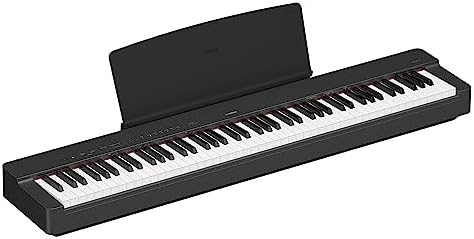 Visit on Amazon → Visit on Amazon →Yamaha Arius YDP-146B |
88 weighted keys, graded hammer style | Three-pedal unit, bench included, upright cabinet | Serious students who need the closest thing to an acoustic at home |
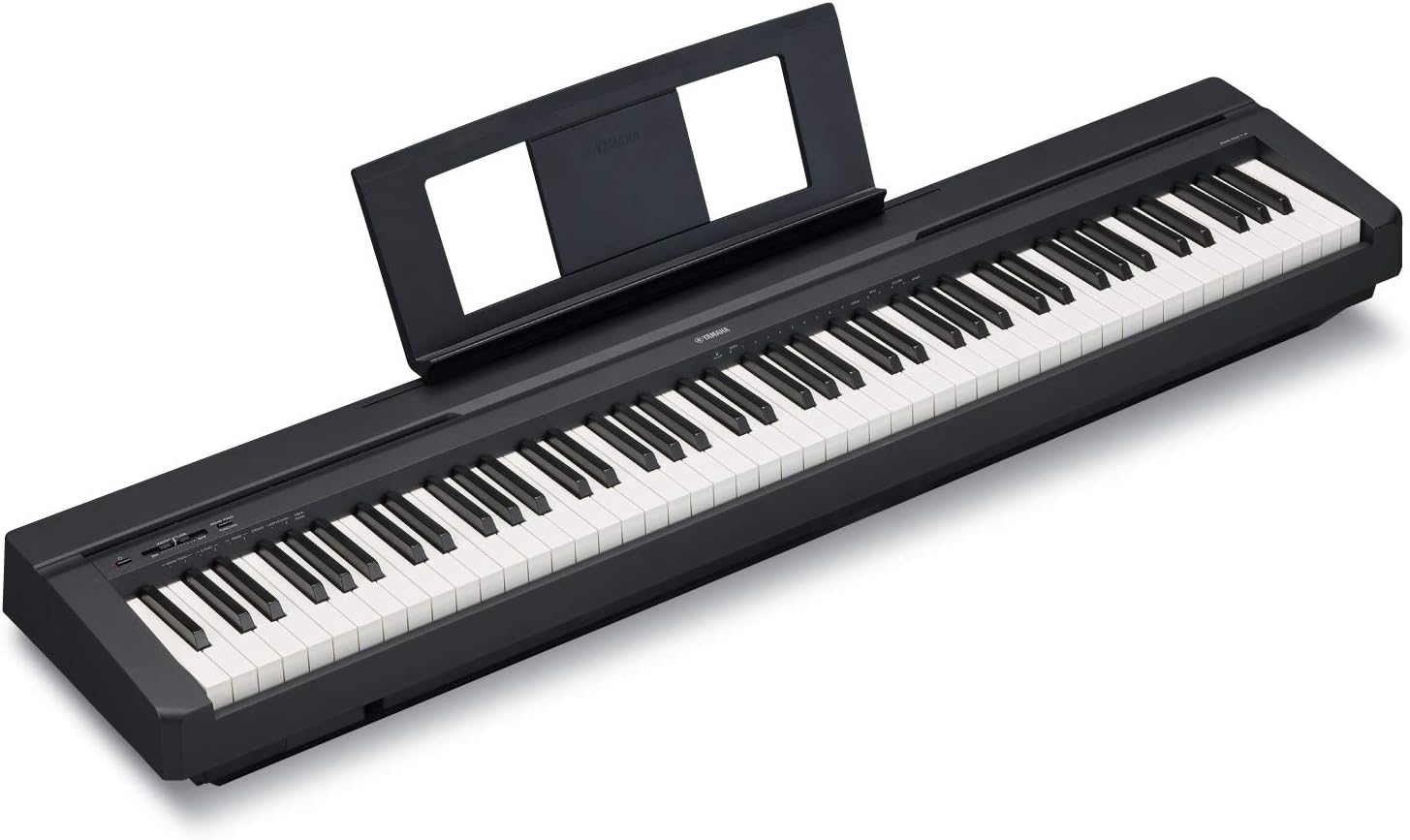 Visit on Amazon → Visit on Amazon →Donner DDP-95 |
88 weighted keys | 4.3 inch LCD, recording, wireless connection, 610 tones, 600 rhythms, three teaching modes | Beginners who want features and a screen at the lowest sensible price |
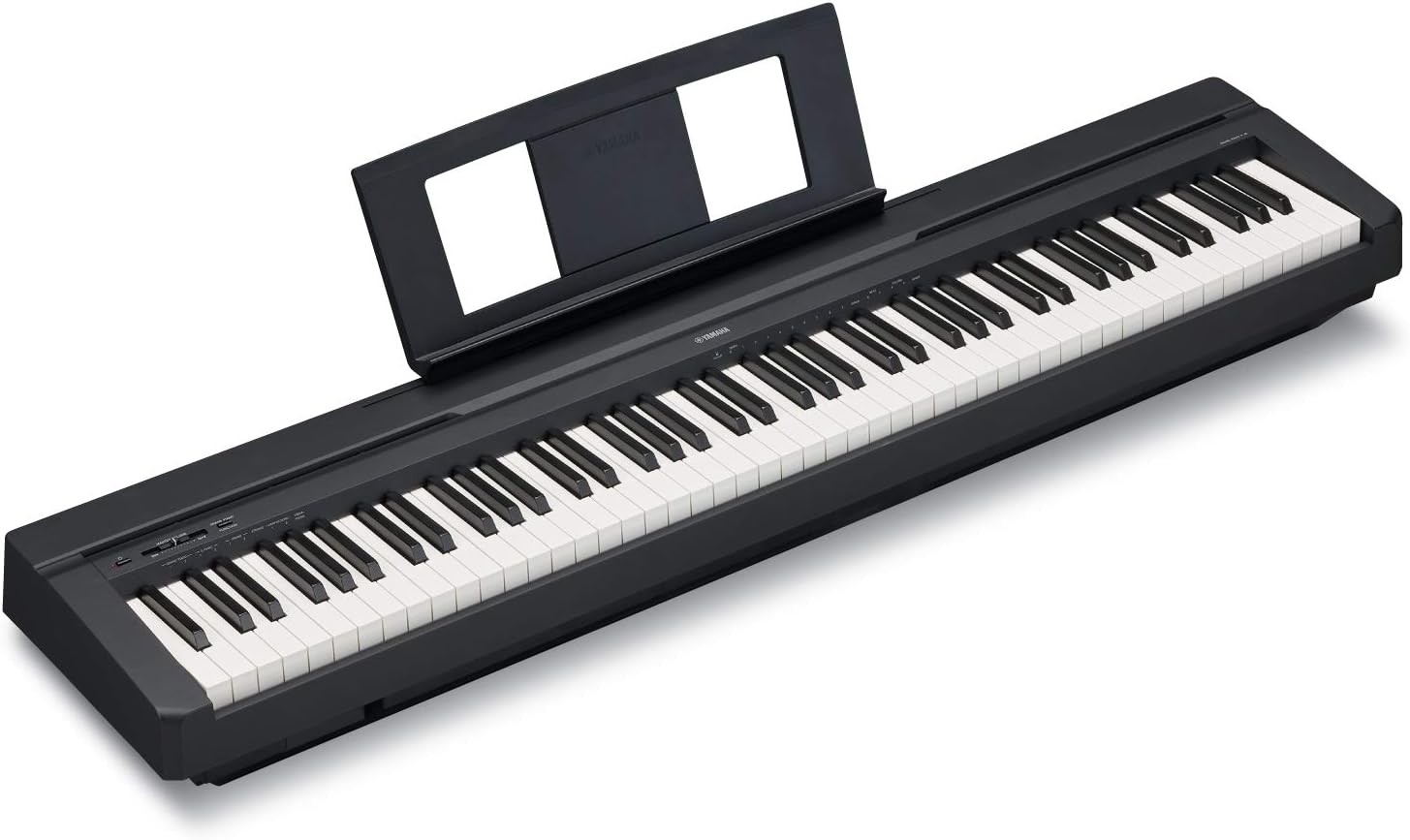 Visit on Amazon → Visit on Amazon →Digital Piano 88 Key Weighted Keyboard, Full-Size Desk |
88 weighted keys | Desk-style cabinet, minimal extras | Small rooms and households where the piano doubles as furniture |
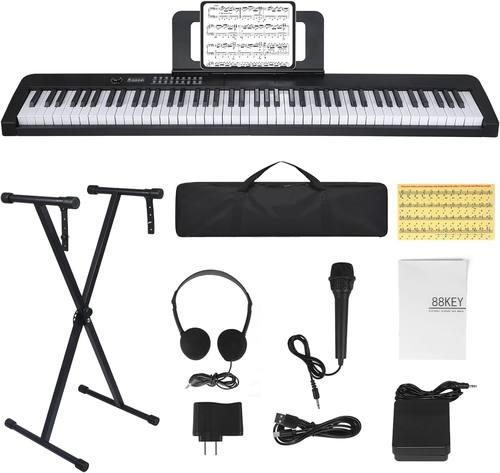 Visit on Amazon → Visit on Amazon →88 Key Piano Keyboard with Semi Weighted Keys |
88 semi-weighted keys | Sustain pedal, power supply, stand, carrying case, headphones, USB-MIDI | Adults who need portability and storage over touch control |
The pattern in that table is the pattern in the market. Weighted action costs money, cabinets cost more money, and the extras that sound impressive in a listing (tone counts, rhythm counts) cost almost nothing to add. If you have to choose between a longer feature list and a better keybed, take the keybed every time.
What I would tell a parent
Buy the action, not the features. A ten-year-old who practices on a keyboard with keys that spring back will develop uneven timing, and you will spend the next two years paying a teacher to fix it.
Budget for the accessories nobody mentions. The bench in the box is usually too low, the pedal slides, and the headphones are an afterthought. Add a real adjustable bench, a pedal that grips the floor, and a closed-back pair of headphones. That is the difference between a practice station and a toy.
Do not buy based on tone count. Six hundred tones means six hundred sounds nobody uses. A student plays piano, and maybe electric piano for one jazz piece a year.
Should you buy the Yamaha Arius YDP-146B?
If the budget and the floor space are there, yes. It is the instrument I would put in a student's house if I wanted to stop worrying about their setup for the next five years. Yamaha's consistency across units is the real product here, and consistency is what a developing ear needs. The three-pedal unit and included bench mean nothing else has to be bought on day one, and the upright cabinet looks like a piano instead of a piece of electronics. Check current Amazon price, because this tier shifts with sales, and buy it when it dips.
Should you buy the Donner DDP-95?
For a first instrument on a tight budget, yes, with one caveat. The weighted keyboard, the recording function, and the teaching modes cover everything a beginner needs for two or three years. What you are accepting is the action consistency question that every brand outside the top tier still has to answer. If you can play the specific unit before buying, do that. If you cannot, buy from a seller with an easy return window, because a bad individual keybed is a return, not a repair.
Should you buy the portable slab?
Yes, if portability is a real constraint rather than an imagined one. Apartments, dorm rooms, shared custody schedules, and closets are all legitimate reasons to choose semi-weighted keys in a carrying case. Just be honest about the timeline. Treat it as a first instrument with a two-year horizon, and put the upgrade on the calendar now.
The bottom line
The action is the piano. Everything else is a feature. Buy the best keybed your budget allows, replace the bench and the pedal that came in the box, and put the difference into lessons. A student with a good action and a mediocre speaker setup will outplay a student with a great sample library and keys that bounce, every single time.