Related: How Much Should a Beginner Digital Piano Cost?
Most of the students who quit my studio in their first year do not quit because the sound was wrong. They quit because the keys fought them. I have taught piano in Seattle for 25 years, I run a home studio where I teach 30 students a week, and I have owned 12 digital pianos in that time, from a cheap slab I bought for a summer camp to a heavy one I would not carry up a flight of stairs. If I could tell every parent one thing before they spend a dollar, it is this: the 88-key digital piano action is the instrument. Samples, speakers, Bluetooth, app lessons are features. The action is what your hands learn on, and hands learn bad habits faster than good ones.
So this is a ranked guide with a bias. I put four instruments in front of real students, played my own test pieces on each, and ranked them by how they feel under the fingers rather than by what the spec sheet promises. Two are slabs you can carry to a lesson. One is the cheapest way to get 88 full-size keys into a kid's room. One is furniture that happens to make sound, and I mean that as a compliment and a warning at the same time.
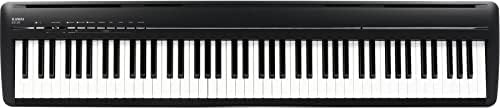
Best Overall: Kawai ES120
The ES120 is what I recommend when a family can stretch a little and wants the piano to survive middle school, high school, and the first year of college. Kawai is one of the two brands I trust to build an action that still behaves when you play quietly, and quiet playing is where cheap actions fall apart. Anyone can make a key go down hard. The hard part is controlling a key at the bottom of the dynamic range, where the Chopin nocturne lives, and this instrument lets me shape that line with finger speed instead of volume.
The first thing I listen for is key repetition. I play the Bach C major prelude from the Well-Tempered Clavier on every instrument that comes through the studio, because it repeats the same finger pattern over and over, and a slow-returning key turns it to mud by the third line. The ES120 keeps up. The action returns under my finger instead of waiting for me to lift, and that is the difference between an instrument a student grows on and one they outgrow in eight months.
The speakers are built in, and the voicing is warm rather than bright. My students practice with headphones at night in apartments, and the speakers are for daylight hours and for playing for family, which is a bigger part of staying with piano than most buyers admit. It is also a slab. It goes in a gig bag, it goes to a lesson, it goes in the car when you move.
One caution before you buy anything in this tier: sit with it for ten minutes. Check where the headphone jack lives, and check whether the sustain pedal stays where you put it. I have sent instruments back over both.
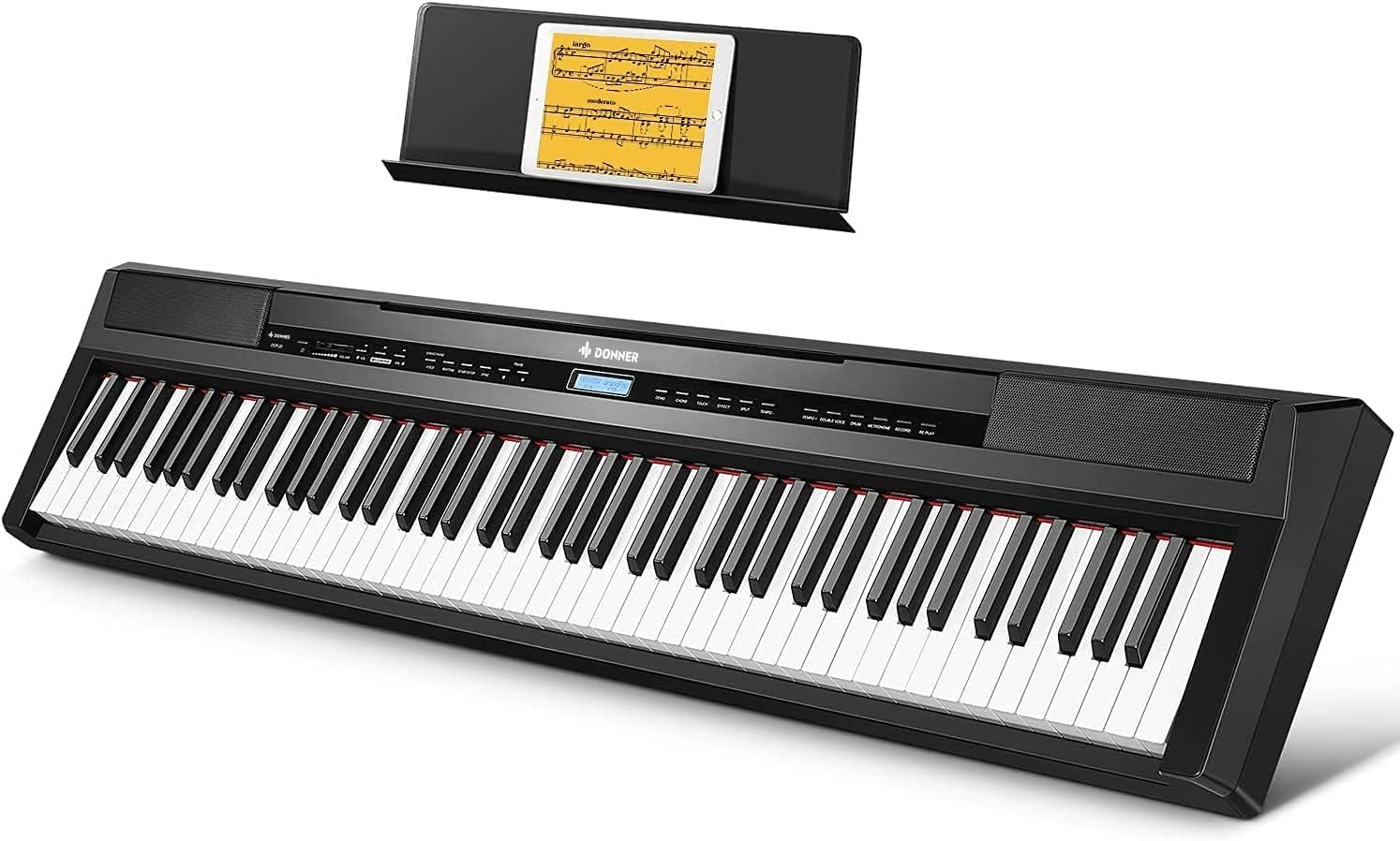
Best Value: Donner DEP-20
The DEP-20 is what I recommend when the budget is genuinely tight and the alternative is no piano at all. It is 88 full-size keys with a weighted feel, it runs from a power supply, and it ships with a sustain pedal, which means a kid can sit down the day the box arrives. For note reading, scales, and the first two years of method books, it does the job, and I would rather a student practice on this than not practice.
Where it shows its price is action consistency. The Chinese-built instruments have closed most of the sound gap with the Japanese brands, and I will say that plainly, but the action is the last thing to get right at the low end. What that feels like in a lesson: the key at the top of the keyboard does not quite behave like the key at the bottom, and as a student plays deeper into a piece, the tone gets louder on its own. That is the machine playing, not the student, and it teaches the wrong reflex.
The pedal in the box is the other weak point. Budget pedals slide across the floor mid-phrase, which is maddening during a recital run-through. Plan on replacing the pedal and the bench, and treat what ships as a temporary fix. The instrument is still the right answer for a lot of families, because a playable piano in the kid's room beats a better one at a grandparent's house.
How I Tested These 88-Key Digital Pianos
Every instrument gets the same three pieces. Bach's C major prelude for evenness and key repetition. The Chopin Op. 9 No. 2 nocturne for dynamic control at low volume, which is where action weight and speaker voicing meet. And a blues improvisation in F, which is the test nobody writes about, because if the instrument is not fun, a 12-year-old will not touch it, and no amount of graded hammer marketing changes that.
I keep a scale in the studio and check how the keys feel at the front edge and again near the fallboard, because an action that gets heavier as you play deeper into the keybed is a deal breaker for me. I keep a dB meter for speaker output, not because loud is good, but because a piano that cannot fill a living room pushes students into headphones permanently, and headphones hide everything.
Then I hand it to a student and watch. Ten minutes of watching a 10-year-old tells me more than an hour of my own playing. Do they lean in? Do they stop to fix a wrong note or slide past it? Does the pedal stay put? None of that shows up on a spec sheet.
What the Tests Showed
Ranked purely by action, the Kawai ES120 is first and the gap is not small. Ranked by action for the money, the Donner DEP-20 is second. The Alesis Recital is a different category of instrument, and I will get to why. The Casio PX-870 sits in the middle on feel and first on furniture, and I stand behind that sentence.
Dynamic control at low volume separated them cleanly. On the ES120 I can play the nocturne's opening phrase at a whisper and still hear its shape. On the DEP-20 the same phrase wants to be a little louder than I intend, and the tone thickens before it should. That is not a setting you can fix. It is the action and the speaker voicing talking to each other.
Speaker voicing, not sample quality, is where most of the audible difference between brands lives now. The samples have plateaued. Two instruments can load the same style of recorded grand and sound nothing alike, because one cabinet points a small driver at your knees and the other puts a decent speaker in front of you. When a box claims concert grand sound from three-inch speakers, I stop reading.
Polyphony numbers are marketing. Nobody plays 256 notes at once. If a spec sheet leads with polyphony, it is because the action did not earn the top of the page. Bluetooth is the feature I care least about and the one that fails most often mid-lesson, so buy for the action and treat the app as a bonus.
The 88-Key Digital Piano Reference Table
This is the table I keep in the studio, sorted by what I would recommend and to whom. The action notes are mine, from playing the same three pieces on each instrument. Check the current listing for specs, because manufacturers change bundles without changing the model name.
| Instrument | Action | Key Repetition | Best For | Price |
|---|---|---|---|---|
 Visit on Amazon → Visit on Amazon →Kawai ES120 |
Weighted, graded, behaves at low volume | Fast, returns under the finger | Students who will study for years, apartment practice on headphones | $849.00 |
 Visit on Amazon → Visit on Amazon →Donner DEP-20 |
Weighted, less consistent top to bottom | Adequate for method books | Tight budgets, first two years of lessons | $309.99 |
 Visit on Amazon → Visit on Amazon →Alesis Recital |
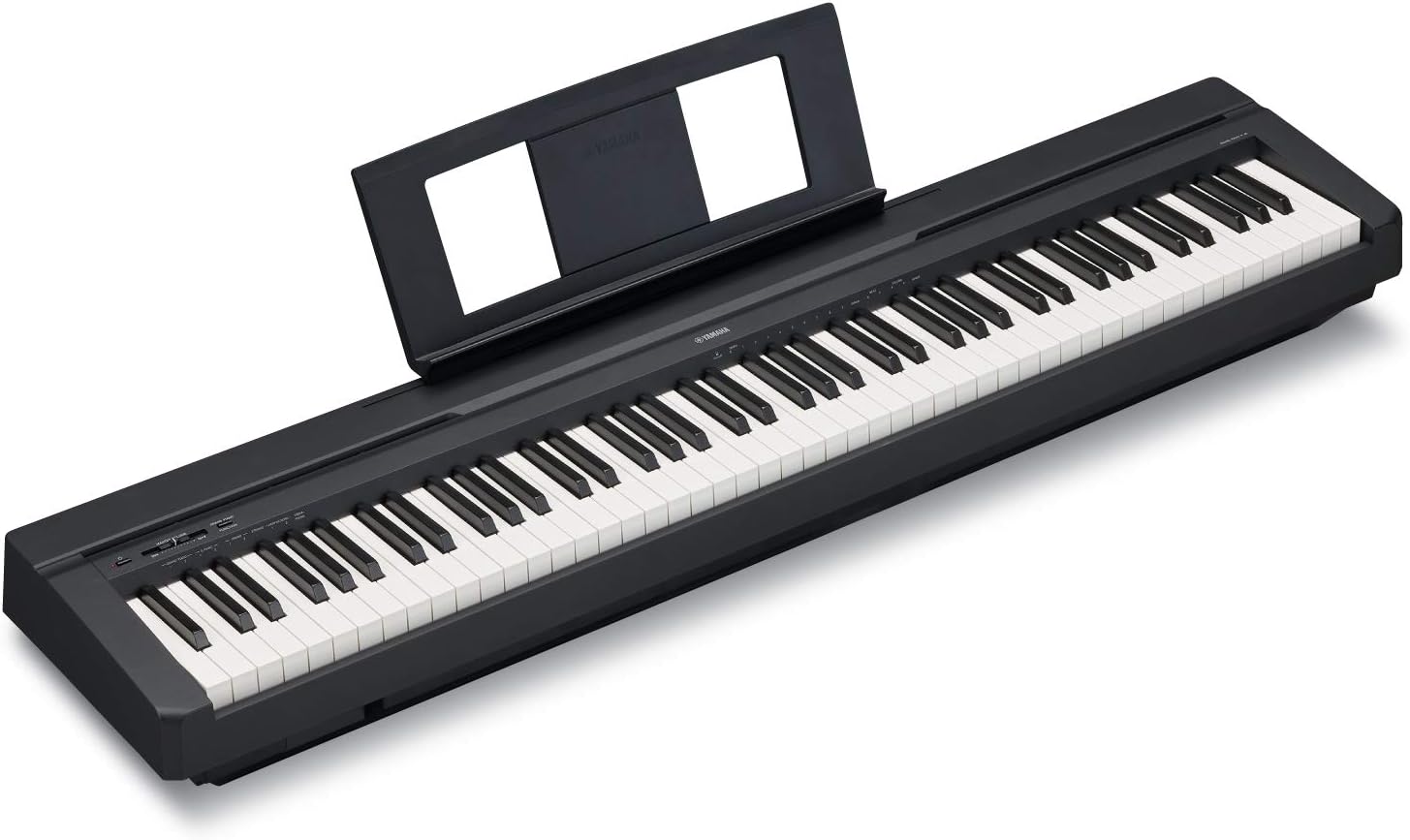
Semi-weighted, spring feel | Fast but light, little resistance | Note reading, casual playing, a second instrument | $251.31 |
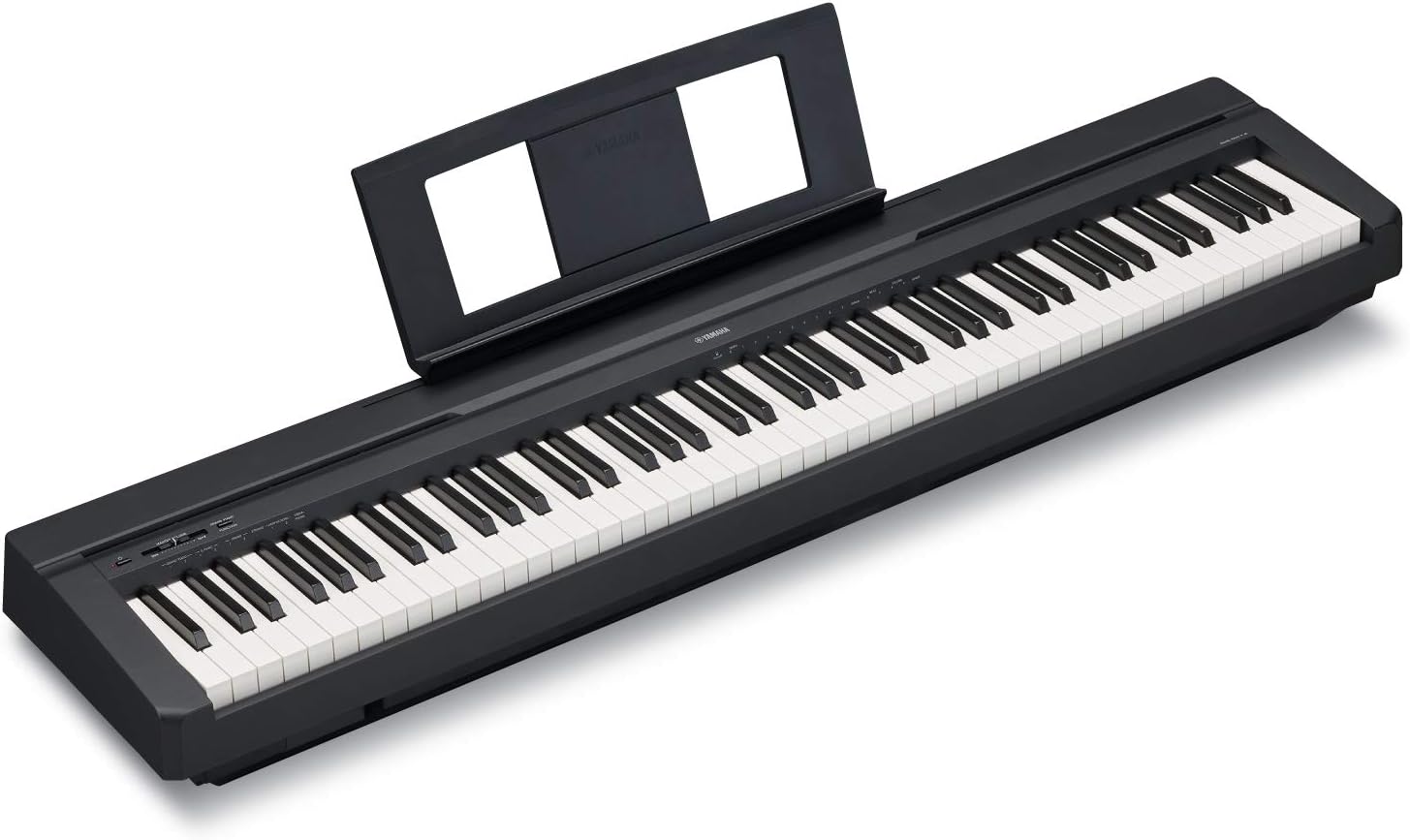 Visit on Amazon → Visit on Amazon →Casio PX-870 |
Weighted, cabinet mounted | Solid, comfortable for long sessions | A piano that lives in one room and looks like furniture | $899.99 |
Alesis Recital Digital Piano 88-Key Semi-Weighted
Semi-weighted is not a worse version of weighted. It is a different instrument, closer to an organ than to a piano: lighter keys, less resistance, a quicker spring back. If the goal is a kid who reads music, keeps a steady pulse, and plays for fun, the Recital is a legitimate and inexpensive way to get 88 full-size keys in the house, and it is the easiest of the four to move.
What it will not do is build finger strength for classical repertoire. I can hear the difference in a transfer student inside one piece. The tone gets loud because the key is light and the hand does not have to work for it, so the student never learns to draw sound out of a key with finger speed. For pop songs, church accompaniment, or playing for their own enjoyment, that is fine. For graded exams, I would put the difference toward the DEP-20 instead.
Casio PX-870 Privia Digital Piano Bundle
The PX-870 is a cabinet piano, and I want to be honest about what that means. You are paying for furniture as much as for sound. But the bundle is the reason I keep it on this list: the furniture bench, the headphones, the instructional book, the online lessons, the DVD, and the polishing cloth all arrive together, and a family that buys a slab usually ends up buying all of that separately and badly. A bench at the right height matters more to a beginner's technique than most parents believe.
The action is comfortable and the cabinet holds a living room. For a student who practices at the same time every evening in the same corner of the house, a cabinet gets played more than a slab that lives in a closet. That is the entire argument for it. If the piano is going to move, if the room is small, or if the student needs to bring the instrument to lessons, skip it and buy a slab.
Should You Buy the Kawai ES120?
Yes, if the student is going to study for years. It is the only instrument here that lets you shape a quiet phrase with finger speed instead of volume, and it is a slab, so it travels to lessons and survives moving day. The transfer students who regress over the summer are almost never the ones practicing on an action in this tier.
Should You Buy the Donner DEP-20?
Yes, when the budget is the deciding factor and the alternative is no piano at all. It has 88 full-size weighted keys, a power supply, and a sustain pedal in the box, so a kid can start the day it arrives. Expect the action to be less consistent from the bottom of the keyboard to the top, and budget for a real pedal and a real bench. A playable piano in the student's own room beats a better one somewhere else.
Should You Buy the Alesis Recital?
Only if the goal is note reading and playing for fun. Semi-weighted keys will not build the finger strength classical repertoire needs, and I can hear that in a transfer student within a single piece. For pop songs, church accompaniment, or a second keyboard at a grandparent's house, it is a legitimate cheap option.
Should You Buy the Casio PX-870?
Yes, if the piano is going to stay in one room and be seen. You are paying for furniture as much as for sound, but the bundle arrives with a proper bench, headphones, and instructional material that most slab buyers end up buying separately and badly. If the instrument needs to move, skip it. Buy the action first, then buy the furniture only if the room will hold it.