Related: Best Digital Pianos for Apartment Practice
Every September I learn which of my transfer students practiced over the summer, and I learn it with my ears rather than with their practice logs. The ones who spent three months on a keyboard with springs under the keys come back playing from the wrist up, because the instrument gave them nothing to push against. A real action tells you where the sound is before you hear it. A cheap one tells you after the fact, and the student quietly learns to guess.
So when a parent asks me about an 88 key digital piano, I do not start with voices, Bluetooth, or sample libraries. I start with the action, and then I ask what the instrument is actually for. A ten year old in weekly lessons needs something different from a forty year old who plays four evenings a week after the kids are asleep.
Everything below sits at the low end of the market, which is exactly where action quality varies most. I have kept the same evaluation routine for years, and every instrument that comes through my studio gets it: the same Bach prelude, the same Chopin nocturne, the same blues improvisation in F, plus a scale for action weight and a dB meter for how the speakers behave at half volume.
This is the reference I hand to families, followed by a table you can screenshot and take to a store.
Best Overall: The Upright 88-Key With Triple Pedals
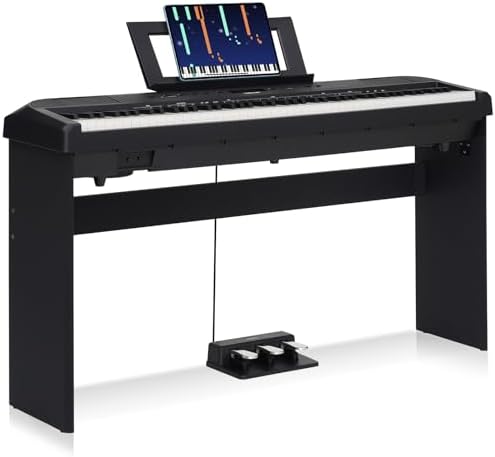
Digital Piano 88 Key Full Size for Beginners, Upright Home Keyboard, Fully-Weighted Touch Response, Built-in Speakers, Headphone Mode for Adults Kids Apartment Living Room Daily Use (Triple Pedals)
This is the one I point families to when they have room for one piece of furniture and one budget. It arrives as a cabinet rather than as a slab, it carries a fully weighted touch response, and it is the only instrument in this group that ships with three pedals.
Three pedals is not a marketing line to me. It is the difference between a student who can practice a nocturne the way it is written and a student who fakes the una corda with the volume knob. The right pedal is the one everybody uses. The middle and left pedals are the ones that show up in real repertoire by year three, and an instrument without them quietly teaches a student to skip those markings.
The upright format also solves a problem slabs cannot. On a cabinet, the pedals belong to the piano, so they stay where your foot left them. On a slab, the pedal is a separate box on the floor, and I have watched more students lose the beat chasing a sustain pedal across hardwood than I care to count. Add the headphone mode and you have an instrument that can live in an apartment without the neighbors becoming a scheduling problem. The built in speakers cover the hours when nobody is sleeping.
Who it fits: a beginner with a year of lessons behind them, an adult returning after twenty years away, and any household where the piano lives in the living room. The cabinet is the part you pay for, and here the premium over a slab is small enough that I would take it.
Best Value: The 88-Key Weighted Desk Piano
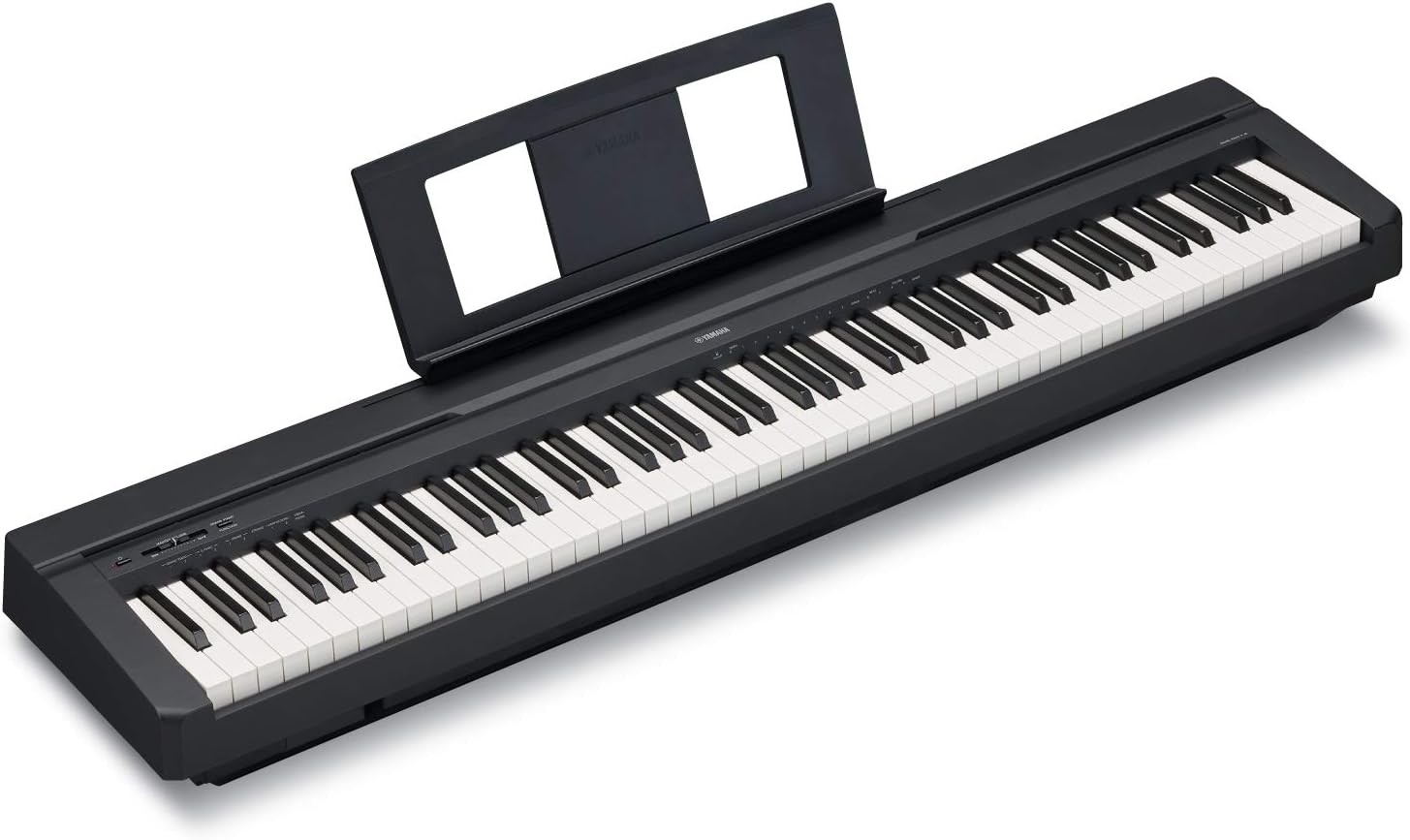
Digital Piano 88 Key Weighted Keyboard Full-Size Desk Electric Piano
If you already own a stand, a bench, and a pedal you trust, this is the smarter buy. It is a desk piano in the literal sense: a full-size 88 key instrument with weighted keys that expects you to supply the furniture. Nothing about it is precious, and that is the appeal.
The trade is straightforward. You give up the cabinet, the attached pedals, and the furniture feel. You keep the full-size layout and the weighted action, which are the two things that actually change how a student plays. If you are comparing this against the upright above, ask yourself one question: is anyone in this house going to play at eleven at night? If the answer is no, the slab usually wins on price and on moving day.
Two warnings. First, the bench and the pedal that ship in a box are the first things I tell parents to replace, and that goes double for a slab where the pedal is not attached to anything. Second, a weighted action is a spectrum, not a checkbox. Some of them bounce, and some of them get heavier as you play deeper into a piece, which is the fastest way to make a student play louder than they intend. Good ones let you control tone with finger speed. Listen for that in the first five minutes, and buy from somewhere with a return window.
Where it loses: it is not furniture, and it never will be. Where it wins: a hatchback, a flight of stairs, and a teenager who will move twice before they turn thirty.
How I evaluate an action
Every instrument that comes through my studio gets the same three pieces, and the pieces are chosen to expose different failures.
The Bach prelude is for evenness. I play it slowly and listen for whether the middle register speaks at the same volume as the ends of the keyboard. If one octave is louder than its neighbor, that is an action problem, not a sample problem, and it will drive a student crazy in a contrapuntal piece.
The Chopin nocturne is for control at low dynamics. Can you voice a melody above an accompaniment, or does the instrument force everything to the same level? This is where a spring action falls apart, because the key gives you no useful information below mezzo piano.
The blues improvisation in F is for key repetition. Fast repeated notes, trills, and whether the key comes back up before the next strike. Ten seconds of repeated middle C tells you more than any spec sheet.
Then the scale, played from the front of the key to the back, to feel whether the action gets heavier as you go. Then the dB meter at half volume, because speaker voicing is what people actually hear.
I have not lived with all four of these instruments, and I am not going to pretend otherwise. What I have is a routine, and it is the same routine I would run in a store with twenty minutes and a pair of headphones.
What separates these four instruments
Two things: the action and the speaker.
The actions run along a spectrum. The upright and the weighted desk piano sit at the hammer end, where the key has real mass behind it and your finger speed controls the tone. The semi-weighted 88 sits in the middle, with resistance but no hammer. The 61 key sits at the spring end. A student who only ever plays at the spring end develops a touch that has to be rebuilt later, and that rebuilding takes longer than learning the notes did.
Polyphony numbers are marketing. Nobody plays 256 notes at once. The number that matters is whether the key returns fast enough to repeat cleanly, and you can test that with one finger.
Sample quality has plateaued across the budget tier. When you compare two instruments and prefer one, you are usually hearing speaker voicing rather than the recording. That is why I carry a meter instead of trusting the marketing copy, and why "concert grand" claims from small drivers deserve suspicion.
Bluetooth that drops mid lesson is worse than no Bluetooth at all. If the wireless audio is unreliable, treat the instrument as a wired one and stop fighting it.
The 88 key digital piano reference table
This is the chart I keep in my studio notebook. Format and action come first, because that is the decision. Then who it fits, and what to verify before you pay.
| Instrument | Format and action | Who it fits | Before you pay |
|---|---|---|---|
 Visit on Amazon → Visit on Amazon →Upright 88 with triple pedals |
Upright cabinet, fully weighted touch response, three pedals, headphone mode | Beginners and returning adults in a living room or apartment | Check current Amazon price |
 Visit on Amazon → Visit on Amazon →Weighted 88 desk piano |
Desk or slab format, full-size 88 weighted keys, furniture not included | Students who already own a stand, a bench, and a pedal | Check current Amazon price |
 Visit on Amazon → Visit on Amazon →Semi-weighted 88 |
Full-size 88 keys, semi-weighted action, lighter touch | Casual adult players and shared households | Check current Amazon price |
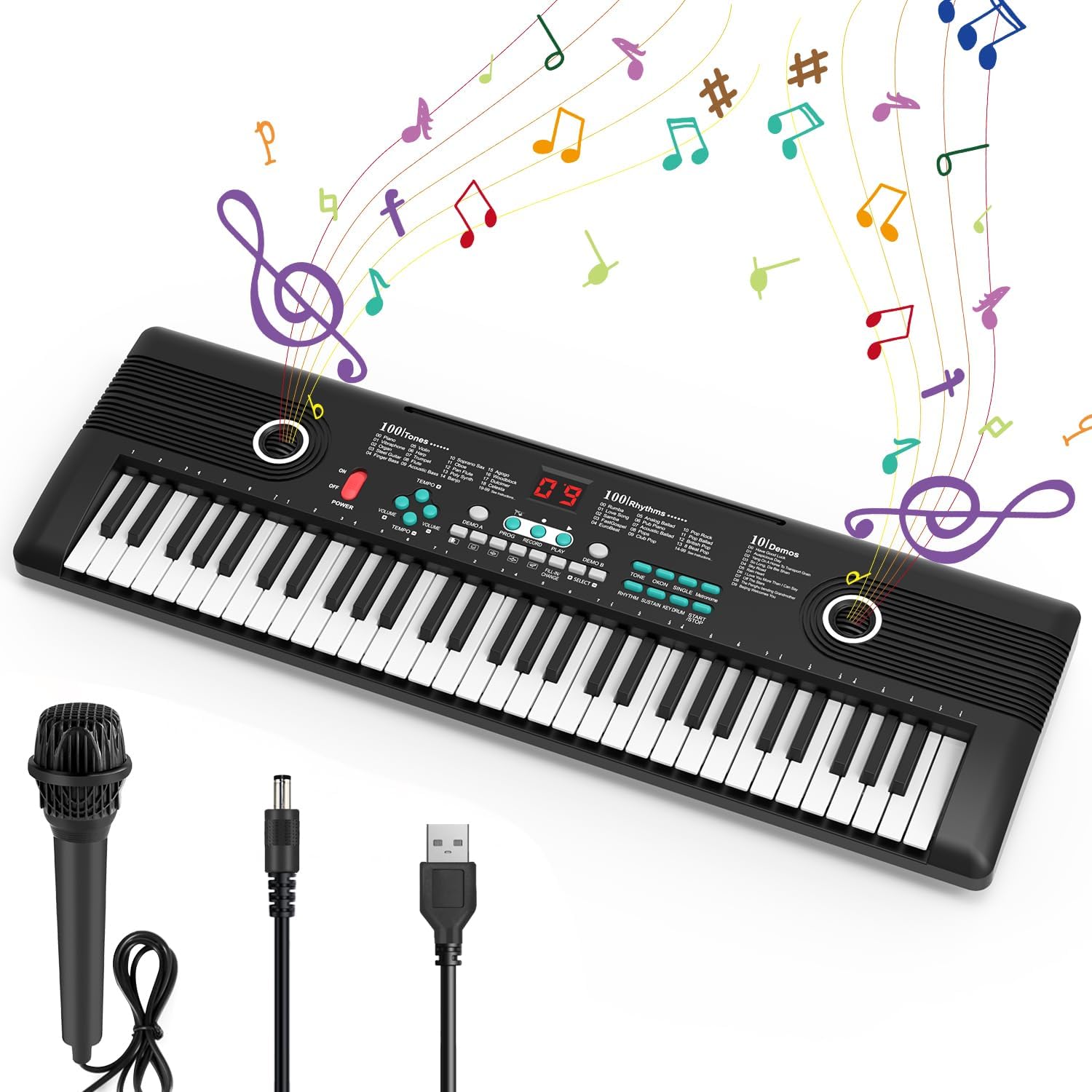 Visit on Amazon → Visit on Amazon →61 key portable |
61 keys, built in dual speakers, external microphone input, teaching content | Very young beginners, travel, a grandparent's house | Check current Amazon price |
Where a semi-weighted 88 fits
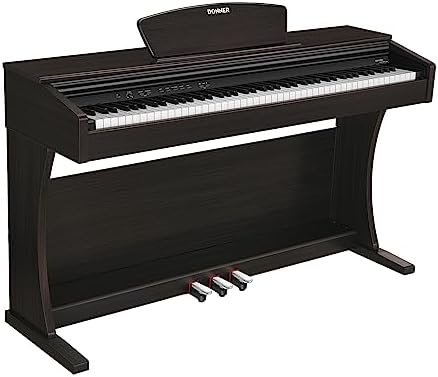
Digital Piano Keyboard 88 Key Semi-Weighted Full Size Electric Piano
Semi-weighted means the keys have resistance but no hammer behind them. You get the full-size layout, so a student learns the geography of an 88 key instrument, and you get a lighter touch that will not tire a small hand or a casual player. What you do not get is the graded feel that lets you control tone with finger speed.
Who it fits: an adult who plays for pleasure, a household where the piano is shared with a young child, a second instrument for a cabin or a rental. Who it does not fit: a student preparing for graded exams, or anyone whose teacher will move them onto an acoustic grand within a year. For those students, the semi-weighted action becomes something to unlearn.
The 61-key exception
61 key keyboard Piano,Portable Electronic Digital Piano,Built In Dual Speakers,External Microphone,Power Plug,Rich Teaching Content,Multi-Functional Electronic Piano Suitable For Beginners
I said at the top that I write about instruments with 88 weighted keys, and this is the exception I will make, because parents ask me about it constantly and the honest answer is useful.
Sixty-one keys is roughly five octaves. Most method books stay inside that for the first year, and then the left hand starts walking lower and the student runs out of instrument. The action here is not a hammer action. The built in dual speakers mean no extra gear, the power plug means no battery budget, and the external microphone input is genuinely fun for a six year old who wants to sing over their own playing. The teaching content built into it is aimed squarely at that same kid.
Who it fits: a five to eight year old who is not sure yet, a travel instrument, a spare at a grandparent's house. Who it does not fit: anyone who has been taking lessons for more than a year. Buy it knowing it is a two year instrument and that you will be shopping again.
Should you buy the upright 88-key with triple pedals?
Yes, for most families who are starting out and have floor space. It is the only instrument here with three pedals, which means a student can practice pedal markings instead of skipping them, and the headphone mode is what makes apartment practice possible after bedtime. It is also the one I would hand a transfer student who already reads music, because the fully weighted touch response will not fight them.
Should you buy the 88-key weighted desk piano?
Yes, if you already own the furniture. It gives you the full-size layout and a weighted action for less than a cabinet, and it survives a move that would cost you a Saturday and two friends. Just budget for a real bench and a real pedal, because the ones in the box are the first things to go.
Should you buy the semi-weighted 88?
For a casual adult player or a shared household, yes. For a student with a teacher and an exam date, no. Semi-weighted is a fine compromise for someone who plays for pleasure, and a poor one for someone building touch.
Should you buy the 61-key portable?
Yes, for a very young beginner or as a second instrument. No, as the only piano in a house where a kid is seriously practicing. It is a good first taste and a bad long-term home.
The action is the piano. Everything else is a feature.