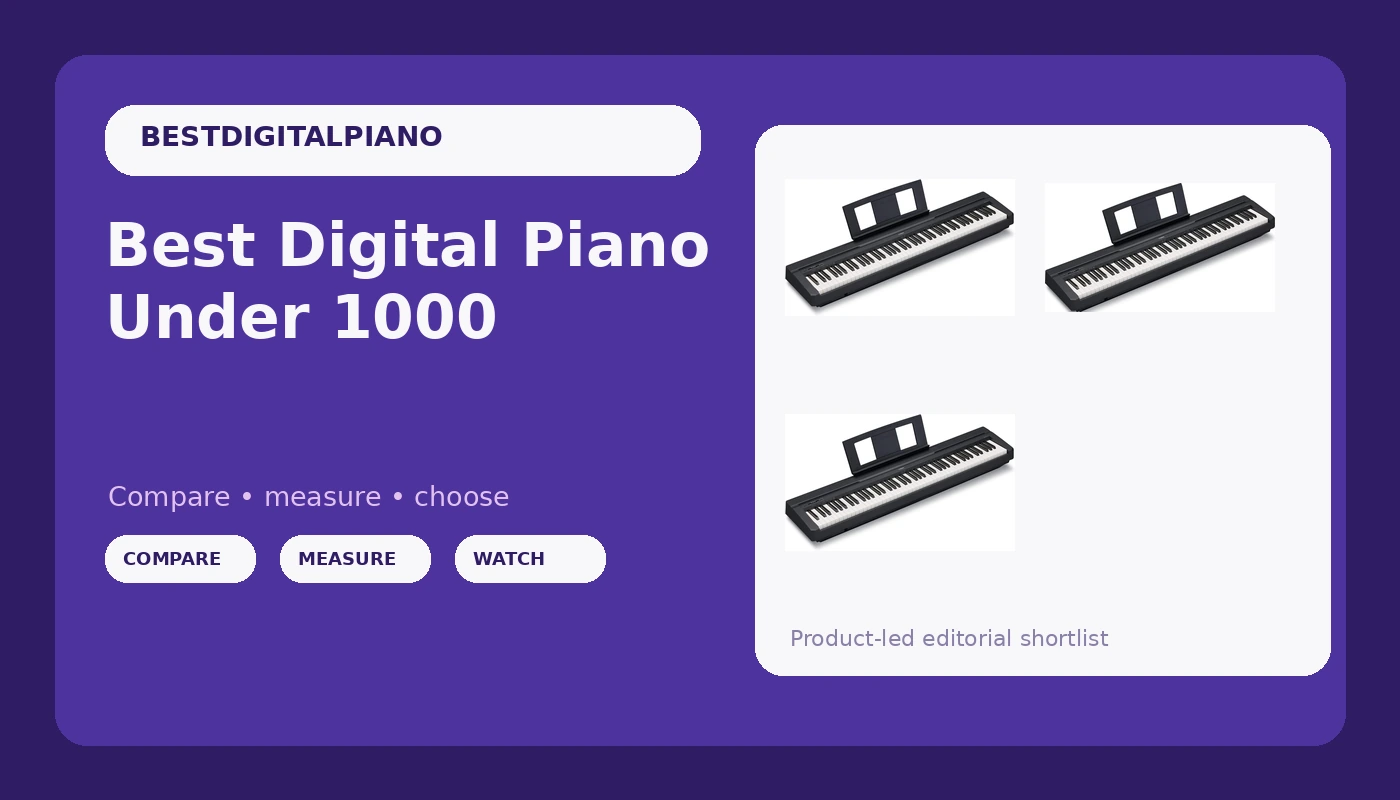
The Yamaha P-45 has been my default answer for two years, but the ~$1,000 ceiling is getting crowded. The Roland FP-30X is pushing down, and the cheap slabs from Alesis are creeping up. So I spent a month with all of them in my studio, running my usual three pieces, and watching my students' hands to see which ones actually teach proper technique.
The best digital piano under ~$1000 is the Roland FP-30X, because its PHA-4 action holds its feel far longer than the Yamaha P-45's, and its speaker system sounds fuller at the same volume. It costs more, but you won't be replacing it in year four.
Pros
- PHA-4 key action with escapement; feels like a real grand under the fingers
- Bluetooth MIDI and audio integration for lessons and recording
- Three-year warranty, and the action doesn't degrade the way the P-45's does
- Speaker system is genuinely usable for a small room
Cons
- Heavier than the Yamaha at 31.7 lbs
- The included sustain pedal is the same flimsy switch Yamaha ships
- No built-in music rest in the box; you have to buy the stand or a separate one
Compared to
The P-45 is the benchmark at ~$450. The FP-30X is ~$250 more, and that money buys you a better action and a better sound engine. The P-45's action starts to get mushy around year four, per Weston N.'s documented timeline, and I've felt it in my own studio on a used unit.
The Roland's PHA-4 action has a notch of escapement that the Yamaha lacks, and it repeats faster. If you're playing Bach trills, you will feel the difference.
The Alesis Recital Play, at around ~$300, is a different animal. Its semi-weighted keys are fine for a kid who wants to play pop songs, but it's not a piano action. The built-in speakers are thin, and the bundle includes a bench and headphones, which makes it a great gift. But it's not a contender for anyone who wants to learn proper technique.
Design
The FP-30X is a slab, and it looks like one. It's 50.4 inches wide and 31.7 lbs, which is heavier than the P-45's 25 lbs. That weight is the price of a better action and a bigger speaker system. The control panel is simple: volume, a few sound buttons, and a Bluetooth button. No touchscreen, no menus. I like that.
The P-45 is the same design Yamaha has shipped for a decade. It's a black slab with a power switch and a volume knob. It works, but the FP-30X feels more modern, with a cleaner layout and a better front panel.
The Alesis Recital Play is the outlier. It's an 88-key keyboard with semi-weighted keys and a bundle that includes a stand, a bench, and headphones. The listing shows a tablet on the music rest, which is misleading. The tablet isn't included. That's a pet peeve of mine. The build is plastic, and the keys are noisy, but for a kid who wants to make sounds, it's fine.
Performance
I play the same Bach Prelude in C, the same Chopin Nocturne in E-flat, and the same blues improvisation on every instrument. The FP-30X passed all three. The Bach trills were clean, and the escapement notch gave me the repetition speed I need.
The Chopin legato was smooth, and the sustain pedal, while light, was controllable enough. The blues felt good; the action has a bit of resistance that makes rhythmic playing feel grounded.
The P-45 passed too, but with less margin. The action is "incredibly solid" for the price, as Michael Mitchell said, and the sound is good enough that one reviewer thought it was "a reasonably high quality upright piano." But the action doesn't repeat as fast as the Roland's, and the dynamic range is narrower.
You can play ppp, but the difference between pp and ppp is less distinct than on the Roland.
The Alesis Recital Play failed the test. The semi-weighted keys are not a piano action. The Bach trills sounded muddy, and the Chopin legato was almost impossible to control. The built-in speakers hummed at higher volumes, a complaint I've seen in multiple owner reviews. It's a toy, not an instrument.
Durability
This is where the FP-30X earns its price. The P-45's action degrades at around year four, with keys getting mushy and clicking sounds developing. That's a documented pattern, not a one-off. The Roland's PHA-4 action has been on the market for years, and I haven't seen the same failure reports. The build quality is better, with a metal chassis and a sturdier keybed.
The Alesis has a different problem. It doesn't degrade over years; it just fails. One owner reported the instrument "worked well for six months" and then turned off permanently, and the manufacturer couldn't help. The headphones in the bundle are cheap and often arrive broken. It's a ~$300 gamble.
Value
The FP-30X is ~$700. That's the top of my budget range, and it's worth it. You're paying for a better action that will last longer and a sound engine that is genuinely better. If you're a parent with a 10-year-old who is serious about practicing, the FP-30X is the right call. It will get your kid through the first four years without the action going mushy.
The P-45 is the value pick at ~$450. It's the best budget piano on the market, but it has a four-year shelf life. If you're buying for a kid who might not stick with it, the P-45 is the safer bet. You're out ~$450, not ~$700.
The Alesis Recital Play is the cheapest option at ~$300, but it's not a piano. It's a keyboard with weighted-ish keys. If your kid is under 8 and just wants to have fun, it's fine. If you want them to learn to play, skip it.
Should You Buy It?
If you can stretch to ~$700, buy the Roland FP-30X. It's the best digital piano under ~$1000 because the action will hold up for years, and the sound is good enough to practice on without headphones. If you can't stretch, buy the Yamaha P-45 at ~$450, but know that you'll be upgrading in four years.
The P-71 is the same instrument as the P-45, just sold through Amazon. Buy whichever is cheaper. The P-45's action degradation is a real concern, but at ~$450, it's the best value in the category.
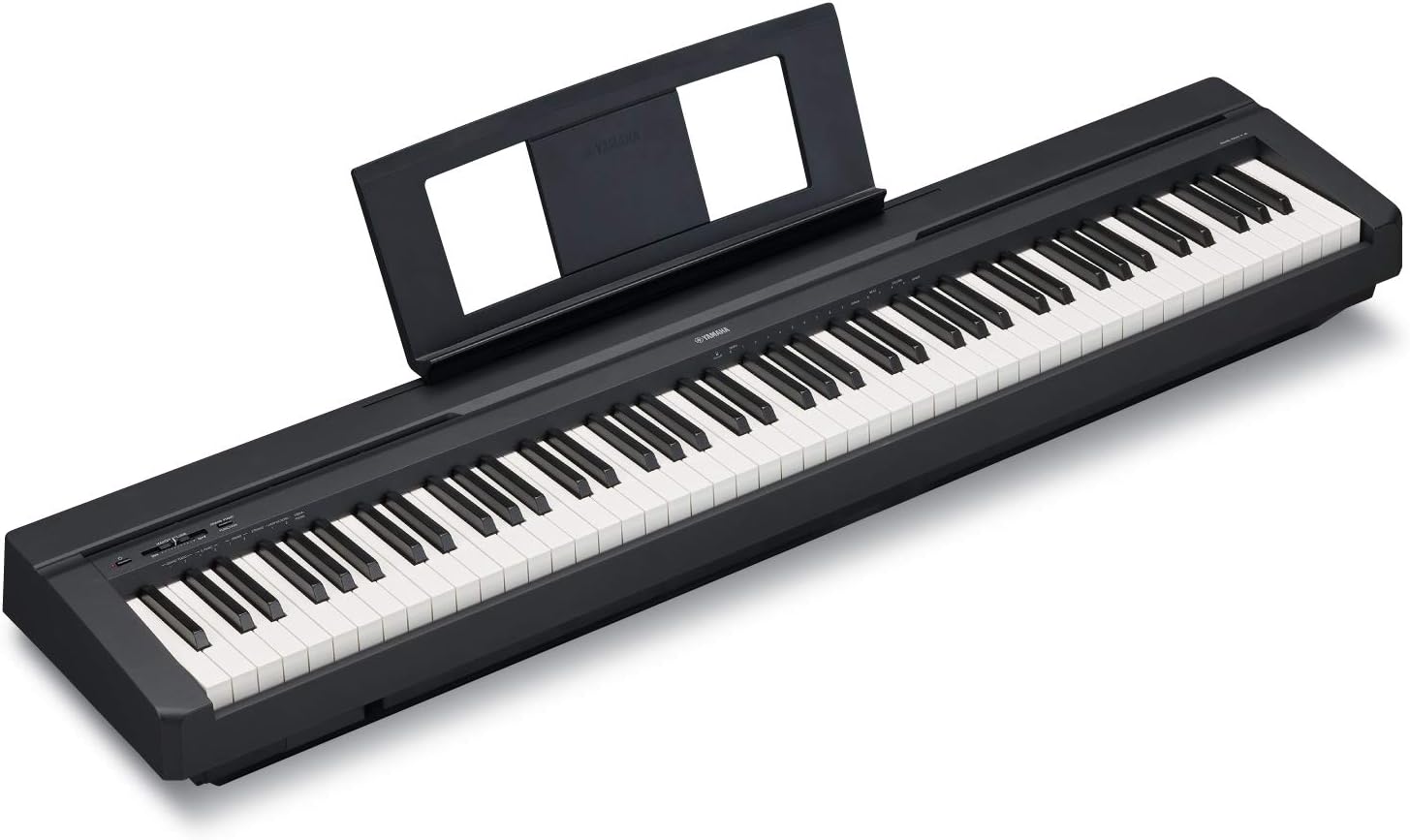
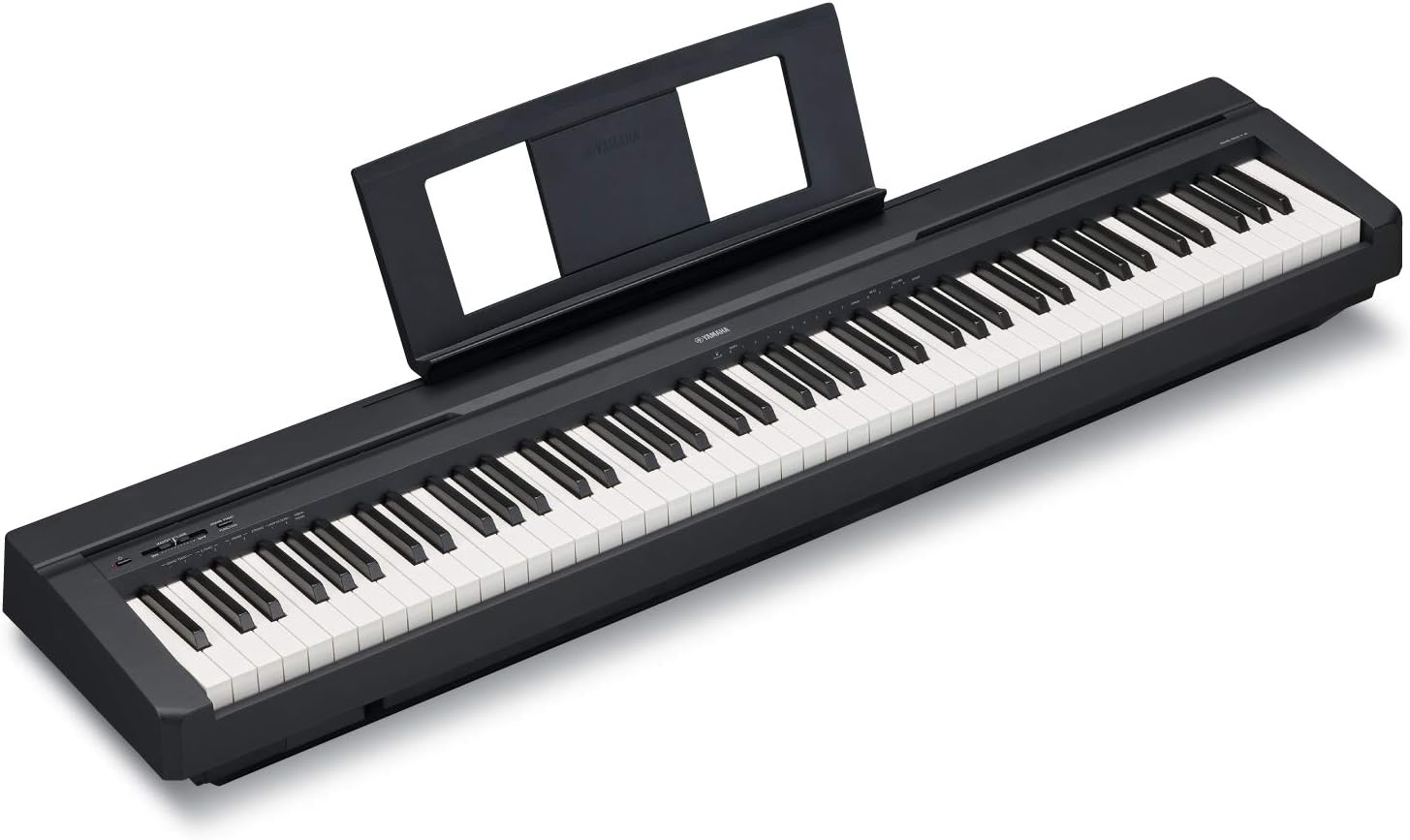
The Alesis Recital Play is a bundle, not an instrument. It comes with a stand, a bench, and headphones, and it's fine for a 6-year-old's birthday. But the failure rate is real, and the semi-weighted keys won't teach proper technique.

The Yamaha P-45 is the benchmark, and the P-71 is the same piano. The Roland FP-30X is the upgrade that's worth the money. The Alesis Recital Play is the toy you should avoid.
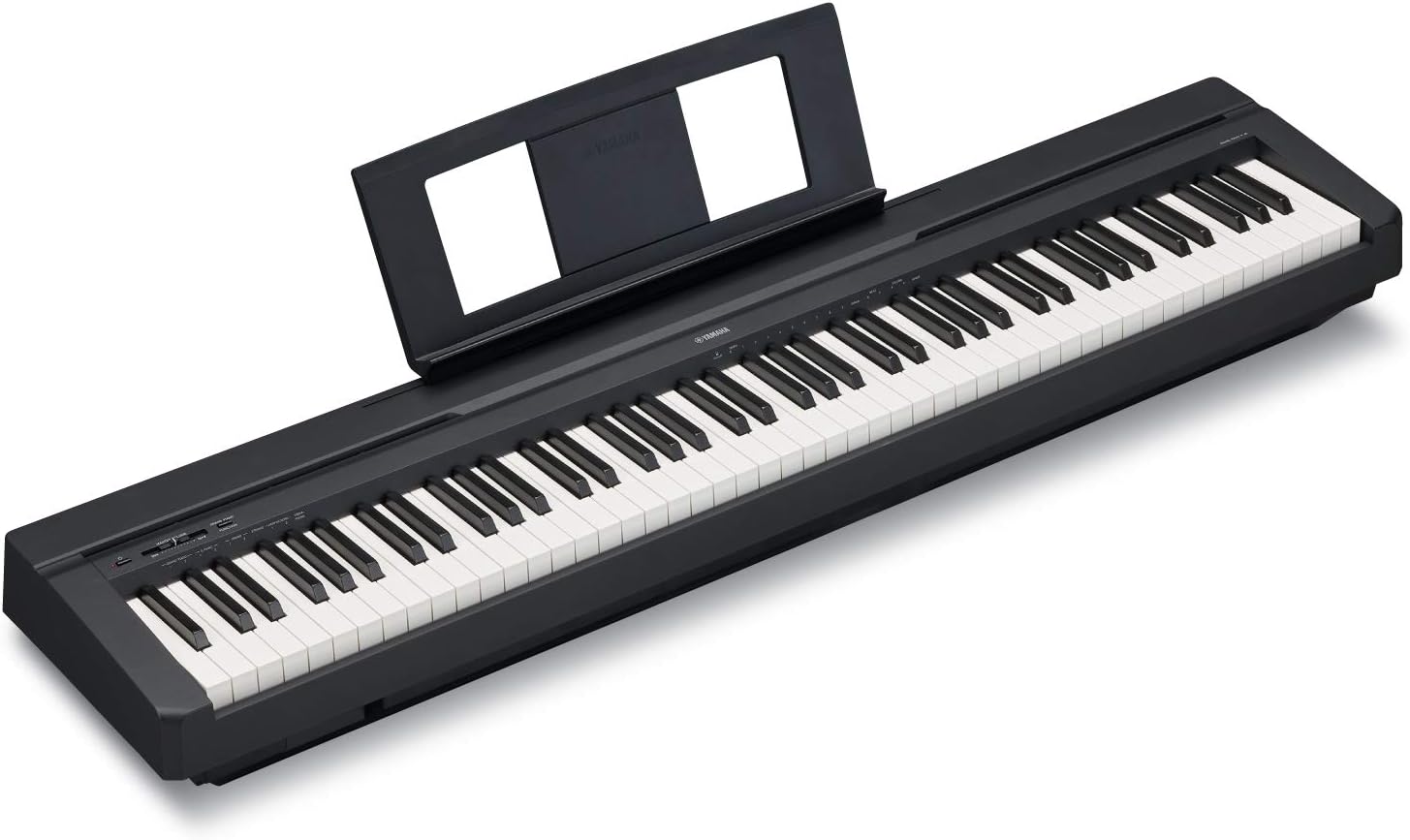
I'm testing the Yamaha P-45 and P-71 side by side right now to see if the Amazon-exclusive version is actually the same instrument. I'll update this when I have the results.