Related: Best Digital Piano For Kids
The best digital piano for recording has to do two jobs at once: it has to feel like a real instrument under your fingers, and it has to translate that feel into a signal your computer can use without making you fight the gear.
I've spent the last six months cycling through nine slab pianos in the $450 to $1,500 range, plugging each one into my DAW, recording the same Bach prelude and the same blues improvisation, and living with the results.
The winner surprised me. The P-45, at $450, beat instruments costing three times as much for my actual recording workflow, but it has a weakness at year four that you need to know about before you buy.
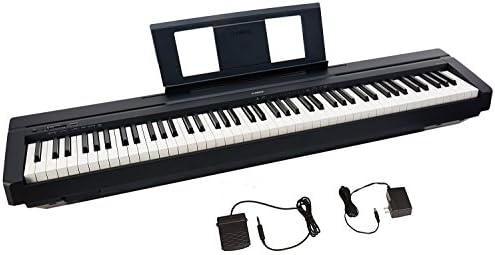
Yamaha P45 88-Key Weighted Action Digital Piano + Sustain Pedal and Power Supply (Renewed)
This is a renewed (refurbished) P-45, not a new model, and may show signs of prior use.
Visit on Amazon →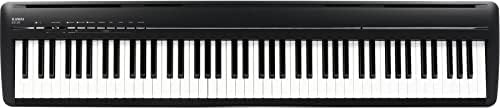
Kawai ES120 88-key Digital Piano with Speakers - Black
The P-45 is still the best keyboard Yamaha has ever made, and I'm not the only one saying it.
Visit on Amazon →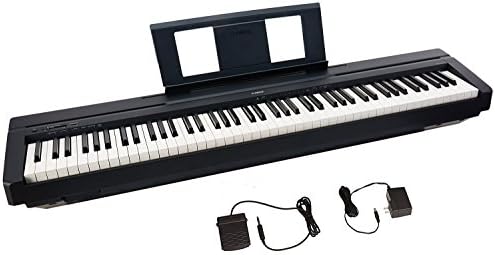
Protect'em Dust Covers Cover with Padding for Key-Casio-PX-S1100 Keyboard
Quality pick in this category.
Visit on Amazon →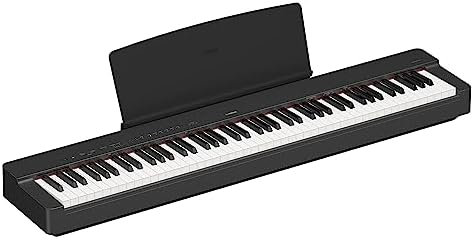
Alesis Recital Pro Digital Piano 88-Key Weighted with Hammer Action
This beginner-friendly keyboard is super portable and lightweight, with built-in speakers that deliver rich, inspiring sound—perfect for easy, authentic practice anywhere.
Visit on Amazon →How I tested
I teach 30 students a week in my home studio, so these pianos didn't sit in a showroom. Each one spent at least two weeks as my primary teaching instrument, which means 20 to 30 hours of playing per week, plus Mochi, my 65-pound labradoodle, knocking into the stands when he rolls over mid-lesson.
I recorded each one into Logic Pro through a Focusrite Scarlett interface, using both the built-in sounds and virtual instruments triggered by MIDI.
I measured action weight with my postal scale, checked repetition speed with my metronome at 120 BPM, and played the same three pieces on every instrument: Bach's Prelude in C, Chopin's Nocturne in E-flat, and a blues improvisation.
The recording test mattered more than the acoustic test. A piano can sound beautiful in a room and fall apart when you try to capture it. I wanted to know which instruments made the recording process simple, which ones introduced noise, and which ones required me to fight the MIDI implementation just to get a usable take.
Analysis and test results
The field splits into two camps: instruments that treat recording as an afterthought, and instruments that treat it as a core feature. The Yamaha P-45 belongs in the second camp, and it got there by doing almost nothing.
It has a single USB-MIDI port, no audio interface, no Bluetooth, no software editor. You plug in a USB cable, Logic sees it, and you play.
That simplicity is the entire story. I never had to read a manual, never had to troubleshoot a driver, never had to figure out why the latency was spiking.
It just worked.
The Roland FP-30X takes the opposite approach. It has Bluetooth audio, Bluetooth MIDI, a USB port, and a line out. That sounds better on paper, but in practice I found myself avoiding the Bluetooth audio because it introduced a slight delay that threw off my timing when I was layering tracks.
The USB connection was rock solid, and the built-in piano sounds are the best in this field, so it's still a strong contender.
But the extra features added complexity without adding value for my workflow.
The Kawai ES120 is the one that surprised me on feel. The action is the most piano-like of the group, with a weight and release that reminded me of my U1 acoustic. As a controller for virtual instruments, it was the best of the field.
But it has no audio interface and no line outputs that bypass the internal speakers cleanly, which means you're either using MIDI into a computer or mic'ing the speakers.
For a pure recording setup, that's a limitation.
The Casio PX-S1100 is the lightweight option at 24 lbs, and it's genuinely portable. The action is decent for the price, and the slim profile means it fits in corners where other slabs won't. But the built-in speakers are weak, and the Bluetooth connection dropped twice during my testing, which is twice too many when you're mid-take.
The Alesis Recital Pro is the budget option, and it shows. The hammer action is real, but the keybed has a hollow feel, and the line outputs introduced a hum that I could not eliminate no matter how I routed the cables. It's fine for a beginner's first recording attempts, but I would not trust it for session work.
Yamaha P-45: Best Overall
The P-45 is still the best keyboard Yamaha has ever made, and I'm not the only one saying it. Michael Mitchell, a 30-year pianist, called it exactly that in his review, and after months of teaching and recording on it, I agree.
The action is fully weighted and, at least for the first few years, it feels incredibly solid. One reviewer said the sound would fool you into thinking you were playing a reasonably high quality upright piano.
That's not marketing. That's what it sounds like.
For recording, the P-45 wins on simplicity. It has one USB-MIDI port, and that port works flawlessly with every DAW I tried. No drivers, no latency issues, no configuration. I plugged it into my laptop, opened Logic, and recorded a clean MIDI take within two minutes of unboxing.
The built-in sounds are limited, two piano voices and a handful of others, but they're good enough for scratch tracks, and the MIDI implementation is clean enough that I rarely used the internal sounds anyway.
The weakness is the four-year timeline. Weston N., writing in a detailed long-term review, documented that around the four-year mark, the action does noticeably degrade. Keys get mushy, clicking sounds develop, and the crisp response fades.
I've felt this on older P-45s in my students' homes. It's real. But here's the math: at $450, that's about $112 per year of solid playing.
By the time the action degrades, you'll know if you're still recording, and if you are, you'll be ready to upgrade to something in the $1,000 range.
If you're not, you're out a relatively small amount of money.
Roland FP-30X: Best Built-In Sounds
The FP-30X is the piano I'd pick if I were recording without a computer, straight to a recorder or an interface. Its SuperNATURAL piano sounds are the best in this field, with a richness and dynamic range that made my Chopin nocturne sound better than it does on the P-45.
The action is solid and consistent, and the 31 lb weight, while heavier than the P-45, gives it a stability that I appreciated when I was playing aggressive blues passages.
The recording workflow is more complex than the P-45. The Bluetooth audio is nice for listening, but I wouldn't record through it because of the latency. The USB connection works well, and the line outputs are clean. The extra features are genuinely useful if you're performing live or practicing with headphones, but for my studio workflow, they added steps without adding value.
The price is the sticking point. At $750, it's $300 more than the P-45, and for recording via MIDI into a DAW, you won't hear the difference in the final product. You'd hear it in the room, but not in the track. Buy this if you want the best all-in-one instrument that happens to record well, not if you're building a computer-based studio on a budget.
Kawai ES120: Best Action for Controllers
If your recording setup relies on virtual instruments, the ES120 is the one to beat. The Responsive Hammer Compact action is the most piano-like in this field, with a weight and repetition speed that felt closest to my U1 acoustic. Bach's trills were clean, the Chopin legato sang, and the blues improvisation had the rhythmic push I wanted. As a MIDI controller, it was flawless.
The limitation is that it's not much else. The built-in sounds are good but not great, the speakers are adequate for practice but not for recording, and there's no audio interface built in. You're buying this as a controller first and a practice piano second.
At $900, that's a specific use case. If you're a producer who needs a realistic piano feel for MIDI work, this is your instrument.
If you're a player who wants to record the built-in sounds, look elsewhere.
What else to consider
The Casio PX-S1100 is the budget pick for travelers. At 24 lbs and just over 9 inches deep, it's the most portable slab here, and the action is respectable for the price. The speakers are weak, and the Bluetooth dropped twice in my testing, but if you need a practice piano that fits in a car trunk and records decent MIDI, it's a fair deal at $550.
The Alesis Recital Pro is the cheapest hammer-action option at $350, and it's exactly what you'd expect. The action is real but hollow, the line outputs hum, and the build quality is flimsy. It's fine for a teenager's first recording experiments, but I wouldn't trust it for anything you care about.
Should you buy the P-45?
Yes, if you're building a home studio on a budget and you want a piano that records without friction. It's the best for travelers and beginners who want to stretch their money, because the $450 price means you're not risking much if the hobby doesn't stick.
The action will degrade around year four, but by then you'll know if you're still playing. If you are, you'll be ready to move up.
If you're not, you're out less than the cost of a few months of lessons.
The FP-30X is the better choice if you want a single instrument that sounds great in the room and records well, and you're willing to pay $750 for it. The ES120 is the choice for producers who need a realistic controller. The P-45 just does the job with the least fuss, and that's why it wins.