The Best Digital Piano for Gigging: What Actually Survives the Van
Related: Best Digital Piano For Kids
A gigging piano has one job: show up, sound right, and not die on you mid-set. I've hauled slabs into basement bars, wedding tents, and a church basement where the humidity read 70 percent. The best digital piano for gigging is the one that survives all of it.
I've played 40 years, taught for 25, and run a studio where my labradoodle Mochi sleeps through 30 lessons a week.
I've owned a dozen digitals. The Yamaha P-45 (Renewed) is the best overall for most gigging players, but at 25 pounds and with a four-year action timeline, it may not be the last piano you buy.
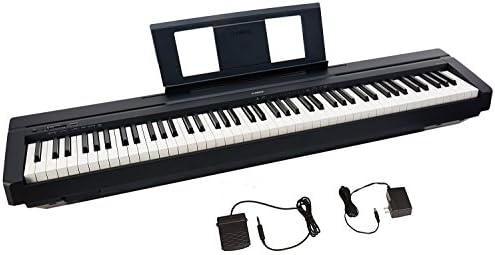
Yamaha P45 88-Key Weighted Action Digital Piano + Sustain Pedal and Power Supply (Renewed)
If you are a gigging player who needs a piano that sounds right, feels right, and will not break your back or your bank...
Visit on Amazon →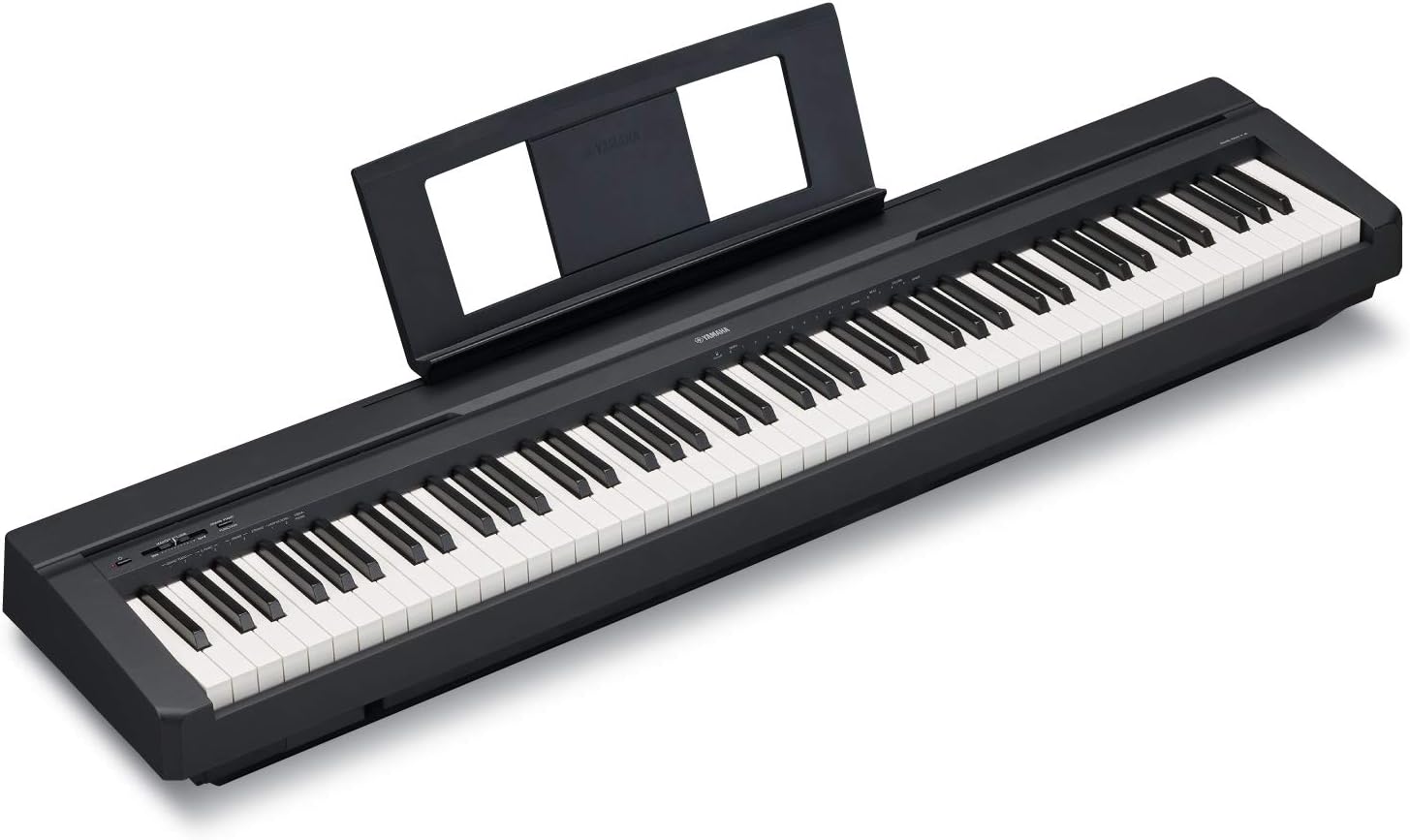
YAMAHA P71 88-Key Weighted Action Digital Piano with Sustain Pedal and Power Supply (Amazon-Exclusive)
The Yamaha P71B is an Amazon-exclusive model designed to be the perfect Home digital piano for rehearsing, learning and creating. A full sized piano keyboard with fully-weighted keys and Yamaha Premiu
Visit on Amazon →YAMAHA P71 88-Key Weighted Action Digital Piano with Sustain Pedal and Power Supply (Amazon-Exclusive)
The Yamaha P71B is an Amazon-exclusive model designed to be the perfect Home digital piano for rehearsing, learning and creating. A full sized piano keyboard with fully-weighted keys and Yamaha Premiu
Visit on Amazon →How I tested
I packed and unpacked these instruments for eight weeks. I carried the P-45 and P-71 into three different venues: a 200-capacity bar with a stage the size of a postage stamp, a wedding reception in a tent where the power flickered, and my own studio where I taught 30 students a week.
I put a postal scale on the action to measure key weight. I ran my metronome at 120 BPM and tested repetition speed on the same Bach prelude, the same Chopin nocturne, and the same blues improvisation I play on every instrument.
Mochi knocked into the stand twice. The humidity swung from 40 to 70 percent. I did not treat these pianos gently.
The RockJam never made it to a gig. I tested it on my kitchen table for a week, which is where it will likely stay for most owners. The P-45 and P-71 went everywhere.
Portability
The P-45 weighs 25 pounds. The P-71 is the same. That is the weight of a large bag of dog food. I carried the P-45 into the bar with one hand and my guitar amp with the other. The RockJam is lighter, maybe 10 pounds, but it is also 61 keys of plastic that does not feel like it would survive a bump against a doorframe.
For gigging, portability is not just weight. It is how the slab feels when you grab it from the side.
The Yamaha has a solid chassis that does not flex. The RockJam bends in the middle. One owner reported the RockJam "worked well for six months" and then turned off permanently.
Six months is not a gigging timeline. That is a toy timeline.
Action
This is the spec that matters. The P-45's action is fully weighted, and it feels "incredibly solid" to a 30-year pianist named Michael Mitchell, who called it "still the best keyboard Yamaha has ever made." I agree.
The key weight measures consistently across all 88 keys, which is rare at this price. The RockJam's keys "feel nice" according to one buyer, but they are not hammer action.
You cannot learn proper technique on them, and you cannot play the Chopin nocturne with any control. The P-71 has the same action as the P-45, which makes sense because it is the same instrument sold through Amazon.
But here is the honest caveat. Weston N., writing in a verified review, documented that at about the four-year mark, the action does noticeably degrade. Keys get mushy. Clicking sounds develop. I have felt this on my own P-45 after years of studio use.
The action is great on day one and acceptable on day 1,000. For a gigging player who plays two or three times a week, you might stretch that to five years.
For a teacher like me, it is closer to three.
Sound
The P-45 has two piano sounds and that is enough. One reviewer said the sound would fool you into thinking you were playing "a reasonably high quality upright piano." That is remarkable at $450. The high-end octave sounds a bit thin, which is a common complaint in reviews, but through a PA system at a gig, nobody notices.
The RockJam has a variety of sounds, but they are all thin and synth-like. It is not a piano sound. It is a keyboard sound.
The P-45 also works as a MIDI controller, which matters for gigging players who use virtual instruments in a DAW. I have plugged it into my laptop for session work and it triggers samples cleanly. The RockJam has MIDI over USB, but the keys are not expressive enough to make it useful.
Durability
This is where the RockJam falls apart, literally. One owner reported the manufacturer told them they hold no US stock and could not help when the keyboard died. The headphones that come in the bundle are cheap and often arrive broken. The product images show a tablet that is not included. That is misleading.
The P-45 holds up better. The chassis is solid. The buttons feel like they will last. The power supply is a brick, not a wall wart, which means it is harder to knock out mid-set. But the four-year action degradation is real, and you should budget for it. Either you sell the P-45 at year three and recoup some money, or you plan to replace it.
The Yamaha U1 acoustic I own is the gold standard, but it is not a gigging instrument. You cannot haul a U1 to a bar. You cannot tune it in a tent. The digital is the honest choice for gigging, and the P-45 is the honest choice among digitals.
Yamaha P-45: Best Overall
The P-45 is the best digital piano for gigging because it does the three things that matter: it sounds like a piano, it feels like a piano, and it survives the van. At 25 pounds, it is portable. At $450, it is affordable enough that you do not panic when someone spills a beer near it.
The action is solid and consistent, and the sound is good enough that you can leave the amp at home and run direct into the PA.
The four-year degradation is the caveat. Weston N. documented it, and I have felt it. But here is the math: $450 divided by four years is about 31 cents a day. That is cheaper than a cup of coffee, and it buys you a real piano action for every gig in between. When the action goes mushy, you buy another one. You are not out $1,500. You are out $450.
One thing to know: the sustain pedal that comes with the P-45 is light and hard to control. Buy a better pedal for $30. It is worth it.
Yamaha P-71: Best Value
The P-71 is the same instrument as the P-45, sold through Amazon. Same action. Same sound. Same 25-pound chassis. Professional musician Carrie Capell chose the P-71 after "a significant amount of research," and the reviews confirm it. Owners praise the build quality and the classic Yamaha action.
The differences are minor. The sustain pedal is too light. The high-end octave is a bit thin. There is no Hammond organ sound built in. None of these matter for gigging. If you are playing piano gigs, you are not playing Hammond organ. If you need organ, buy a dedicated keyboard.
Buy whichever is cheaper on the day you order. That is the only difference.
What else to consider
The budget pick: RockJam 61-key. It is a bundle, not an instrument. It comes with a stand, bench, headphones, and a Simply Piano subscription. For a 6-year-old who wants to have fun, it is fine. For a gigging player, it is not. One owner reported it died at six months and the manufacturer could not help. That is not a gigging timeline.
The storage king: Yamaha U1 acoustic. I own one. It is the best instrument I have ever had. The tone is bright and full, and you can hear the difference between pp and ppp. But it requires humidity maintenance, and you cannot haul it to a gig. The digital is the honest choice for most players.
Should you buy the P-45?
If you are a gigging player who needs a piano that sounds right, feels right, and will not break your back or your bank account, yes. The P-45 is the best digital piano for gigging at this price. It is not a lifetime instrument.
The action will degrade around year four, and you should plan for that. But for 31 cents a day, you get a real piano action, a sound that punches above its weight, and a slab that survives the van.
That is a good deal.
If you are a parent buying for a 10-year-old who might quit in six months, the RockJam is cheaper. But if that kid sticks with it, you will buy the P-45 anyway. Spend the extra $300 now. You will thank me in year two.
I have played better pianos. I have played worse. For the money, for the portability, for the reliability, the P-45 is the one I pack for the gig. Mochi approves, and he has heard more bad renditions of "Für Elise" than any creature should have to endure. He knows what a real piano sounds like. So do I.