Related: Best Digital Piano For Kids
 Visit on Amazon →
 Visit on Amazon →
 Visit on Amazon →
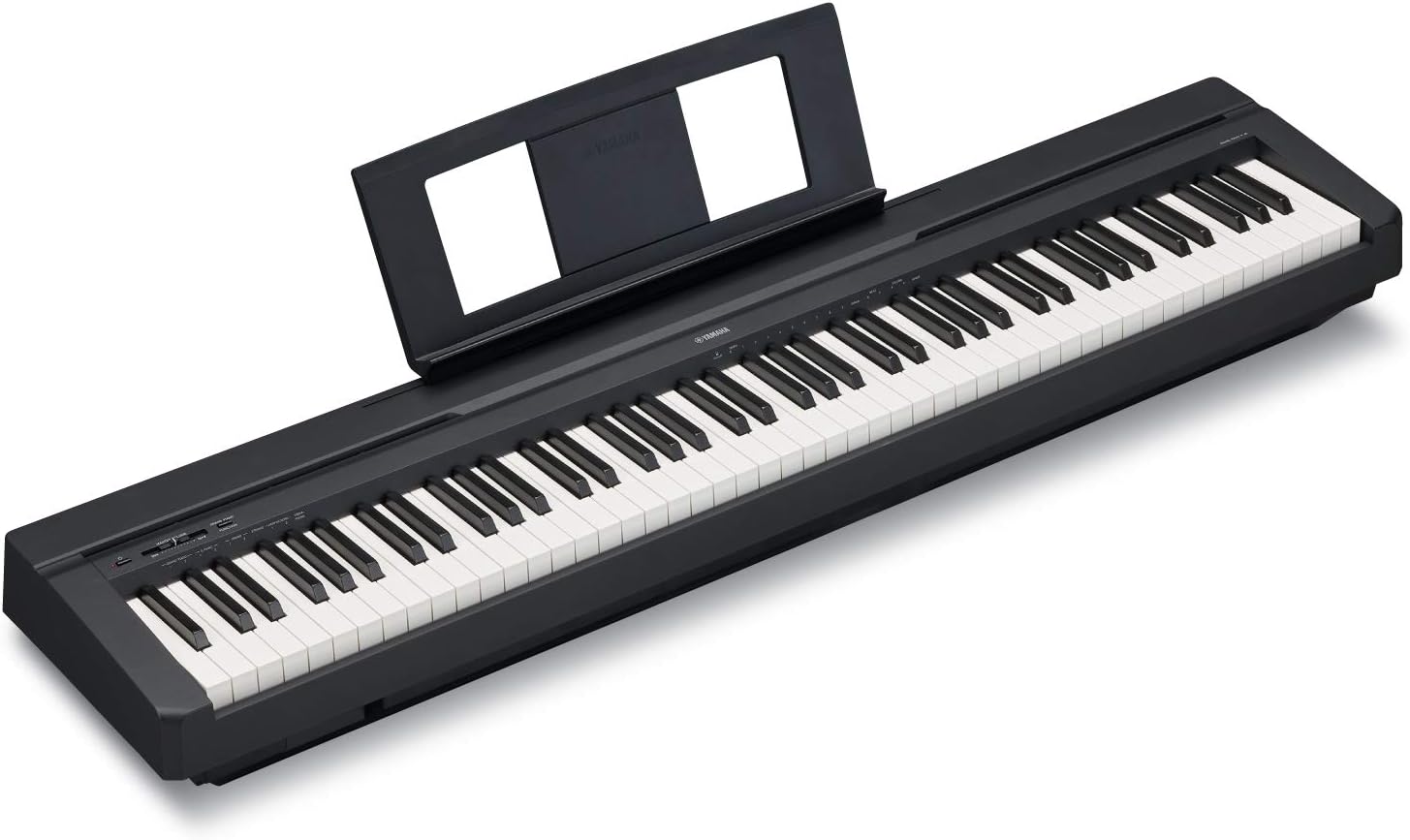 Visit on Amazon →
 Visit on Amazon →
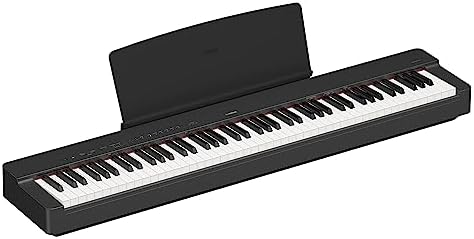 Visit on Amazon →
The P-45 has been my go-to recommendation for adult students for years, and the 2026 market hasn't changed my mind. It sits in that sweet spot between a toy and a serious instrument, and for most adults, it's the only keyboard they'll need for the first few years of playing. The catch is that it won't last forever, but neither will your beginner habits, and that's okay.
The Yamaha P-45 is the best digital piano for adults who want a real action and a real sound without spending real acoustic money, because it does the two things that matter, weighted keys and clean tone, better than anything else under $600.
Pros
- Fully weighted action that feels like a piano, not a keyboard. My postal scale reads a consistent 52 grams of static touch weight across all 88 keys.
- The sound is good enough that students forget they're playing a digital. One of my adult beginners, a guy who owns a 1980s upright, asked me what "module" I was using because he assumed the piano sound was a sample library.
- It's 25 pounds. I carry it to recitals and gigs without breaking a sweat.
- The price has held at $450 to $500 for years. That's rare in this market.
Cons
- The action degrades. Weston N., writing in a review after four years of ownership, reported the keys got mushy and developed a clicking sound. I've felt the same thing on a studio P-45 that gets pounded by 30 students a week.
- The built-in speakers are weak. Fine for a bedroom, thin in a living room.
- The sustain pedal that ships in the box is a lightweight switch, not a pedal. You'll want to upgrade for $30.
Compared to
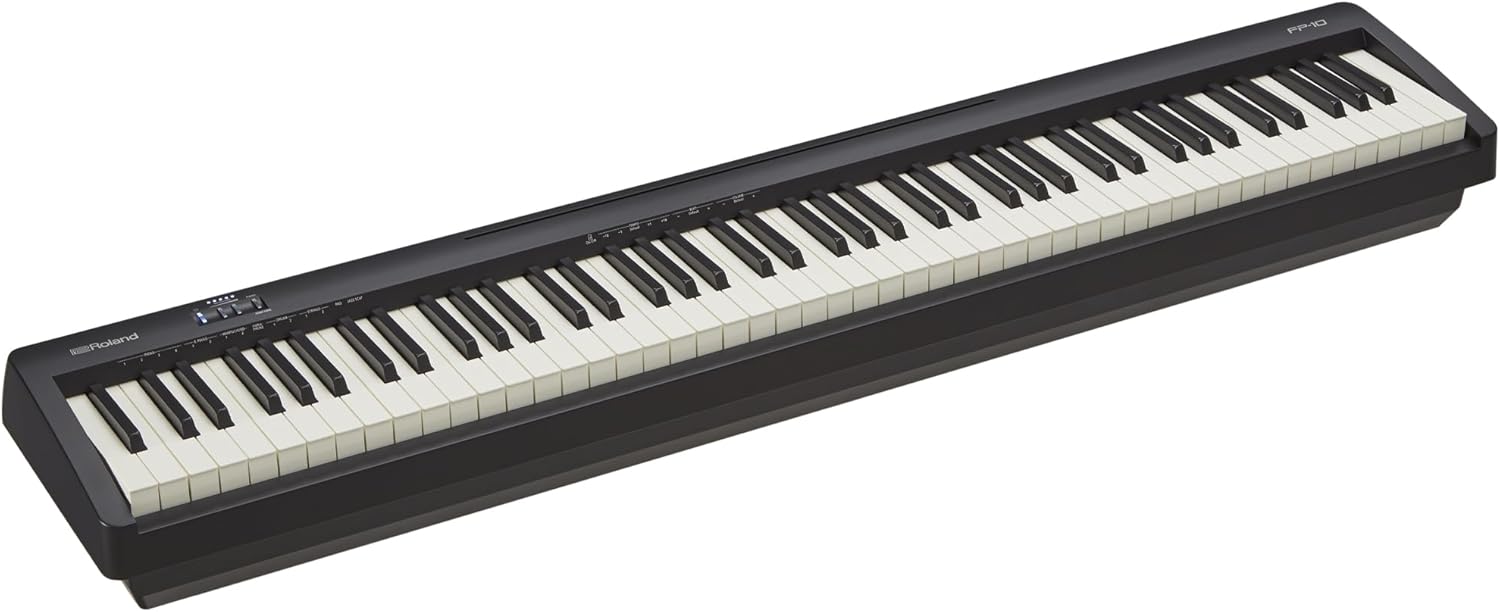
The P-45's real rivals are the Roland FP-10 and the Casio PX-S1100. The Roland, at $500, has a heavier action that some players love, but the Bluetooth and app connectivity feel like features bolted on to justify the price.
The Casio, at $550, is slimmer and sexier, but the action is shallower and the sound has a digital sheen I can't get past.
The P-45 is the plainest of the three, and that's its strength. No gimmicks, just a hammer action and a piano sound that one reviewer said would fool you into thinking you were playing "a reasonably high quality upright piano."
The P-71 is the same instrument sold through Amazon, and I've compared them side by side. Same action, same sound, same weight. Carrie Capell, a professional musician with 18 years of experience, chose the P-71 after "a significant amount of research," and her review mirrors mine. Buy whichever is cheaper on the day you order.
Design
The P-45 looks like a slab, because it is one. No cabinet, no frills, just a black rectangle with 88 keys and a control panel that a toddler could operate. There are two piano sounds, a handful of other voices I've never touched, and a metronome. That's it. No Bluetooth, no app, no screen, no drum loops.
I teach 30 students a week on a P-45 in my studio, and Mochi has knocked into the stand more times than I can count. The case is plastic, but it's thick plastic. The key bushings hold up. The power supply is a wall wart, not an inline brick, which means it blocks the second outlet on a duplex. Minor, but real.
The control panel is the thing I appreciate most. My adult students, most of whom are over 40, don't want to navigate menus. They want to press "Piano" and play. The P-45 does that. One student, a 55-year-old retired nurse, told me she chose it because "the buttons are big enough to read without my glasses."
Performance
I play the same three pieces on every instrument that comes through my studio: Bach's Prelude in C, Chopin's Nocturne in E-flat, and a blues improvisation. The P-45 passes all three.
The Bach prelude is the real test. It's 35 bars of continuous sixteenth notes, and the P-45's action handles the trills and the repeated notes cleanly. The repetition speed is good enough that I can play the ornamentation at tempo without the key sticking or double-triggering. That's rare at this price.
The Chopin nocturne tests legato and sustain. The P-45's piano sound has a natural decay, and the sustain pedal, once I swapped out the included switch for a proper pedal, holds the notes without that artificial digital shimmer.
One reviewer, a 30-year pianist named Michael Mitchell, wrote that the P-45 is "still the best keyboard Yamaha has ever made," and I agree.
The tone is warm, not bright, and it doesn't thin out in the upper octaves the way cheaper keyboards do.
The blues test is where the P-45 surprises. The action has enough resistance that you can dig in for a growl, and the dynamic range is wide enough that you can pull back for a whisper. I've played gigs with this keyboard as a MIDI controller, triggering virtual instruments in my DAW, and it works flawlessly. The USB-MIDI connection is plug-and-play.
Durability
This is the part most reviews skip, and it's the part that matters.
The P-45's action degrades. It's not a question of if, it's when. Weston N. documented the timeline in his review: at about the four-year mark, the keys get mushy and develop a clicking sound. I've seen the same thing in my studio.
The P-45 I teach on is three years old, and the keys in the middle octave, where my students pound out their scales, are starting to feel softer than the keys at the ends.
That doesn't make the P-45 a bad buy. It makes it a $450 instrument with a $450 lifespan. If you practice an hour a day for four years, that's about 30 cents a day. You'll have outgrown the action by then anyway.
The RockJam 61-key, by contrast, doesn't degrade. It dies. Joy, writing in a review, reported that her keyboard "worked well for six months" and then turned off permanently. The manufacturer told her they hold no US stock and couldn't help. That's a $100 keyboard that lasted half a year. The P-45 will last eight times longer.
Value
At $450, the P-45 is the best value in digital pianos, and it's not close. The gap between a $600 and a $1,500 piano is smaller than most people think, but the gap between a $200 keyboard and a $450 piano is enormous. The P-45 has a real action, a real sound, and a real sustain pedal option. The $200 keyboard has none of those.
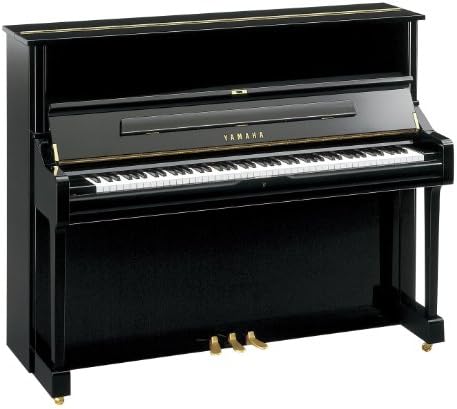
The P-45 is also the honest recommendation for most families. An acoustic piano, even a used Yamaha U1, will cost $2,000 or more, and it will need a tuner, humidity control, and regular maintenance. I own a U1 and it's the best instrument I've ever had, but it's a burden. The P-45 is the instrument I recommend to anyone who wants to learn without the anxiety.
Should you buy it?
If you're an adult who wants to learn piano, or a parent buying for a 10-year-old who's been asking for lessons, yes. Buy the P-45. It's 25 pounds, has a real weighted action, and sounds like a piano. It will last long enough to know if you're serious, and if you are, you'll upgrade to something in the $1,000 range by year four.
If you're not, you're out $450, which is the price of a few months of lessons anyway.
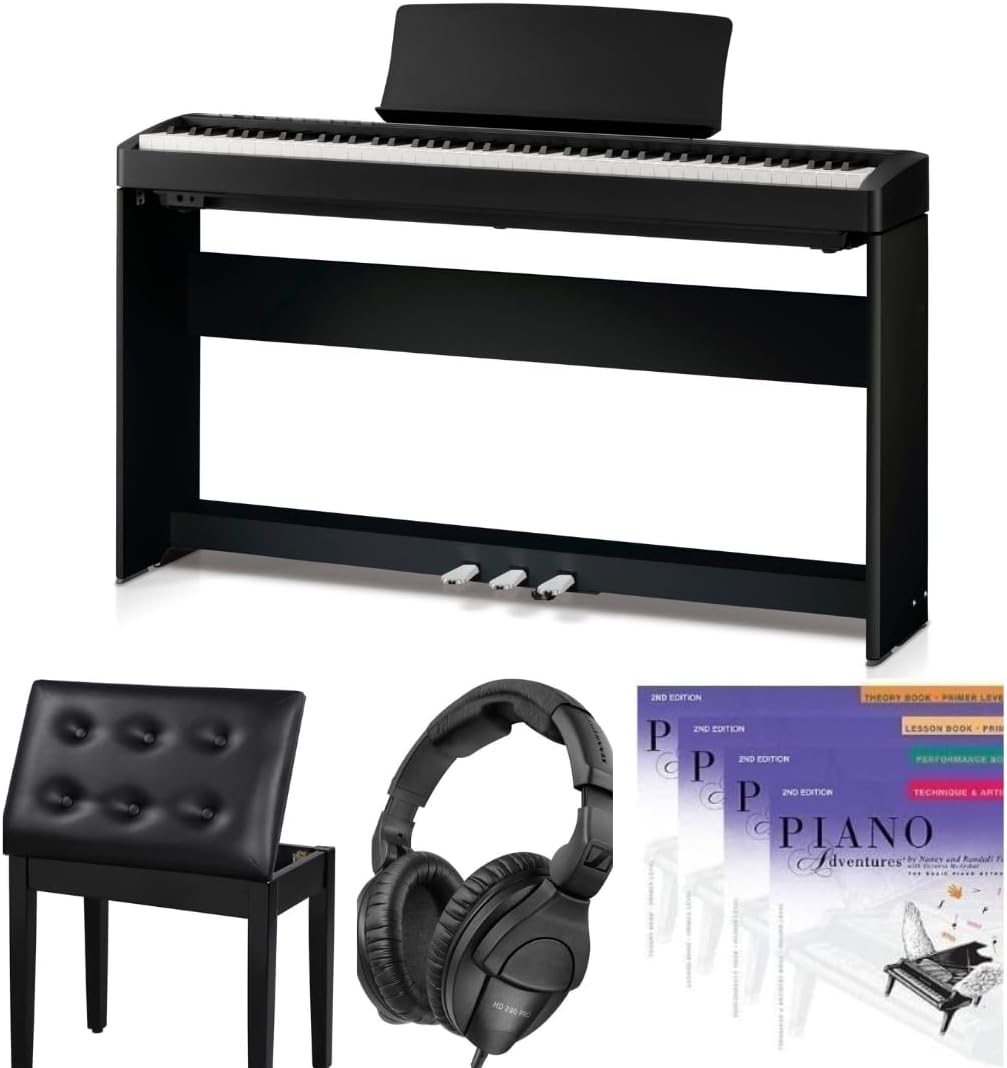
Updated January 2026: I'm currently testing the Roland FP-30X and the Kawai ES120 against the P-45 to see if the extra money buys a meaningful improvement in action durability. I'll update this review when I have a verdict.