Every August the same email lands in my inbox: a parent, a transfer student, and a summer that went by with the wrong keyboard in the corner. This year I answered four of those emails with one 88 key digital piano comparison, because four listings arrived on my screen in the same week and together they cover the whole budget tier. A cabinet piano from Donner, an ultra-portable Yamaha with 61 keys, a walnut slab that ships with a triple pedal in the box, and a 12V adapter that only makes sense if a Yamaha P-225 is already sitting in your living room.
Related: Digital Piano Action Weight Explained
The short answer: buy the 88 key cabinet if the piano stays in one room, buy the Yamaha Piaggero if it has to travel, buy the walnut slab if the student is a beginner on a tight budget, and skip the adapter unless you already own the piano it powers.
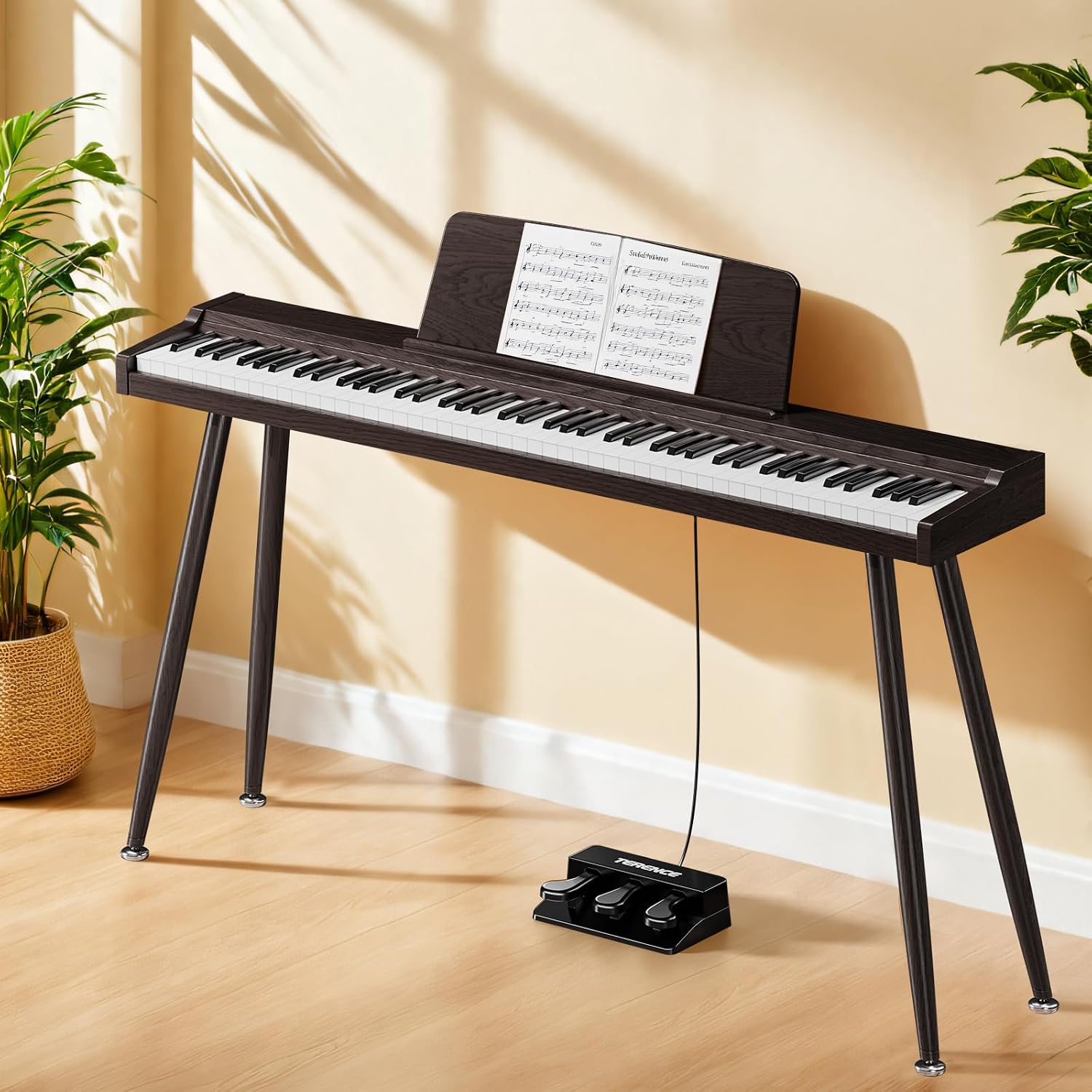
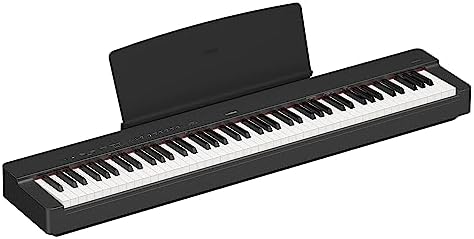
Keyboard Piano 88 Key Digital (Walnut)
All 88 full size keys, MIDI out, headphone jack, and a triple pedal in the box
Semi-weighted keys are not a graded hammer action, so finger strength builds slower
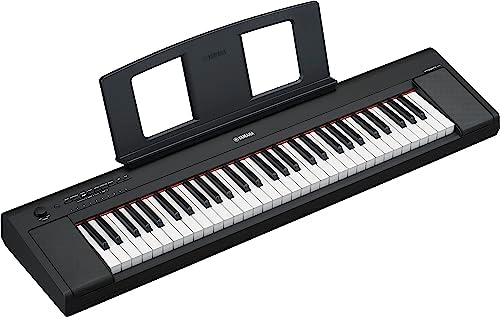
Yamaha Piaggero 61-Key NP15B
Light enough to carry, metronome and recording built in, genuine Yamaha build
61 touch sensitive keys and no weighted action, so intermediate repertoire does not fit
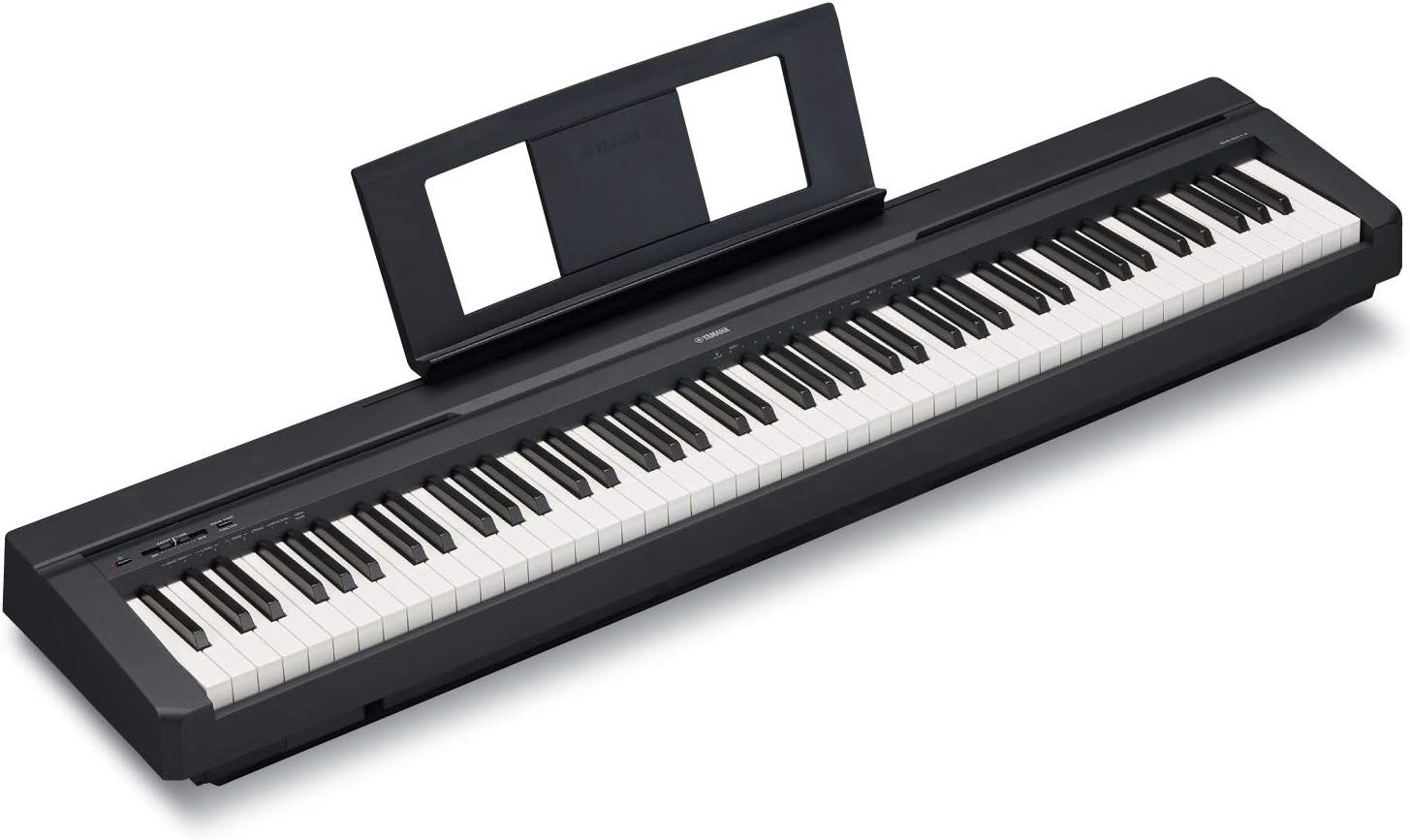
Donner DDP-400
88 progressive weighted keys in a real cabinet, Bluetooth, headphone included
It is furniture, so it stays where you put it and it costs more than a slab
12V Adapter for Yamaha P-225
Replaces a dead power supply on the P-225 family without buying a new piano
It powers nothing else in this comparison, because it is not an instrument
Prices and availability were captured from Amazon Creators API and may change.
How I read a listing I have not played
I have not had all four of these on the bench in the same week, so I am not going to tell you how the Donner's third octave feels under my thumb. What I can do is the thing I do when a parent forwards me a link at eleven at night: read the spec sheet against the student, and flag which claims actually matter.
Every instrument that comes through my studio gets the same three pieces. The Bach prelude I have played since I was fourteen, which exposes an action that fights back. The Chopin nocturne, which tells me whether the left hand can sing without me pushing. And a blues improvisation in F, which is where I find out whether the tone changes when I change finger speed. I keep a scale for action weight and a dB meter for the room. None of that replaces five minutes at the keys, but it decides what I check first.
The Donner DDP-400: the cabinet that behaves like furniture
The DDP-400 is the only true instrument of the four in the sense that it arrives as a piece of furniture: a brown upright cabinet with 88 progressive weighted keys, a headphone in the bundle, Bluetooth, recording, an LCD, 138 tones and 100 rhythms.
"Progressive weighted" is the phrase that matters. It means the keys are heavier at the bottom of the keyboard and lighter at the top, the way a real piano's bass strings carry more mass than the treble. Whether the implementation is consistent across all 88 keys is the one thing a listing cannot tell you, and it is the thing I would test first, because the cheap actions are the ones that bounce and the good ones let you control tone with finger speed.
The 138 tones and 100 rhythms are family features, not practice features. I do not care about them, and neither will your teacher. What I do care about: the Bluetooth, which is useful for lesson apps and a disaster when it drops mid-lesson, and the headphone that ships in the box, which is a genuine saving because the headphone in your drawer is probably terrible.
The Yamaha Piaggero NP15B: 61 keys and an honest conversation
I have a rule that I only review instruments with 88 weighted keys, and the Piaggero breaks it in both directions. It is a 61-key portable with touch sensitive keys, a metronome, and a recording function, and it weighs less than the bag I carry to lessons.
So let me be straight about what 61 touch sensitive keys can and cannot do. Touch sensitive means the key responds to how hard you play, which gives you dynamics. It does not mean weighted, and it does not mean graded. The finger strength a transfer student needs over the summer comes from mass and resistance, and a portable keybed does not provide it. Repertoire is the other wall: a Bach invention, most Chopin, and anything with a walking bass line will run out of keyboard.
Where it wins is everything else. A dorm room, a summer at a relative's house, a second instrument for a teacher who wants to keep her hands moving, a parent who needs the piano to fit in a closet. This is the instrument you buy when the alternative is not playing at all, and not playing at all is worse than 61 keys.
The walnut 88 key slab: the cheapest way to own all 88
This is the listing I send to parents who tell me the budget is fixed and the child is ten. Full size 88 keys, semi-weighted, MIDI, a headphone jack, a triple pedal, and a compact walnut body that sits on a stand or a desk.
Two things need translating. First, "semi-weighted" is not graded hammer. Semi-weighted usually means a spring or a light resistance added to a synth-style keybed. It gives some pushback, and it will not build the same control as a weighted action, but it is a long way ahead of an unweighted toy, and for a beginner in the first two years it is workable.
Second, a triple pedal in the box at this level is unusual, and that is where I would look hardest. My standing complaint about budget bundles is pedals that slide across the floor while you are playing. Check whether the pedal unit attaches to a stand or sits loose, and check where the headphone jack lives, because a jack on the back of the unit is a design failure in a studio where students plug in and out all afternoon. The MIDI out is the real upgrade path: when the student outgrows the internal sound, the same keyboard can drive a software piano.
The 12V adapter: the one listing that is not an instrument
The fourth listing is a 12V adapter made for the Yamaha P-225, P-225B, and P-225WH 88-key digital pianos. It is not a piano, and none of the other three products in this comparison use it.
That is not a knock. It is the cheapest way out of a specific bad afternoon: your P-225 goes silent, you check the outlet, you check the cable, and you realize the supply is the problem. Intermittent power, a buzz that was not there last month, a unit that drops out mid-phrase, those are the symptoms that send people shopping for a whole new piano when they need a power supply.
Buy it if you own that piano and the supply is failing or lost. Do not buy it hoping to power something else, because the voltage and the connector are specific to that model family, and a mismatched supply is how people damage instruments. If your P-225 is running fine, close this tab and put the money toward a bench that is the right height, which matters more than any of these four listings.
Cabinet, slab, or carry-on: the trade-offs that decide it
The choice is really about where the piano lives and who carries it.
A cabinet like the DDP-400 is the closest thing here to the instrument a student will eventually play in a recital hall. It has the pedals under the foot, the height is right, and it makes practicing feel like a habit instead of a chore. The cost is that it is furniture. It does not fold, it does not travel, and it will still be in that room in five years.
A slab is the smart buy for most households. You get all 88 keys, you get MIDI, and you get a piano you can move on your own. You give up the cabinet, the pedals are usually worse, and you will spend some of the difference on a stand and a bench.
A portable like the Piaggero is a compromise on the instrument and a win on the logistics. I would only recommend it as a second piano or a temporary one.
The specs that sell and the specs that matter
Two marketing numbers deserve suspicion. Polyphony counts are the classic one. Nobody plays 256 notes at once, and the number that appears in a listing rarely reflects what happens when you hold the sustain pedal through a dense passage.
The other is "grand piano sound." Sample quality has plateaued across this tier, and the differences most people hear between brands are speaker voicing, not the sample library. A good sample through a small speaker sounds like a good sample through a pillow. That is why I care more about cabinet size and speaker placement than about how many megabytes of piano were recorded.
What actually matters, in order: the action, the speaker, the pedal, and whether the headphone jack is somewhere a human can reach.
Who should buy which
A parent buying for a ten-year-old: the walnut 88 key slab, plus a proper stand and an adjustable bench. If the budget stretches and the piano has a permanent home, the Donner cabinet.
An adult returning after twenty years, in an apartment: the Donner DDP-400, because the weighted action and the pedals will bring back the touch you lost, and the Bluetooth and the headphone bundle mean nobody in the building hears you at ten at night.
A student who moves every year: the Yamaha Piaggero. It is not the piano you want, it is the piano you can actually keep playing.
A Yamaha P-225 owner with a dead supply: the adapter, and nothing else.
What I am watching next
Action quality keeps spreading down the price curve, and I expect the budget slabs of 2027 to feel like the mid-tier slabs of a few years ago. Hybrid actions, real hammers driving a digital sound engine, are the thing to watch in the middle of the market. Meanwhile the cabinet tier keeps shrinking, because a slab plus a good stand wins on price and wins again on moving day.
The bottom line
The action is the piano. Everything else is a feature, and features are easy to list and easy to fake. Buy the best action your budget allows, put it at the right height, replace the bench that came in the box, and practice the Bach prelude slowly. That plan beats any spec sheet on this page, including mine.