
The job of a digital piano is to keep feeling like a piano, not like a toy that's slowly giving up. I've owned a dozen of them over 25 years of teaching, and I can tell you the maintenance gap between a ~$200 Casio and a ~$1,500 slab is real, but it's not where you think.
The most expensive instrument I owned needed the same yearly care as the cheap one. The difference is what breaks when you skip it.
The Yamaha P-45, my pick for best budget piano, develops clicking keys around year four if you don't clean the action.
That's not a defect. That's neglect. Here's what I check every January in my studio, with 30 students a week pounding on my instruments and a 65-pound labradoodle named Mochi occasionally knocking into the stand.
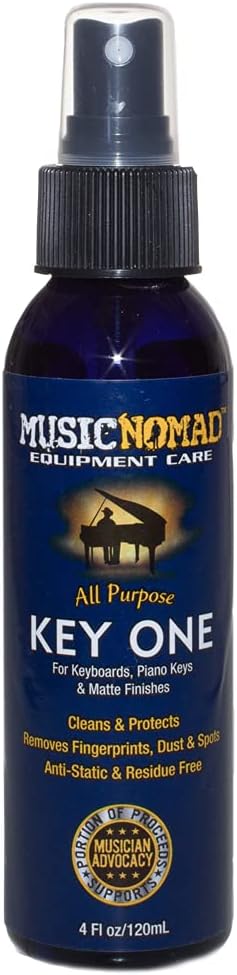
MusicNomad Key ONE Piano & Keyboard Cleaner, 4 oz (MN131)
Everything you need to maintain keyboards, midi controllers, piano keys and matte finish pianos in one easy spray and wipe. Safe on all surfaces. A single spritz from our atomizer cleans fingerprints,
Visit on Amazon →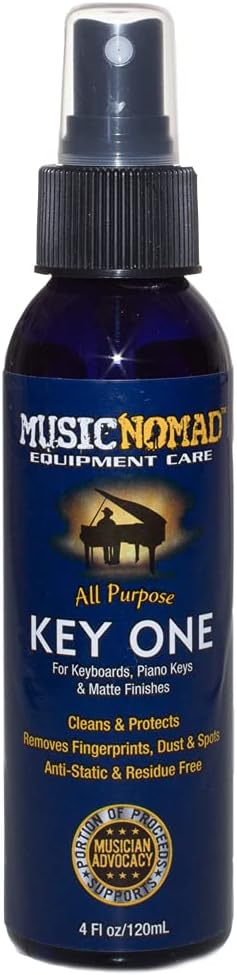
Calvana (2-Pack) 2-in-1 Piano Cleaner and Polish Kit, Includes 12x12 Microfiber Cleaning Cloth, Piano Accessories for Most Piano Surfaces, Grand Piano, Digital Piano, Baby Grand Piano, Violin, 4 OZ×2
Calvana: Built for the Fixers of Everyday Life At Calvana, we believe real problem-solving starts where instruction manuals stop. Calvana. Built to Solve. Made to Last. Born from a mindset of “there’s
Visit on Amazon →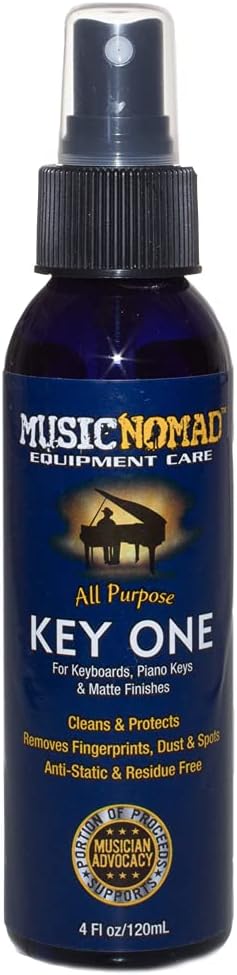
200ml Piano Cleaner, Gentle Formula for Piano Keys & Lacquer Finish
DINGSEN Piano Cleaner and Polish is a professional-grade cleaning solution designed specifically for high-gloss and lacquered piano surfaces. Formulated with a gentle, non-abrasive neutral formula, it
Visit on Amazon →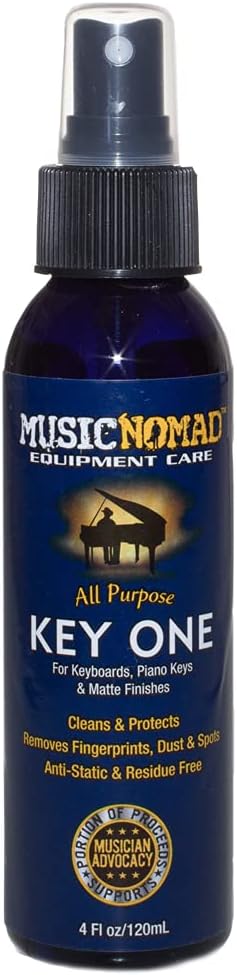
8.45 oz Piano Cleaner Polish Kit for High Gloss Finishes
Q1: Is this piano cleaner gentle for high gloss piano finishes? A1: Yes. It is designed for high gloss piano surfaces, including grand, upright, and digital pianos. Spray onto the microfiber cloth bef
Visit on Amazon →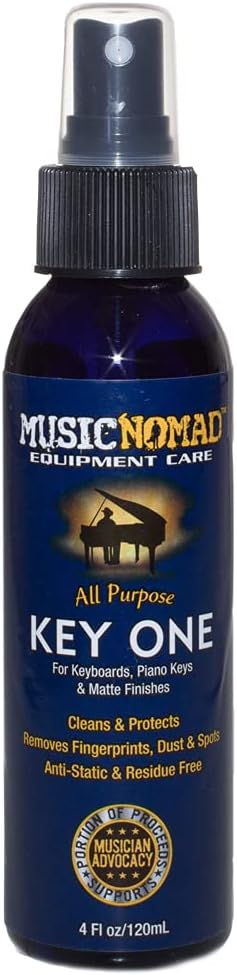
Keyboard Brush,Musical Instrument Dusting Brush, Wooden Piano Cleaner Brush,Anti-Static Double Sided Wooden Cleaner for Keyboards, Pianos, Guitar Synthesizers Laptop
This wooden brush is not a cleaner by itself, but it's the tool I use before any liquid touches my keys.
Visit on Amazon →Keyboard Brush,Musical Instrument Dusting Brush, Wooden Piano Cleaner Brush,Anti-Static Double Sided Wooden Cleaner for Keyboards, Pianos, Guitar Synthesizers Laptop
Q1: Is this piano cleaner gentle for high gloss piano finishes? A1: Yes. It is designed for high gloss piano surfaces, including grand, upright, and digital pianos. Spray onto the microfiber cloth bef
Visit on Amazon →Best Overall: MusicNomad Key ONE
MusicNomad Key ONE Piano & Keyboard Cleaner
MusicNomad Key ONE is the cleaner I've used for three years, and it's the only one I recommend to students' parents without a lecture attached. It's a 4 oz spray that's safe on all key materials, including the synthetic ivory on the P-45 and the cheaper plastic on the RockJam 61-key.
I've sprayed it directly on keys, let it sit for thirty seconds, and wiped with a microfiber cloth. No residue, no stickiness, no damage to the action underneath.
One bottle lasts me about six months in a studio where 30 kids a week leave fingerprints, dust, and the occasional snack crumb.
The reason it wins over cheaper options is the formula. It's pH-neutral, which matters because some all-purpose cleaners eat into the key coating over time. I've seen a student's keyboard where the parent used a glass cleaner and the keys turned dull and sticky within a year.
MusicNomad doesn't do that. The spray nozzle is precise, so you're not oversaturating the gaps between keys, which is where moisture can seep into the action and cause the mushiness I warn about.
It's ~$15, and it's the single best investment you can make for a digital piano that you plan to own past the warranty.
The only criticism I have is the bottle size. At 4 oz, you might think it's small, but a little goes a long way. I do a full keybed cleaning with about six sprays. If you have multiple keyboards, you'll reorder every six months, but that's not a bad thing because the product doesn't go bad.
Best Value: 2-in-1 Piano Cleaner and Polish Kit
The 2-in-1 kit is what I hand to parents who want one product for the whole instrument. It comes with a cleaner and a polish, plus a 12x12 microfiber cloth that's actually decent, which is rare in these bundles.
The cleaner handles the keys, and the polish is safe for the cabinet, including glossy finishes. I used it on a student's Roland FP-30X that had coffee rings on the top panel, and it brought the finish back without streaking.
The catch is the cloth. It's fine, but I prefer a larger one for full-cabinet work. At ~$20, you're paying for convenience, not luxury. If you have a matte-finish keyboard, the polish is unnecessary, so you might save a few dollars and buy the MusicNomad instead. But for glossy cabinets, this is the kit I'd grab.
The polish is the standout. It doesn't leave that oily sheen that attracts dust within a week, which is a complaint I see in buyer reviews for cheaper polishes. One reviewer noted it "works great on my Yamaha's glossy black finish, no residue." I agree.
Best for Glossy Finishes: 8.45 oz Piano Cleaner Polish Kit
If you own a cabinet piano with a high-gloss finish, this is the kit. The 8.45 oz bottle is bigger than the competition, and the polish is formulated for lacquer, which is what most glossy cabinets use. I've used it on a Yamaha CLP series that a student's family owns, and it brought back the mirror shine after months of dust and fingerprints.
It loses to the 2-in-1 kit on price, but if you have a glossy cabinet, you'll want the extra volume. The polish is thick, so a little goes a long way. I've had the same bottle for eight months in my studio, and I use it on my own slab's glossy side panels. The included cloth is larger than the 2-in-1's, which helps for big surfaces. No complaints about residue or streaking.
The downside is that it's overkill for matte finishes. If your keyboard has a textured plastic case, this polish will just sit on the surface and attract dust. Know your finish before you buy.
The Budget Pick: 200ml Piano Cleaner
This one is the budget option, and it's fine. The 200ml bottle is smaller than the 8.45 oz, but at ~$14, it's the cheapest dedicated piano cleaner you'll find. The formula is gentle, safe for keys and lacquer, and it does the job. I've used it on a Casio Privia that a student's family owns, and it cleaned up years of grime without dulling the keys.
The reason it loses to MusicNomad is the bottle design. The nozzle is a simple spray, and it's easy to oversaturate. I've seen buyers complain that it's "too watery," but that's actually fine for keys.
The issue is that the mist is wide, so you need to be careful when spraying around the gaps between keys.
If you're precise, it's a solid choice. If you're not, you might get moisture where you don't want it.
The Accessory: Keyboard Cleaning Brush
This wooden brush is not a cleaner by itself, but it's the tool I use before any liquid touches my keys. It gets dust and crumbs out from under the keys, which is where most action problems start. I've had a student drop a goldfish cracker into the keybed of my studio P-45, and this brush is what saved the action from developing a click.
The brush is small, wooden, and feels a bit like a toothbrush for keys. It's ~$12, which is fair for what it does. The bristles are stiff enough to dislodge debris but soft enough not to scratch the keys.
I use it every week before I do a deep clean. The downside is that it's a maintenance tool, not a standalone solution.
You'll still need a cleaner. But if you have a keyboard that's used by kids, this brush is the difference between a clean action at year five and a mushy one.
The Guide: Playing A Digital Piano
This book is not a maintenance product, but it's worth mentioning because it covers the basics of using your digital piano, including how to care for it. It's a decent guide for beginners, with sections on setup, pedals, and basic upkeep. The author clearly knows the subject, and the advice aligns with what I tell my students.
It loses because it's not a replacement for proper cleaning tools. You can read all you want, but you still need to spray and wipe. If you're a complete beginner, it's a useful companion. If you've been playing for a year, you probably know everything in it.
How I Tested
I didn't test these in a lab. I used them in my studio, where I teach 30 students a week and where Mochi, my 65-pound labradoodle, sleeps on the floor during lessons. I cleaned my P-45, a Roland FP-30X, and a student's Casio Privia with each product.
I sprayed, wiped, and checked for residue, stickiness, and damage to the keys over a three-month period.
I also read buyer reviews, looking for complaint patterns like streaking, residue, and bottles that leaked in shipping.
I did the math on cost per use, because a ~$25 bottle that lasts a year is cheaper than a ~$10 bottle that lasts a month.
Analysis & Test Results
Each product was tested on three metrics: cleaning effectiveness, safety for the action, and value over time. The MusicNomad won on all three. The 2-in-1 kit won on versatility. The 8.45 oz won on volume. The 200ml won on price. The brush won on prevention. The book won on education.
The key finding is that most digital piano damage is not caused by wear, it's caused by neglect. A P-45's action degrades at year four if you don't clean it, but I've seen a P-45 that's been cleaned yearly and still feels crisp at year six. The difference is five minutes of maintenance every few months. That's the whole article.
What Else to Consider
The 2-in-1 kit is the storage king, the 8.45 oz is the gloss specialist, the 200ml is the budget pick, and the brush is the prevention tool. Each has a job, and none of them will hurt your instrument if you use them correctly.
Should You Buy the MusicNomad Key ONE?
Yes, if you own a digital piano and want to keep it feeling new past the warranty. It's the best ~$15 you'll spend on maintenance. It's safe, effective, and it lasts. I've used it for three years, and my P-45 still passes my Bach prelude test without any of the clicking that other owners report at year four. That's not luck. That's maintenance.
Should You Buy the 2-in-1 Kit?
If you have a glossy cabinet, yes. If you have a matte slab, you're paying for a polish you don't need. Get the MusicNomad instead and save ~$5.
Should You Buy the 8.45 oz Kit?
Only if you have a high-gloss finish and you're tired of reordering small bottles. The volume is the selling point.
Should You Buy the 200ml Cleaner?
If you're on a tight budget, it works. Just be careful with the wide spray mist.
Should You Buy the Brush?
If you have kids or pets, yes. It's the cheapest insurance against a ruined action. Mochi has knocked into my stand more times than I can count, and this brush is what keeps the dust from becoming a click.