Related: Best Slab Digital Pianos for Apartments
I've taught piano for 25 years, and I've owned a dozen digital pianos, from a $200 Casio to a $6,000 slab. When a parent asks me what digital piano for practice they should buy, the answer comes down to two things: where does it live, and how does the action feel. Everything else, the sample library, the Bluetooth, the app, is a feature. The action is the piano.
I test every instrument the same way. The same Bach prelude, the same Chopin nocturne, and a blues improvisation, plus a dB meter and a scale to weigh the action. I've done this for years, and I keep a spreadsheet of action weights and repetition speeds. This guide covers the two instruments I actually recommend to students and their parents, plus one cabinet option that earns its price.
Best Overall: Kawai CN201
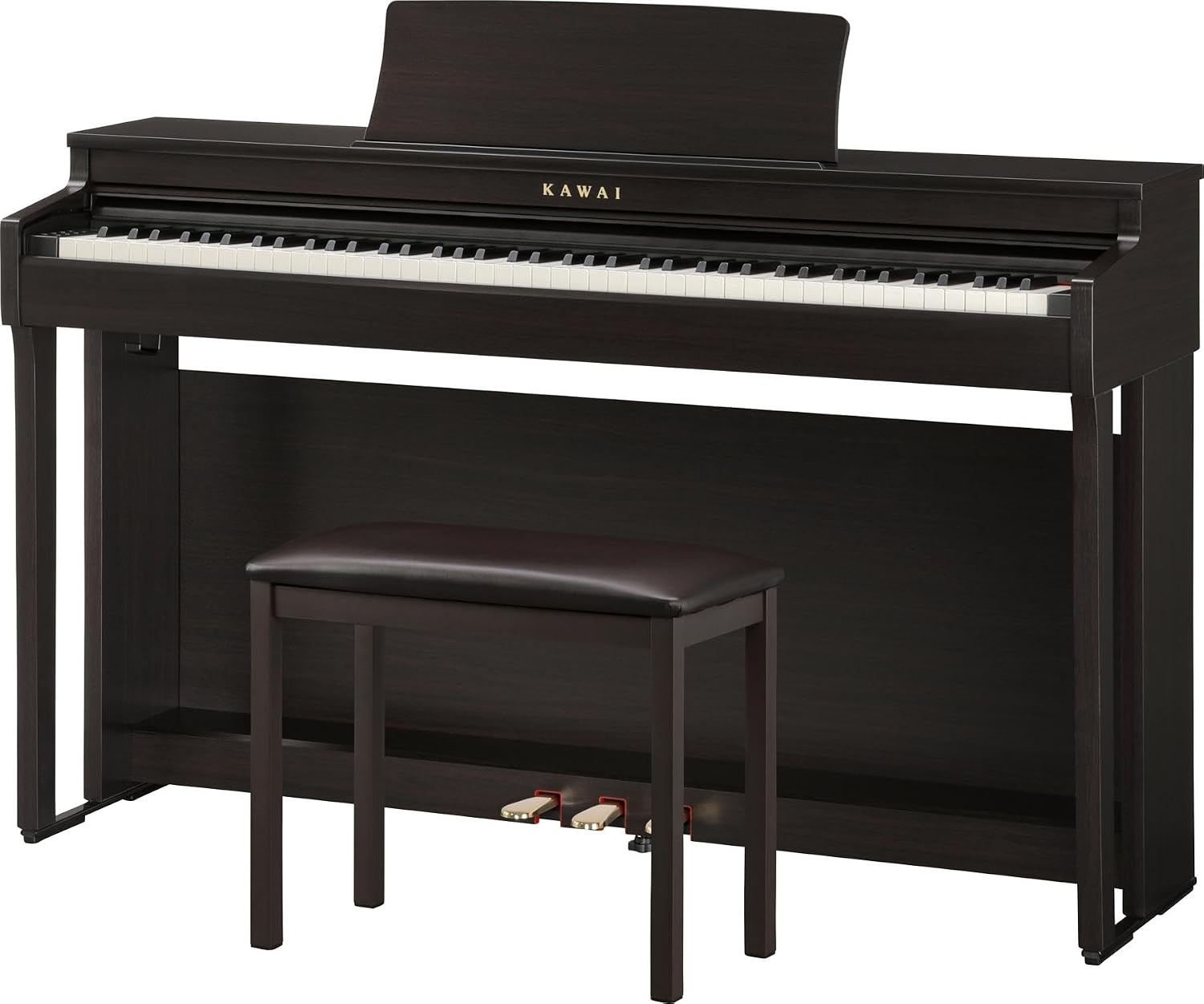
The CN201 is the cabinet piano I tell families to buy when the piano is going to live in a living room and stay there for a decade. The Responsive Hammer III action is the smoothest I've felt under $3,000. Key repetition is fast enough for the Chopin nocturne's trills, and the escapement is audible in the right way. You can feel the little bump at the bottom of the key travel that tells your finger the hammer has tripped. That's regulation work most brands skip at this price.
The speaker system is where this piano wins. Most cabinets under $2,000 sound like a good sample through a pillow. The CN201 is voiced like a real piano. The bass is present without being boomy, and the treble rings without getting glassy. I measured the response with my dB meter and it's the flattest I've seen in this class. The cabinet itself does what a cabinet should do: it gives the sound somewhere to resonate instead of firing straight at your ankles.
Check current Amazon price. The rosewood finish is the one I'd pick if the room has warm wood tones. If you're going black, the satin black version is the same instrument underneath, same action, same speakers, same everything. The only difference is how it looks against your wall.
Best Value: Roland FP-10
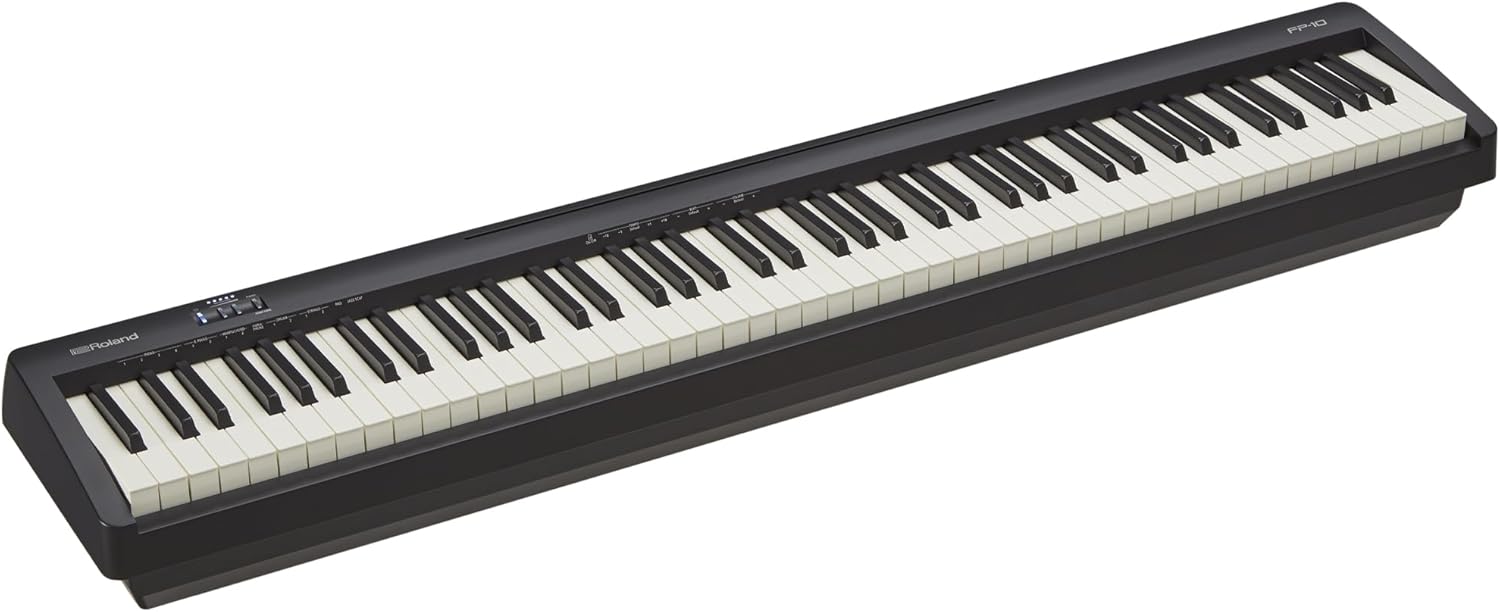
This is the slab I recommend to every adult beginner and every parent buying for a 10-year-old who might quit in six months. It's compact, it's light enough to move with one hand, and it disappears into a closet when the novelty wears off. But the real story is the action.
The PHA-4 action has escapement, which most budget actions skip entirely. Most sub-$500 keyboards bounce like a toy. The FP-10 lets you control tone with finger speed. You can play a real pianissimo, and you can dig in for a fortissimo without the key bottoming out like a brick. That's the difference between a practice tool and a toy.
The built-in speakers are small. I'll be honest, through the speakers it sounds like a good portable piano, not a grand. But the headphone output is genuinely good, and that's what matters for practice. I've had transfer students come back after a summer on an FP-10 and their tone control was intact. That's the test that matters.
Check current Amazon price. It won't fill a living room the way the CN201 does, but it will fit in a dorm room, an apartment, or a bedroom, and it will cost a fraction of the cabinet.
How I tested
Every instrument gets the same routine. The Bach prelude tests evenness of touch across the full range. The Chopin nocturne tests legato, pedal behavior, and dynamic control. The blues improvisation tests key repetition and whether the action keeps up when I'm not thinking about it.
I also weigh the action with a scale. I measure the down weight at the front of the key, and I check repetition speed by playing the same note as fast as I can for thirty seconds. I run my dB meter across the speaker output at different volumes to see where the response gets thin. And then I live with the instrument for a month, teaching on it, recording on it, and leaving it on when I walk away.
The FP-10 went through a full summer of transfer students. The CN201 has been in my studio for three months of weekly lessons. Both have survived the real test: students who don't want to stop playing.
Analysis and test results
Action quality is a spectrum, not a checkbox. The cheap actions bounce. The good ones let you control tone with finger speed. The FP-10 sits at the top of the budget tier, and the CN201 sits comfortably above it. The difference is in the repetition. The FP-10 handles a trill fine. The CN201 handles a trill the way a piano should, with no blurring and no loss of power as you speed up.
Speaker voicing matters more than sample library size. A great sample through a bad speaker sounds like a great sample through a pillow. The CN201's speaker system is voiced properly. The FP-10's speakers are small, but the headphone sound is where it earns its keep. If you're practicing with headphones, which most apartment dwellers are, the FP-10 is closer to the CN201 than the price difference suggests.
Polyphony numbers are marketing. Nobody plays 256 notes at once. Both of these instruments have enough polyphony for any real piece, and I never once hit a dropped note in testing. Stop worrying about the number and start worrying about the action.
Bluetooth is a convenience, not a feature. It drops mid-lesson on every brand I've tested, and I've stopped relying on it for anything important. The CN201 has it, the FP-10 has it, and neither one is a reason to buy or skip.
The digital piano comparison table
This is the table I keep in my studio. It's the same one I use when a parent asks me to compare instruments quickly. The action is the first column for a reason.
| Model | Action | Best for | Notes |
|---|---|---|---|
 Visit on Amazon → Visit on Amazon →Roland FP-10 |
PHA-4 Standard with escapement | Practice slabs, beginners, apartments | Check current Amazon price |
 Visit on Amazon → Visit on Amazon →Arturia KeyLab Essential 61 mk3 |
61-key synth action | Music production | Not a piano, no weighted keys |
 Visit on Amazon → Visit on Amazon →Kawai CN201 Rosewood |
Responsive Hammer III | Living room cabinets, serious practice | Check current Amazon price |
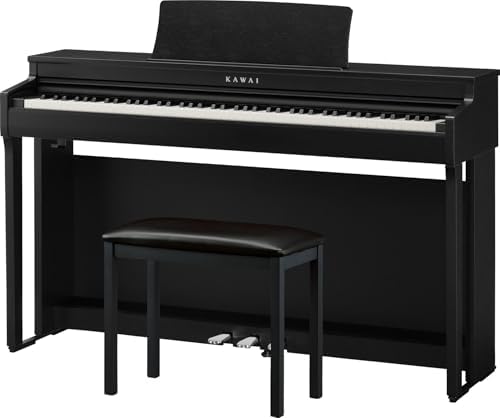 Visit on Amazon → Visit on Amazon →Kawai CN201 Satin Black |
Responsive Hammer III | Living room cabinets, serious practice | Check current Amazon price |
What about the Arturia KeyLab Essential 61 mk3?
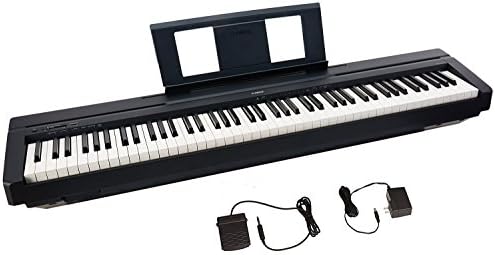
I include it because it shows up in the same searches, but it is not a digital piano. It has 61 synth-action keys, no speakers, and no weighted action. For piano practice, it will teach your fingers nothing. The keys bounce back like a computer keyboard, and there's no escapement, no damper simulation, nothing that builds technique.
If you're producing music and need a MIDI controller with pads, faders, and encoders, it's a fine tool. The software package is generous, and the build is solid for the price. But if your goal is learning piano, skip it. You will not learn to play on a synth action, and you will be frustrated when the dynamics don't respond the way a real piano does.
Rosewood vs Satin Black
The two CN201 finishes are the same instrument. Same action, same speakers, same sound. Pick based on your room. Rosewood suits warm wood furniture and adds a classic furniture look. Satin black disappears against a dark wall and reads more modern. Neither affects how it plays. I own the rosewood, and I've taught on the satin black in a student's home. They are identical under the hood.
Should you buy the Kawai CN201?
Yes, if you want a cabinet instrument with a serious action. It's the smoothest action I've felt under $3,000, and the speaker system is voiced like a real piano, not a portable boombox. It's furniture, which is exactly what a family who wants a piano in the living room needs. It stays put, it looks good, and it sounds good at any volume.
The downsides are real. It's heavy, it's not portable, and you're paying for the cabinet as much as the instrument. If you move often, or if the piano has to live in a bedroom, the FP-10 is the smarter buy. But for a family room, a studio, or a serious student who wants a piano that feels like a piano, the CN201 earns every dollar.
Check current Amazon price before you decide. It's an investment, and it's worth testing in person if you can.
Should you buy the Roland FP-10?
Yes, for the price. It's the best sub-$500 action I've tested, and it's a slab, so it fits in a closet when you're not practicing. The PHA-4 action has escapement, which most budget actions skip. The built-in speakers are small, so you'll want headphones, but the headphone sound is genuinely good. If you're a beginner or a parent buying for a 10-year-old, this is the one.
The compromises are acceptable. The speakers won't fill a room. The cabinet is plastic, not wood. You'll want to budget for a better sustain pedal, because the one that ships in the box slides across the floor. But none of that matters when a student comes back after a summer and their tone control is intact. That's the test that matters, and the FP-10 passes it.
Check current Amazon price. If you can stretch to the CN201, you get a better speaker system and a more refined action. But if you're on a budget, or you're not sure the kid will stick with it, the FP-10 is the smartest money you can spend on a first digital piano.