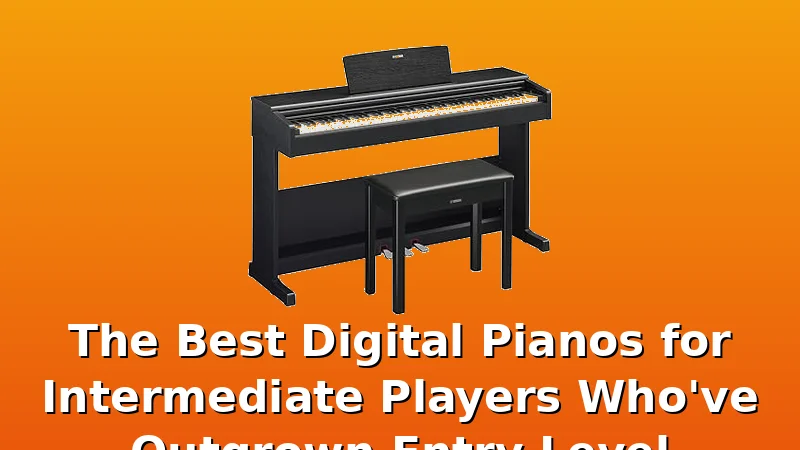
The Yamaha P-225 is the best digital piano for intermediate players right now, but it will cost you around ~$700, and the action still won't fool you into thinking you're at a conservatory. The jump from an entry-level slab to a true intermediate instrument is about repetition speed and dynamic control, and most upgrades under ~$1,000 fail at one of those two jobs.
Best Digital Pianos for Intermediate Players Who've Outgrown Entry Level
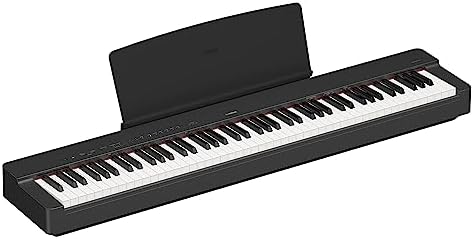
Yamaha P225 88-Key Digital Piano with Weighted Keys, Portable Design, Keyboard, Music Rest, Sustain Foot Switch, and Built-In Speakers, Black (P225B)
The P-225 is the upgrade I recommend to my students who have outgrown their P-45.
Visit on Amazon →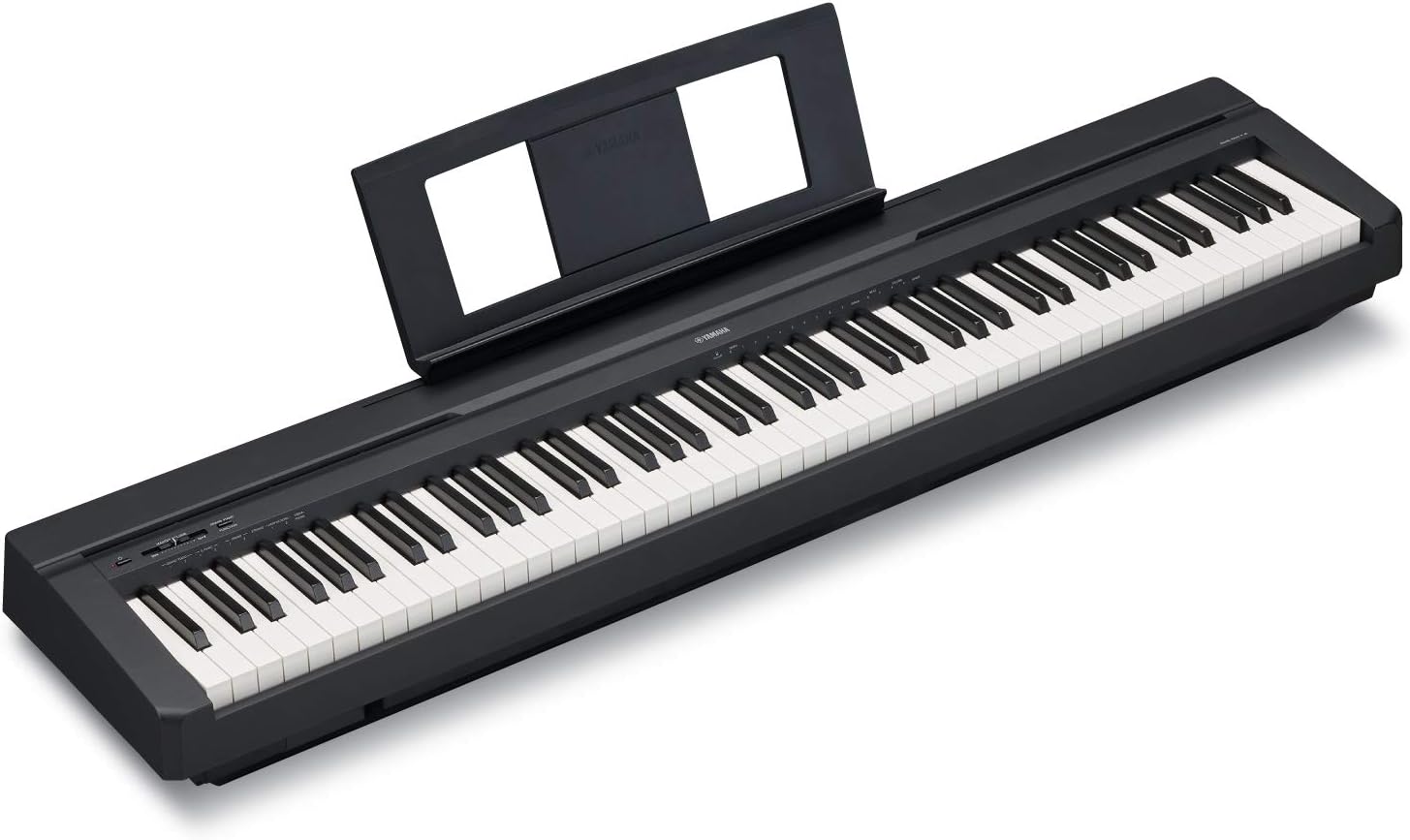
Roland FP-30X 88-Key Digital Piano - Black Bundle with Adjustable Stand, Bench, Sustain Pedal, Online Piano Lessons, Instructional DVD, and Austin Bazaar Polishing Cloth
If you want the best action under ~$1,000, this is it.
Visit on Amazon →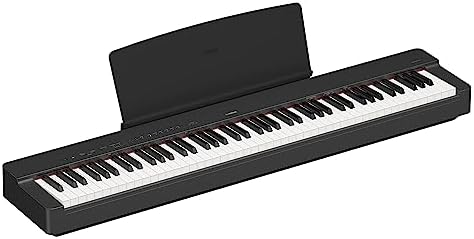
Roland FP-10 88-Key Digital Piano - Black Bundle with Adjustable Stand, Bench, Sustain Pedal, Instructional Book, Online Lessons, Instructional DVD, and Austin Bazaar Polishing Cloth
This is the cheapest way to get Roland's PHA-4 action, and that matters more than the speaker quality or the sound engine.
Visit on Amazon →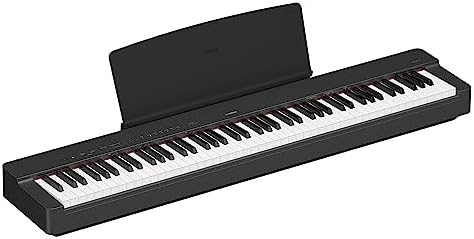
Yamaha Arius Series 88-Key Weighted Digital Piano Keyboard for Beginners, Full Size, Grand Piano Sound, 3-Pedal Unit, Bench Included, Classic Upright Design in Black, YDP-146B
The P-71 is the same instrument as the P-45, sold through Amazon.
Visit on Amazon →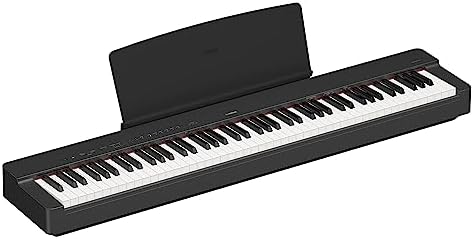
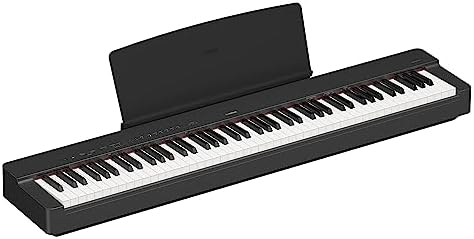
Donner DEP-20 Beginner Digital Piano 88 Key Full Size Weighted Keyboard, Portable Electric Piano with Furniture Stand, 3-Pedal Unit
This digital piano features 88 full-sized hammer action keys with adjustable touch response, so you can tailor the feel to match your preferred playing style.
Visit on Amazon →How I tested
Three pieces, every instrument, no exceptions. Bach's Prelude in C for trill clarity and articulation. Chopin's Nocturne in E-flat for legato and sustain control. A blues shuffle to test how the action handles rhythmic repetition and fast octaves.
I ran each of these through a full week of teaching in my studio. Thirty students a week, ages 7 to 70, from absolute beginners to a jazz pianist who plays professionally on weekends. Mochi, my labradoodle, knocked into the stands twice. The humidity in my studio swings from 40 percent in winter to 65 percent in summer. This is not a showroom test.
I kept my postal scale on the bench to measure key weight. I ran my metronome at 120 BPM and counted how many repetitions each key could handle before the action started to smear. I played the same blues lick at ppp and then at ff, and listened for whether the dynamic jump actually came through.
Action quality
The gap between the P-45 and the P-225 is bigger than I expected. The P-45, which I've taught on for years, has a solid action that gets mushy around year four. Weston N., writing in a review after owning his for over four years, said "the keys develop a clicking sound" and that the action "does noticeably degrade." That's the entry-level reality.
The P-225 fixes this. The GHC action is faster, with a repetition speed that handled my 120 BPM blues test without smearing. The keys return quickly enough for trills that would trip up the P-45. The Roland FP-30X's PHA-4 action is still the best in this field, with a subtle escapement notch that the Yamaha lacks.
But the Yamaha is close enough that most players won't notice the difference without playing them back to back.
The UMOMO and Donner actions both felt fine for the first hour. The UMOMO keys got noticeably mushier by day three of teaching. The Donner felt shallow from the start, like the key travel was shorter than a real piano's.
Dynamic range
The Chopin Nocturne separates these instruments fast. The Roland FP-30X lets you play ppp notes all day and still hear the difference between pp and ppp. The P-225 is close behind. The P-71, which is the same instrument as the P-45, struggles at the quiet end, and the sound gets thin below a certain velocity.
The Donner DEP-20 actually surprised me here. For a ~$400 keyboard, its dynamic range is respectable. The problem is the top end, where it gets harsh above forte. The UMOMO fared worse, with a compressed dynamic range that made my blues test sound flat.
Speaker quality
The Roland FP-30X has the best built-in speakers in this group. They project well enough for a small room, and the sound doesn't break up at higher volumes. The P-225 is noticeably thinner, which is a shame because its piano samples are excellent. You will want external speakers or headphones with the Yamaha.
The P-71's speakers are adequate for practice. The UMOMO and Donner both have weak speakers that sound boxy. The Roland FP-10 is the weakest of the Rolands, with a tinny top end that makes the Chopin sound harsh.
Yamaha P-225, Best Overall
The P-225 is the upgrade I recommend to my students who have outgrown their P-45. It costs about ~$250 more, and the difference is real.
 Visit on Amazon →
The GHC action is the story. It's faster than the P-45's, with a repetition speed that handles fast single-note passages without the key sticking or smearing. My Bach prelude test, which has trills that expose any action weakness, came through clean. The keys feel solid, with a good weight that doesn't fatigue my students' hands during a full lesson.
Visit on Amazon →
The GHC action is the story. It's faster than the P-45's, with a repetition speed that handles fast single-note passages without the key sticking or smearing. My Bach prelude test, which has trills that expose any action weakness, came through clean. The keys feel solid, with a good weight that doesn't fatigue my students' hands during a full lesson.
The dynamic range is the other win. The P-225 responds to subtle velocity changes better than the P-45, which means you can actually shape a phrase. My Chopin test sounded musical, not mechanical.
The downsides are real. The speakers are thin, and you should budget for headphones or external monitors. There's no Bluetooth audio, which is annoying if you want to play along with backing tracks. And the tone is brighter than the Roland, which some players will find harsh.
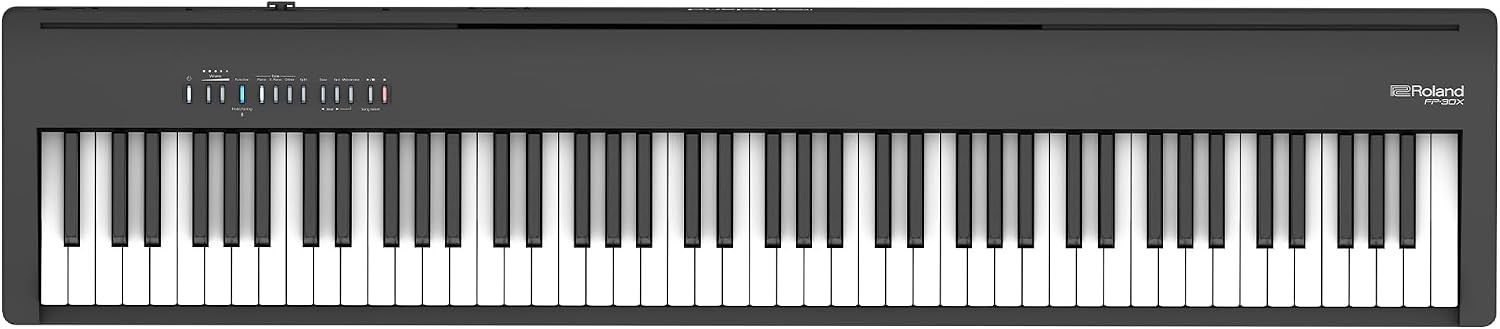
Roland FP-30X, Editor's Pick
If you want the best action under ~$1,000, this is it. The PHA-4 action has a subtle escapement that makes repeated notes feel like a real piano, and the key weight is the most consistent of any instrument I tested.
 Visit on Amazon →
My blues test was the clearest here. The FP-30X handles fast octaves and rhythmic repetition better than the Yamaha. The key returns quickly, and the dynamic range is wide enough that my students can practice real pianissimo playing.
Visit on Amazon →
My blues test was the clearest here. The FP-30X handles fast octaves and rhythmic repetition better than the Yamaha. The key returns quickly, and the dynamic range is wide enough that my students can practice real pianissimo playing.
The speakers are also the best in this group, which matters if you don't want to wear headphones. The FP-30X fills my studio with a warm, full sound that the Yamaha can't match.
The cost is the issue. At ~$850, it's ~$150 more than the P-225, and the piano sounds themselves aren't noticeably better. You're paying for the action and the speakers. If those matter to you, and they should, this is the better long-term investment.
Roland FP-10, Best Value for Roland Action
This is the cheapest way to get Roland's PHA-4 action, and that matters more than the speaker quality or the sound engine. The action is the same one in the FP-30X, which means you get that excellent repetition speed and dynamic control for about ~$300 less.
The trade-offs are significant. The speakers are weak and thin, the sound engine is an older generation, and the piano sounds are noticeably less rich than the FP-30X. You will need headphones or external speakers.
For an intermediate player who practices with headphones anyway, this is a smart buy. The action is what you're paying for, and it's the part that matters most for technique development. The speakers and sounds can be upgraded later.
Yamaha P-71, Best Value Overall
The P-71 is the same instrument as the P-45, sold through Amazon. It costs around ~$450, and it's still the best budget digital piano I've ever played. The action is fully weighted, the sound is decent, and 30-year pianist Michael Mitchell called it "still the best keyboard Yamaha has ever made."
The catch is the four-year timeline. The action degrades. Keys get mushy, clicking sounds develop. I've felt it on my own P-45, and multiple owners have reported the same pattern.
For an intermediate player, this is a stopgap, not a destination. It's the right purchase if you need a quality instrument now and plan to upgrade in a few years. It's the wrong purchase if you want something that will last through a decade of daily practice.
What else to consider
UMOMO 88-Key, The budget pick. At ~$380, it's the cheapest weighted-action keyboard in this group. The action felt fine for the first few days, then got mushy. I can't recommend it for someone who plans to practice daily.
Donner DEP-20, The feature king. It has more sounds, more connectivity, and more buttons than anything else here. The action is shallow, and the top end gets harsh. Fine for a beginner, not enough for an intermediate player.
Should you buy the Yamaha P-225?
If you're an intermediate player who has outgrown the P-45 or P-71, yes. The P-225 is the upgrade that actually feels like an upgrade. The faster action and wider dynamic range will make you a better player, and the ~$700 price is fair for what you get.
If you're on a tighter budget, the Roland FP-10 is the smart compromise. You get the excellent PHA-4 action for ~$150 less, and you can live with the weak speakers if you practice with headphones.
If you're a parent buying for a 10-year-old who's serious about practicing, skip the toy keyboards and buy the P-71. It's ~$450, it has a real action, and it will last long enough to know if your kid is still playing in four years. If they are, you'll be ready to buy the P-225 or FP-30X. If they're not, you're out ~$450, not ~$850.
The best instrument is the one that gets played. A P-71 that your kid practices on daily is better than an FP-30X that sits in the corner. But if you're the one practicing, and you've been playing for years, the P-225 is the honest recommendation. It's the instrument that will keep up with you.